Showing posts with label 10th Amendment. Show all posts

Friday, January 29, 2010

Nullification: It’s Official.


While speaking to a large crowd of over a thousand people on the campus of Arizona State University last December, Congressman Ron Paul mentioned one thing that might come about as the result of the federal government habitually ignoring the Constitution: Nullification.
About five minutes into the video segment which you’ll find below, he said, “There’s not much attention paid to the Constitution in Washington. There’s not much attention paid to it by our executive branch of government. And we don’t get much protection from our courts. So one thing that might finally happen from this if the people finally feel so frustrated that they can’t get the results out of Washington — They’re going to start thinking about options. They might start thinking about nullification and a few things like that.”
As someone who attended that rally and was doing my best to represent my state’s chapter of The Tenth Amendment Center, I know I cheered very loudly and was very pleased when the rest of the crowd applauded enthusiastically.
For anyone who is unfamiliar with the concept of state nullification, it was the idea expressed by then sitting vice president, Thomas Jefferson, when he authored what came to be called the Kentucky Resolutions of 1798. The resolutions made the case that the federal government is a creature of the states and that states have the authority to judge the constitutionality of the federal government’s laws and decrees. He also argued that states should refuse to enforce laws which they deemed unconstitutional.
James Madison wrote a similar resolution for Virginia that same year, in which he asserted that whenever the federal government exceeds its constitutional limits and begins to oppress the citizens of a state, that state’s legislature is duty bound to interpose its power to prevent the federal government from victimizing its people. Very similar to Jefferson’s concept of nullification, Madison’s doctrine of interposition differed in some small but important ways.
These two documents together came to be known as The Virginia and Kentucky Resolutions (or Resolves), of 1798. Both were written in response to the dreaded Alien and Sedition Acts, and the phrase, “Principles of ‘98″ became shorthand for nullification and / or interposition. Over time, “The Principles of ‘98″ would be invoked by many other states, many times for a variety of issues.
Getting back to Ron Paul’s speech in December at ASU, Congressman Paul qualified his prediction about the revival of nullification by saying the following:
“But my suspicion is that there will never be official nullification or secession, but if the [federal] government continues to fail, and they can’t deliver anything..checks bounce..that we will be forced to take care of ourselves. And we will be forced to almost ignore everything they do.”
Less than a week after the speech I attended at ASU, Congressman Paul was interviewed by Mike Church on his radio show. When Mike asked him what his thoughts were on nullification, Ron Paul responded by saying:
“I think it’s a great idea. It was never really successful in our history. But I think it’s going to grow in importance. And I think it’s going to grow because the government, the federal government will be seen as inept and ineffective. And I think it’ll almost be de facto in the sense that the states will eventually just ignore some of the mandates.”
Here I would like to pause for a moment and point out that I am not usually in the business of disagreeing with Congressman Ron Paul. I would hardly need one hand to count the number of times that I have actually disagreed with him on any issue of real substance. I am a great admirer and supporter of Congressman Paul, who is undoubtedly very supportive of the idea of state nullification, even if he has doubted its efficacy in the past. However, in spite of all this, I would like to make two observations.
First, nullification has, in fact, been somewhat successful in the past and more recently as well. Second, as President Obama loves to say, “Let me be clear”: “Official” nullification has ALREADY HAPPENED.
Before I explain why “official” nullification has already happened, let me briefly give some examples of what nullification is NOT.
Nullification is not secession or insurrection, but neither is it unconditional or unlimited submission. Nullification is not something that requires any decision, statement or action from any branch of the federal government. Nullification is not the result of obtaining a favorable court ruling. Nullification is not the petitioning of the federal government to start doing or to stop doing anything. Nullification doesn’t depend on any federal law being repealed. Nullification does not require permission from any person or institution outside of one’s own state.
So just what IS “official” nullification you might be asking?
Nullification begins with a decision made in your state legislature to resist a federal law deemed to be unconstitutional. It usually involves a bill, which is passed by both houses and is signed by your governor. In some cases, it might be approved by the voters of your state directly, in a referendum. It may change your state’s statutory law or it might even amend your state constitution. It is a refusal on the part of your state government to cooperate with, or enforce any federal law it deems to be unconstitutional.
Nullification carries with it the force of state law. It cannot be legally repealed by Congress without amending the US Constitution. It cannot be lawfully abolished by an executive order. It cannot be overruled by the Supreme Court. It is the people of a state asserting their constitutional rights by acting as a political society in their highest sovereign capacity. It is the moderate, middle way that wisely avoids harsh remedies like secession on the one hand and slavish, unlimited submission on the other. It is the constitutional remedy for unconstitutional federal laws.
With the exception of a Constitutional amendment, the federal government cannot oppose (except perhaps rhetorically), a state’s decision to nullify an unconstitutional federal law without resorting to extra-legal measures. But such measures would more than likely backfire, since most Americans still affirm that might does not make right.
There is no question as to whether or when “official” nullification will happen: It has ALREADY HAPPENED. In fact, not only has it happened recently, it has been a success! Perhaps this is why the federal government hopes you will never hear about it. According to the Tenth Amendment Center:
“25 states over the past 2 years have passed resolutions and binding laws denouncing and refusing to implement the Bush-era law [REAL ID Act]..While the law is still on the books in D.C., its implementation has been “delayed” numerous times in response to this massive state resistance, and in practice, is virtually null and void.”
But that’s not all; another example of “official” nullification has occurred in the form of an unlikely states’ rights ally: Medical marijuana.
There was a time when the federal government took the Constitution seriously enough that Congress did what is required in order to enact a nationwide ban on a substance. Even though the experiment would eventually be seen by most Americans as a mistake and a failure, the 18th Amendment was passed and the era known as “Prohibition” began. Four years later, it was repealed.
When it came to marijuana prohibition, however, the feds had another trick up their sleeve. All three branches of the federal government would agree on a very novel, liberal interpretation of the “commerce clause” which would allow them to regulate virtually any substance, including marijuana, even though there’s supposedly no “legal” commerce in the plant. Since that time, the federal government has managed to claim, with a straight face, as it were, that a plant grown in your back yard, never sold, and never leaving your property, is somehow able to be completely banned by the federal government under the interstate “commerce clause.” The only problem with their claim is that the states just aren’t buying it.
Fourteen states have actively refused to comply with federal laws on marijuana, and it looks as if six more are about to join the effort. In a recent blog post, Mark Kreslins observes:
“..medical marijuana now poses a real threat to the enforcement power of the Federal Government. With state after state defying Washington DC over this issue..Washington DC has a choice to make; enforce their laws based on a very liberal interpretation of the Commerce Clause by sending thousands of DEA agents into all fifty states…or…look the other way. Thus far, they’ve chosen to look the other way for if they create the appearance of a Federal takeover of police powers in the States, they will fully expose their extra-constitutional behavior and provoke a direct confrontation with the States who will use the 10th Amendment (hopefully) to defend their prerogatives.”
Whatever your view may be regarding marijunana use, medical or otherwise, one thing is apparent: “Official” nullification has happened, and it works! Washington will have to get used to it.
What remains to be seen, however, is whether in addition to “officially” nullifying unconstitutional federal laws, state governments will be willing to use their power to “officially” interpose themselves between agents of the federal government and the people of their state. In the unlikely event that one or more branches of the federal government decides to take extra-legal measures to punish residents of a state for exercising their constitutional rights in defiance of unconstitutional federal laws, will that state’s government have the courage to hamper or even neutralize such extra-legal measures?
There are a whole host of peaceful actions that a state government can adopt if that day comes or appears to be just over the horizon. These measures range from county sheriffs requiring that federal agents receive written permission from the sheriff before acting in their county, to setting up a Federal Tax escrow account, which could potentially de-fund unconstitutional federal activities by requiring that all federal taxes come first to the state’s Department of Revenue.
Besides state interposition, the other thing Washington would have to consider, is whether enough of their agents would actually obey orders to punish people for exercising their constitutional rights. There is a significant chance that enough of them would either publicly or privately decide in advance to ignore such orders. As the probability of this increases, it becomes more likely that Washington will not risk overplaying its hand. The reality is that Washington just doesn’t have the manpower to enforce all their unconstitutional laws if enough states choose to defy them.
Of course, it all depends on the people of the several states: ordinary people like you and I. Although I’ve discovered that there are more elected representatives at the state level who are committed to acting in a courageous and principled manner than I ever dared hope, most of their peers lack such a brave commitment. Most of them will stick their head in the sand or sit on the fence until they determine which way the wind is blowing. And so it’s our opinion, not the opinion of the American people in aggregate, but our opinion as citizens of our respective states, that will influence the decision of our state representatives to either stand tall or to kneel down and knuckle under.
But do you even know the men and women who represent you? I’m not talking about those who represent you in Washington, but rather in Phoenix, Salem, Sacramento, Salt Lake City, Denver, Austin, Oklahoma City, Tallahassee, Atlanta, Nashville, Richmond, Harrisburg, Indianapolis, Columbus and Springfield.
If you don’t know them, and you care about our republic, you should make it your highest priority to get to know them and establish rapport with them as soon as possible.
For any of you who really want to preserve our union, and at the same time retain your rights guaranteed by the Bill of Rights, I can’t say it any better than 2008 presidential nominee of the Constitution Party, Chuck Baldwin:
“..it is absolutely obligatory that freedom-minded Americans refocus their attention to electing State legislators, governors, judges and sheriffs who will fearlessly defend their God-given liberties..as plainly and emphatically as I know how to say it, I am telling you: ONLY THE STATES CAN DEFEND OUR LIBERTY NOW! ..this reality means we will have to completely readjust our thinking and priorities.”


Bookmark and Share

Friday, December 25, 2009

Obamacare sparking 10th Amendment rebellion, action in seven states


By: Mark Tapscott

Looks like the steadily growing list of constitutional, ethical and political outrages that constitute the Harry Reid version of Obamacare is sparking a rebellion in the states, as AP reports South Carolina's attorney general plans to investigate the vote-buying that surrounded the proposal in the Senate majority leader's office.

According to AP, South Carolina's Henry McMaster is being joined by the attorneys general of Michigan and Washington state in a suit to determine the constitutionality of the Obamacare proposal. Their initiative was prompted by a request from South Carolina's two senators, Lindsay Graham and Jim DeMint, both Republicans.

Attorneys-general in at least four other states are also considering joining McMasters, according to AP. A move by a group of states to challenge the constitutionality of Obamacare could reinvigorate the efficacy of the 10th Amendment, which reserves to the states or the people all rights not specifically granted to the federal government.

Graham has been all over cable news today visibly angry about the vote-buying by Reid that secured the votes of Senators Mary Landrieu of Louisiana, Ben Nelson of Nebraska, and Bernie Sanders of Vermont, as well as possibly other senators as yet unknown.

DeMint has also been active, especially on the issue of the Reid amendment's provision seeking to bar future congresses from changing even a single word of Section 3403 on the Independent Medicare Advisory Board (IMAB).

The IMAB will become the federal health care ground zero under Obamacare if it becomes law. Ed Morrissey at Hot Air has a link to DeMint's floor speech on the issue and additional information, analyses, and links.

Nelson's deal with Reid has attracted the most attention because it exempts Nebraska from paying its share of Medicaid expenses in perpetuity. Medicaid expenditures are among the most expensive federal mandates on state governments, and the Obamacare bill will significantly increase costs for all other states that don't somehow wangle a similar deal.

It also raises a constitutional issue, which McMasters explained in a statement issued earlier today:

"The Nelson provision is unusual in that there is not cut off date or phase out. Many provisions in federal law have a sunset date -- say 2, 5, 10, or even 20 years-- but this provision will continue in perpetuity. Quite obviously, this issue raises very serious concerns about equity, tax fairness as well as the constitutionality of having federal tax levies and mandates that treat one state differently from all the others.

"If the Nelson provision is not unprecedented, I feel comfortable in saying it is an exceptionally rare occurrence. States generally are treated in a similar manner. In this case, Nebraska will be treated in a widely divergent manner than any other state.

"Beginning today, I have instructed my attorneys to begin looking into the constitutionality of this provision and exploring the options that may be available to South Carolina and other states to defend taxpayers should this provision ultimately become law."

My colleague David Freddoso wonders what might happen if the governors of states bordering Nebraska - Kansas, Colorado, Wyoming, Iowa, and Missouri - announce that they are no longer funding their Medicaid programs and encourage those needing Medicaid services to visit the Cornhusker state.

Source: The Washington Examiner

Bookmark and Share

Saturday, December 12, 2009

I Shot the Sheriff?


After reading my first article on State Sovereignty by Sheriff Mack, letting it sink in slowly, and then, listening to his most recent podcast on TAC, I thought it time to speak up on the importance of the county sheriff from a concerned citizen’s point of view, as well as a strategic point of view.

There is no doubt this nation is at a “cross roads.” There is no doubt the states’ legislatures are speaking up against the federal government. There is no doubt the citizens are demanding the federal government’s respect of its Constitutional limitation on powers. So, what does the county sheriff have to do with any of this?

We, the people of our various states, have elected our sheriffs to preserve and protect our Constitutional rights. Classically, we see this role as being executing by protecting us from thieves and robbers and by exercising appropriate restraint to insure they do not violate our rights by conducting improper searches and seizures against us. A good sheriff does both of the above.

A great sheriff, however, goes beyond the two aforementioned roles. A great sheriff will stand on the side of the people who elect him or her, and do that which is necessary to preserve their rights.

Now, let me explain the reason for the catchy title of this brief article. If (or when) the people have a face-off with the federal government, and many ordinary citizens gather to demand their rights, what happens when words do not matter? On which side of the line would you want your sheriff standing? With the people, or against the people? I think we can all agree we want the sheriffs’ guns pointed away from us and not at us.

Clearly, the sheriff has an important decision to make when such events occur. One of the unfortunate things that has occurred over the decades is that the federal government has, in so many cases, been viewed, and accepted, as always on the right side. In so many cases, when federal law enforcement officials enter into matters of local jurisdiction, if our local officials are not “rubber-stamping” their actions, that is because they are busy rolling out the red carpets.

Sheriff Mack appears to be making a valiant effort to correct this misguided reception of federal influence. We, the people, elect our sheriffs. We do not elect federal law enforcement officials. We provide substantial tax dollars to our sheriffs, for the hiring of deputies and for properly equipping them to deal with out-of-control situations where ordinary citizens cannot.

Our sheriffs have quite an infrastructure in place. They are not our state representatives. They are the “guns” behind our state representatives. It is good to support action through our legislatures, and by all means, this should continue. But think about how important it is to have law enforcement, with its infrastructure in place, on our side. When words stop mattering, we just might find our sheriffs to be invaluable.

I urge citizens to promote our Constitutional causes by educating and offering assistance in any way we can. Our rights are not just about words and legislators. We must convince our sheriffs (if they are not already convinced) that they need to be on the side of the people. Our sheriffs need to hear from us. And, as usual, if we find complacent or uncommitted sheriffs, we need to vote them out.

We need to work with Sheriff Mack or at least parallel to him. Good job, Sheriff Mack!

Source: 10th AMendment Center


Bookmark and Share

Wednesday, December 9, 2009

The Growing Movement to Nullify National Health Care | Tenth Amendment Center


In response to what some opponents see as a Congress that doesn’t represent their interests, State Legislators are looking to the nearly forgotten American political tradition of nullification as a way to reject any potential national health care program that may be coming from Washington.

In 2010, residents of Arizona will be voting on a State Constitutional Amendment that would let them effectively opt out of any proposed national health care plan. Legislatures in Florida, Michigan, Ohio and Pennsylvania are also considering similar State Constitutional Amendments.

And now, Missouri is joining them. According to a report in The Missourian, “Rep. Cynthia Davis, R-O’Fallon, pre-filed a bill Dec. 1 that, if approved by voters, would effectively put a halt on any national health care legislation. Davis said her intent was to give voters a way to protect themselves.”

FREEDOM TO PARTICIPATE

The bill, HJR48, “Proposes a constitutional amendment which would prohibit compelling a person to participate in any health care system.”

It states:

“To preserve the freedom of citizens of this state to provide for their health care, no law or rule shall compel, directly or indirectly or through penalties or fines, any person, employer, or health care provider to participate in any health care system. A person or employer may pay directly for lawful health care services and shall not be required to pay penalties or fines for paying directly for lawful health care services. A health care provider may accept direct payment for lawful health care services and shall not be required to pay penalties or fines for accepting direct payment from a person or employer for lawful health care services. Subject to reasonable and necessary rules that do not substantially limit a person’s options, the purchase or sale of health insurance in private health care systems shall not be prohibited by law or rule.”

NULLIFICATION: A HISTORY LESSON

The principle behind such legislation is nullification, which has a long history in the American tradition. When a state ‘nullifies’ a federal law, it is proclaiming that the law in question is void and inoperative, or ‘non-effective,’ within the boundaries of that state; or, in other words, not a law as far as the state is concerned.

Early nullification movements began with the Virginia and Kentucky Resolutions of 1798. These resolutions, secretly authored by Thomas Jefferson and James Madison, asserted that the people of the states, as sovereign entities, could judge for themselves whether the federal government had overstepped its constitutional bounds – to the point of ignoring federal laws.

Virginia and Kentucky passed the resolutions in response to the federal Alien and Sedition Acts, which provided, in part, for the prosecution of anyone who criticized Congress or the President of the United States.

Nullification was regularly called upon by states all over the country in response to everything from higher taxes to the fugitive slave law of 1850.

A MODERN NULLIFICATION MOVEMENT

Besides the Health Care legislation in Arizona, activists and state-legislators are pushing forward with nullification efforts all across the country – and it spans the political spectrum.

Thirteen states now have some form of medical marijuana laws – in direct contravention to federal laws which state that the plant is illegal in all circumstances. Massive state nullification of the 2005 Real ID Act has rendered the law nearly void. And, two states, Montana and Tennessee, have already passed laws nullifying federal gun laws and regulations within their states.

HOWEVER WE CHOOSE

“We (Missourians) don’t like it when people try to take away our freedom,” Davis told The Missoulian. “We will maintain the right to purchase health care however we chose. This national health care debate is not about health care as much as it is about redistribution of the wealth. This resolution allows voters to say don’t redistribute our wealth here in Missouri.”

George Senate Majority Leader Chip Rogers, in an interview with the Atlanta Business Chronicle said, “Proposals to deny or limit access to the purchase of private health care are simply unacceptable. Our basic freedoms are at risk with the government-run health care proposals coming out of Washington.” Legislators from Georgia recently announced that they would be introducing a similar resolution in 2010.

REAL ID AS THE BLUEPRINT?

Supporters of modern nullification efforts look to the successful rebellion by states against the Bush-era Real ID Act.

In early 2007, Maine and then Utah passed resolutions refusing to implement the federal Real ID act on grounds that the law was unconstitutional. Well-over a dozen other states followed suit in passing legislation opposing Real ID.

Instead of attempting to force the law to implementation, the federal government delayed implementation not once, but twice. And in June of this year, the Obama administration, recognizing the insurmountable task of enforcing a law in the face of such broad resistance, announced that it was looking to “repeal and replace” the controversial law.

Supporters see this as a blueprint to resist various federal laws that they see as outside the scope of the Constitution. Some say that each successful state-level resistance to federal programs will only embolden others to try the same – resulting in an eventual shift of power from the federal government to the States and the People themselves.

by Michael Boldin

Michael Boldin is the founder of the Tenth Amendment Center


Source: Tenth Amendment Center


Bookmark and Share

Tuesday, December 8, 2009

Constitutional Avoidance: Then and Now


Americans have been dipping into the history of the Founding Era for clues as to how to get our country out of its current mess.

Here’s an instructive story:

In 1783, the Constitution had not yet been written, and Congress was operating under the Articles of Confederation. Congress had no ability to enforce its laws, no power to tax, and could not even meet its obligations to the newly-victorious Continental Army.

Debts kept mounting up. In one humiliating incident, Congress felt compelled to flee from Philadelphia when armed troops demanding their back pay physically surrounded the congressional meeting-place at Independence Hall.

Congress re-convened in Princeton, New Jersey. Once there, the delegates started to talk about how it would be a great idea to have a national capital in a district of its own. But Congress couldn’t agree on where the capital district would be located.

Votes were taken on locations in each of the thirteen states, and they were all voted down. More importantly, Congress was completely broke — it simply had no money to build a capital.

Faced with a crisis, some of the delegates had an idea. If the idea of having one national capital wasn’t feasible, then they would propose building TWO national capitals – one on the Delaware River, and one on the Potomac. And that’s just what Congress voted to do!

The lesson for today: The biggest domestic national crisis, almost every impartial observer agrees, consists of the massive and unfunded entitlement programs sweeping the federal government toward default and bankruptcy.

The second biggest problem is health care costs — rising crazily because the government has replaced the traditional doctor-patient relationship with huge bureaucracies of “third party payers” ( government agencies and insurance companies).

The obvious cure for both problems is to find ways to disengage government and return these services to the free market. But both of those solutions are off the congressional agenda. Instead, a majority in Congress wants expansion of entitlements and third-party payments.

Politicians haven’t changed much.

What finally cured the problems of the 1780s was a new Constitution that restructured Congress and clearly defined its powers. It’s becoming more and more clear that it is also going to take some fundamental change to deal with modern congressional irresponsibility — probably a constitutional amendment or two.

Source: 10th Amendment Center


Bookmark and Share

Wednesday, December 2, 2009

Conservative or Liberal: Pick Your Poison


Human nature and history teach us that political labels are used to influence society to accomplish a certain political end. Many times, words used to describe original principles are somehow conquered or hijacked and then proclaimed to be a part of those original principles, but are realistically far from them. As I was growing up, I remember thinking this: “‘liberal’ equals bad and ‘conservative’ equals good.” “Conservative” was proposed to be a word purely describing the principles believed and proclaimed by America’s founding fathers. “Liberal” was proposed to describe those whose only goal was to bring Americans under the control and dominion of the federal government. As it turns out, these words and descriptions were not only misleading and narrow-minded in their application, but they were also incorrect in their origin. Today, neither “conservative” nor “liberal” accurately describe the philosophy and principles they purport to advocate. Consequently, freedom suffers because of America’s ignorance of and infatuation with these labels, contrary to George Washington’s warning of this very tragedy.

The United States were born and raised on the principles of a constitutionally limited government, (state) powers checking (federal) powers, federalism, natural rights, natural laws of God, individual liberty, self-government, consent of the governed, state and individual sovereignty, and meaningful checks and balances, just to name a few. With these ideas, America threw off the enslaving chains of Great Britain’s national and centralized government control in the individual, familial, commercial and religious affairs of the people, to the point that most of our constitution’s framers and ratifiers believed that the government which governs least, governs best. So, were these principles advocated by conservatives or liberals from 1776 to 1787? Perhaps those who call themselves conservatives today should understand the original application of that word before being proud of it. Same goes for liberals.

Conservatives in the 1700 and 1800’s preferred government controls, privileges, monopolies, cartels and subsidies in the areas in which the revolutionary Americans believed government had no business whatsoever. Conservatives were those who wanted America to be the “British system without Great Britain.” (Murray Rothbard, For a New Liberty: Libertarian Manifesto, 2nd Ed. [Auburn, AL, Ludwig Von Mises Institute, 2006], 8. These conservatives unsuccessfully attempted to interject their ideas for a centralized/national and monarchical government at the Constitutional Convention debates in 1787. These conservatives attempted to annihilate the existence, sovereignty and power of the states in the union. (Alexander Hamilton, The Works of Alexander Hamilton, Ed. Henry Cabot Lodge, vol. 1, [New York, NY, G.P. Putnam’s Sons, 1904], 397-398, 400: “We must establish a general and national government, completely sovereign, and annihilate the State distinctions and State operations; and, unless we do this, no good purpose can be answered…I believe the British government forms the best model.”) These conservatives possessed Old World ideas completely contrary to the foundations of American Revolution during the 1700 and early 1800s. For this, the Federalist Party died (another example of a deceptive use of a word: in this case, “Federalist”). However, their kind, agenda and philosophy did not die, but still thrives today under different labels, even under the label, “conservative”.

Conversely, liberals of the 1700 and 1800s were those who believed that government was to leave individuals, families, commerce and religion alone; that the freedom of the people to produce and prosper was more important than government sustainability and energy; and that the natural rights of man were to be protected, preferred and secured at the cost of government power and control. It was this freedom movement that led us from victory during the American Revolution in the 1700s to the Industrial revolution in the 1800s. Classic liberal leaders like Thomas Jefferson, Patrick Henry, Samuel Adams and John Randolph fought vigorously to keep Old World conservatives like John Adams, Henry Clay, and Alexander Hamilton from creating in America through subversive constitutional (de)construction what they could not accomplish through transparent constitutional debates and ratification in 1787. From Jefferson’s Presidential election in 1801 to James Buchanan’s election in 1857, classic liberal concepts, such as laissez-faire, individual and natural rights, state sovereignty and limited and divided government, prevailed in public opinion, believing that “the ideal government…is one which barely escapes being no government at all.” (Henry Louis Mencken, Prejudices: Third Series, [New York, NY, Alfred A. Knopf, Inc., 1922], 292.)

Over time, the labels, “conservative” and “liberal”, changed meaning and application. You hear the word “liberal” today, and every notion contrary to classic liberalism comes to mind. Liberalism’s ideals of freedom were distorted, through the government-controlled education systems, into socialistic and fascist forms and masquerades, where “individual rights” are obtained through government force, control and regulation. Through duplicity and deceit, classic liberalism was replaced with social liberalism, whereby the “[government] must regulate industry for the public good; substitute organized cooperation for the dog-eat-dog of the free and competitive marketplace; and above all, substitute for the nation-destroying liberal tenets of peace and free trade the nation-glorifying measures of war, protectionism, empire and military prowess.” Rothbard, For A New Liberty, 12.

Admittedly, conservatives today attempt to present themselves in a form similar with classic liberals of the 1700 and 1800s, but their substance is far removed from those ideals. Consider this: since Abraham Lincoln, more supposed conservative presidents have been elected than any other political or philosophical category; and yet, since Lincoln, the power of the federal government has become exponentially more centralized and powerful. Like social liberals, these conservatives claim to advocate freedom for society (and even the world!), only this freedom comes by government centralization, control, war and force. Consider the following few historical illustrations.

Abraham Lincoln engaged in what became America’s most horrific war–against our own people, no less! And for what purpose? Most Americans have been taught Lincoln “had to, to save the union”? The truth is, Lincoln destroyed the union, by destroying the principles that formed the union. In Lincoln’s own words, the Civil War was to reform (replace) the original nature and character of the union from a federation of states to a nation of people, despite our original formation under the constitution. Lincoln says, “[T]he awful calamity of civil war, which now desolates the land, may be but a punishment inflicted upon us, for our presumptuous sins, to the needful end of national reformation as a whole People[.]” (Abraham Lincoln, The War of the Rebellion: A Compilation of the Official Records of the Union, [Washington D.C., Government Printing Office, 1899], 106). Lincoln knew that for the ratified federal union to become a national system (which was rejected by the people and founders), the nature and character of the union must be reformed. For this cause, Lincoln waged war against the Confederate States of America, creating substantially the same national system of government that the colonies seceded from in 1776 and the states rejected in 1787. This is “saving the union”!? This is “American”!? This is “freedom”!?

Shortly after the Lincoln administration, President William McKinley led a war against Spain in 1898, eventually giving the United States empirical control of former Spanish colonies, the Philippines, Puerto Rico, and Guam. What was the driving force behind this “conservative” President?–well, in his own words, to commercialize and imperialize the Spanish territory. McKinley says, “I don’t know how it was, but it came [to me]: (1) that we could not give them [the islands] back to Spain…(2) that we could not turn over to France or Germany – our commercial rivals in the Orient – that would be bad business and discreditable; (3) that we could not leave them to themselves – they were unfit for self-government – and they would soon have anarchy and misrule over there worse than Spain’s was; and (4) that there was nothing left for us to do but to take them all, and to educate the Filipinos, and uplift and civilize and Christianize them…I told [the War Department] to put the Philippines on the map of the United States…and there they are and there they will stay while I am President!” If there is anything contrary to the American ideal of justice, it is empire-building, colonizing, foreign entanglements, and unjust wars. Yet, many conservative presidents have towed that line.

Even modern conservatives’ model president, Ronald Reagan, adopted the imperialistic approach to the United States’ involvement in foreign affairs–a notion completely contrary to the laws of nations as expressed by our founders. Reagan describes the United States role as peace-giver to the world! He says,

“Our dream, our challenge, and yes, our mission, is to make the golden age of peace, prosperity, and brotherhood a living reality in all countries of the Middle East. Let us remember that whether we be Christians or Jew or Moslem, we are all children of Abraham, we are all children of the same God… If you take away the belief in a greater future, you cannot explain America – that we’re a people who believed we were chosen by God to create a greater world.” (John W. Robbins, Freedom and Capitalism, [Unicoi, TN, The Trinity Foundation, 2006], 123).

To these past conservative presidents, America has to force others to accept (their version of) peace, way of life and government. To do this, of course, America must entangle itself in the affairs of foreign sovereign nations and force the states in the union to participate in unconstitutional acts. Thomas Jefferson and George Washington despised and warned us about these very dangers: empire-building, military-industrial union, corporate statism, and foreign entanglement. Yet, somehow, many conservatives and liberals in America erroneously believe this philosophy to be what our forefathers accepted in principle.

The immeasurable expansion, size and control of the federal government includes both foreign affairs and domestic society–at the hands of both conservative and liberal. Of course, we know that politicians can advocate for good causes, but these causes have been the distraction to the more important and fundamental matters of freedom. What good is it for those on a train heading over a cliff to enjoy the ride before falling? Do you want someone advocating that you have tastier food, more comfortable seats, and a better view on the train or do you want someone trying to stop and reverse the train before falling? Evidently, conservatives and liberals in America have not protected, preserved and defended the American ideals adopted by the people of the states from 1776 to 1787. How do we know? Well, they have had a DU-nopoly in America for the past 150 years. Yet , here we are!

A country does not go from good to bad over night. It takes decades. A country does not go from libertarian to fascist, communist or socialist in a matter of months. It takes generations. You think Obama has caused all of our problems? How ludicrous! By chance, to those who now criticize Obama’s enormous federal spending, did you criticize G.W. Bush for his 4 Trillion dollar debt increase, setting a federal spending record at that time? Wake up! Slavery is accomplished by the gradual sink method, not by the mere election of a democrat or republican president. And if these presidents in fact make this determination, then we no longer live in a confederate republic, but a despotic monarchy; and this whole system is just a matrix of lies and deceit to make the people think they have anything whatsoever to do with the outcome of political, social and individual freedom.

Could I agree with certain ideas advocated by conservatives and liberals? Certainly. Even a blind squirrel will find a nut every so often, and talk is cheap. You cannot dump every American into the red-blue, republican-democrat, conservative-liberal pigeon holes–despite the politicians’ and media’s attempt to do so (because it gives them monopolistic control over all public debate and perception).

However, conservatism and liberalism today are missing the ultimate goal for which our forefathers fought and died, and serve only to place those in power who perpetuate the very form and substance of government that continues to deny us our contractual and natural rights derived from God and secured by our Constitution. If that is what being a conservative and liberal is, I do not classify myself as either. Rather, call me a Freedomist! If you agree, join me!

Tim Baldwin is an attorney who received his Juris Doctor degree from Cumberland School of Law at Samford University in Birmingham, Alabama. He is a former felony prosecutor for the Florida State Attorney’s Office and now owns his own private law practice. He is author of a soon-to-be-published new book, entitled FREEDOM FOR A CHANGE. Tim is also one of America’s foremost defenders of State sovereignty. See his website.

Copyright ©Timothy Baldwin 2009

If you enjoyed this post:
Click Here to Get the Free Tenth Amendment Center Newsletter,

Source: The 10th Amendment Center

Bookmark and Share

Presidential Tyranny 2.0: Executive Power as the Enemy of Freedom


by David Swanson

bush-obamaPresidential power has been on a pathway of expansion beyond what the Constitution outlined, and what a government of, by, and for the people requires, since George Washington was president. That expansion, which hit the highway after World War II, got a turbo boost during the co-presidency of George W. Bush and Dick Cheney.

Some of the new powers that those two stole from Congress, the courts, the states, and us the people are being abused less severely in this new age of Obama; others, more so; but far more crucially, in a pattern followed by recent presidencies, all are being maintained, if not expanded, and thus more firmly cemented into place for future presidents to use. Wherever you fall on the political spectrum, you are likely to strongly oppose some major decisions of some future presidents. So it shouldn’t be hard to envision some pretty undesirable consequences that might flow from presidential power that increasingly approaches the absolute.

Our television news and newspapers don’t seem terribly interested in this story, despite scraping its surface with reports on the many “czars” Obama has appointed or lectures on the importance of renewing, or only marginally amending, the PATRIOT Act. And Congress seems, if possible, even less interested. That’s not so surprising, given that we’ve replaced the three branches of government with the two parties, so that at any given time roughly half the members of Congress take as their leader a president who is theoretically supposed to execute the will of Congress. And the other half usually obey their party’s “leaders” in Congress, whose primary interest is in electing one of their own as the next president. Both parties continue to value presidential power itself either for its uses in the present, or for when their candidate is elected. Everyone wants to inherit the imperial presidency, not constrain it.

Under these circumstances, bills to create commissions investigating presidential abuses, to place a judicial check on claims of “state secrets,” limit the use of presidential signing statements, or to allow more than eight members of Congress to be given “security” briefings by the executive branch prove not to be priorities for either party.

These days, the old-fashioned idea of checking executive abuses of existing laws through the issuance of subpoenas or by impeachment is, in Washington, widely considered a scandalous proposition. Congress impeached a judge this year who had groped his employees, but Jay Bybee, who signed secret memos purporting to legalize aggressive war and torture, and who now holds a lifetime seat on the Ninth Circuit Court of Appeals, is protected from such a step by his recent membership in the executive branch (and the displeasure Fox News would express toward his impeachment).

In April, Senator Patrick Leahy, chairman of the Senate Judiciary Committee, asked Bybee to testify, and the judge refused, just as many of his former colleagues in the Bush administration had in 2007 and 2008. Leahy may be unwilling to follow up by issuing a subpoena that even the new Department of Justice might refuse to enforce. The current department, for instance, allowed the White House Counsel to negotiate partial compliance with a House Judiciary Committee subpoena by former presidential advisor Karl Rove. And if Leahy is like most members of Congress, he will not even consider the option of using the Capitol Police to enforce a subpoena himself – something that no committee has done in 75 years.

All Power to the President

Any quick survey of the powers the presidency now claims would have to include the power to make laws, the power to make wars, the power to spend money, the power to make treaties, the power to grant immunity for crimes, the power to operate in secrecy, the power to spy without warrants, the power to detain without charge, and the power to torture.

Laws are still made by Congress, but they can be rewritten via signing statements; that is, statements announcing a president’s intention to violate particular sections of the very bill he is signing into law. Neither Congress nor President Obama has thrown out all of Bush’s extensive signing statements that did indeed alter laws. In fact, Obama has announced that his subordinates will review his predecessor’s signing statements only as the need arises.

This policy might please those imagining that the Obama administration will always make the right decision about whether to maintain or reject a Bush-made amendment to a law, but it does nothing to strip the presidency of the power to use the mechanism of the signing statement to re-make or amend or alter new laws. As it happens, Obama has already published his own law-making signing statements.

Presidents now also routinely determine national policy through executive orders and, in doing so, run the country out of the White House rather than through departments headed by officials approved by Congress. They also increasingly dictate a legislative agenda to Congress – and both members of Congress and members of the public generally accept without comment or opposition that inversion of our constitutional system. And then there are the secret memos.

In those secret memos, Bush’s lawyers in the Department of Justice dutifully “legalized” numerous illegal acts, including aggressive war and torture. Despite years of public back-and-forth between the White House and the Congress over the question of whether to ban torture, any act of complicity in torture was already a felony in the U.S. code under the Anti-Torture Act, which enforced the Convention Against Torture signed by President Ronald Reagan. However, the secret Justice Department memos were taken as the final word in legality, no matter what the law said.

Obama has directed the Justice Department not to prosecute those at the highest levels responsible for producing those memos, though he has permitted consideration – whether seriously intended or not – of the possibility of prosecuting a handful of low-ranking staffers who strayed beyond the illegal policies outlined in the memos. Not only does this bestow immunity on the most prominent criminals, reversing the approach – starting at the top – that the U.S. took at the Nuremburg war crimes trials after World War II, but it has the potential to create a terrifying precedent for the future. If a president can use his justice department to legalize a crime simply by asking a lawyer to write a memo, then who can doubt that a president has something approaching absolute power?

Presidents, not Congress, do indeed make wars now, whether or not they consult Jay Bybee’s memo on the subject. They make wars without congressional declarations of war, using instead vague bills to maintain a pretense of congressional involvement – and then they don’t even comply with the terms outlined in those authorizations. Illegal (as well as unconstitutional) as they may be, these wars can be expanded into apparently permanent occupations that include the construction of gigantic military bases from which additional wars may be launched. In the process, mercenaries often take the place of soldiers, and as “private contractors” they then operate even further from congressional oversight or the law.

To invade Iraq, President Bush spent money not appropriated for that purpose. He also gave himself the power to transfer money into “black budgets” beyond the purview of all but a few members of Congress, and so use it for secret tasks signed off on by his officials. Of course, massive secret budgets under the control of the president are nothing new, though they’ve grown through the years. Neither are they constitutional or sustainable.

On October 6th, the leaders of the two parties met with President Obama and, by Senate Majority Leader Harry Reid’s account, let him know that he could end, decrease, maintain, or escalate the war in Afghanistan and Pakistan as he saw fit. The Senate had voted the previous week not to call on war commander Stanley McChrystal for public testimony about that ongoing war until after the president determines his war policy, which of course means a war policy for all of us. Two days later, in a surprising flicker of dissent, House Appropriations Committee Chairman David Obey released a statement suggesting that, contrary to everything he’d said for years, he recognizes that Congress has the power to choose not to fund those wars and thereby to end them.

As his presidency was winding down, George W. Bush concluded an unofficial treaty (though it was called a Status of Forces Agreement) with the government of U.S.-occupied Iraq for three more years of war there without feeling the slightest need for it to be ratified by the Senate. Ever since, the U.S. military has actually violated the terms of that document, while its key commanders continued to publicly state their intention to remain in Iraq beyond the end of 2011, a clear violation of the agreement. In the meantime, this White House has used the treaty as cover for an ongoing illegal occupation of Iraq with, at this point, 120,000 U.S. troops and tens of thousands of private contractors.

Is Congress Broken?

When many feared that Bush might pardon his subordinates for crimes he had himself authorized, the consensus among members of Congress and scholars was that he could, in fact, do such a thing. In some ways what both Bush and Obama have actually done is worse. With a big assist from Congress in the form of bills like the Military Commissions Act and the FISA Amendments Act, they have worked to grant immunity for crimes without even naming the criminals or revealing what they have done. Obama’s Department of Justice is now arguing, appealing, or re-appealing in various court cases to keep secret the abuses of government officials and corporations involved in torture and warrantless spying. Recently, the Justice Department even argued that, when it comes to denying information to a court or the public, telecommunication corporations must be considered a part of the executive branch of the federal government, and earlier this year the administration threatened the British government with an end to intelligence sharing if it revealed evidence of torture.

President Obama announced that he will only claim the right to hide information from a court on the grounds that important “state secrets” are involved after careful review by lawyers at the Department of Justice. This may be an improvement over the Bush years – not exactly a hard standard to reach – but notably this decision still cedes not an ounce of power to any branch other than the executive, even as Obama’s lawyers make radical “state secrets” claims in attempts to block entire court cases, rather than over particular pieces of information.

While this president is ceding modest amounts of territory claimed by the previous one, he is ceding nothing when it comes to presidential power itself. For example, the president said he would release White House visitor logs (as the Bush administration had not), just not those already recorded, including the ones that held records of the visits of deal-making health insurance executives, nor any future logs that he thinks would endanger “national security.” That offers change of a sort, however modest, but leaves it entirely in the president’s hands to decide which logs to release.

This administration has indeed released some of the secret memos that Bush’s Department of Justice used to justify torture and never shared with the public, but only when compelled by courts. The Justice Department has, in fact, fought fiercely against their release and has redacted significant sections of them before making them public.

Bush claimed for the presidency the power to detain people without charge or legal process – and then used it. Obama stood in front of the U.S. Constitution in the National Archives in Washington and asserted the same power, in violation of the right of habeas corpus found in that torn and tattered document. Director of Central Intelligence Leon Panetta and presidential advisor David Axelrod have similarly made clear that the president still claims the power to engage in “harsh interrogation techniques” but chooses not to use it. Torture in this way has been transformed from a crime into a policy choice, with the intended message apparently being that we can stop torture temporarily by choosing to elect Democrats. This is perilous territory.

Perhaps presidents simply cannot be expected to give back powers gained by the executive branch, but shouldn’t we expect Congress to work to take them back on our behalf? When Alberto Gonzales resigned as attorney general, he did so because a rapidly growing list of members of Congress signed onto a one-sentence bill directing the House Judiciary Committee to investigate possible grounds for his impeachment. Such an approach toward Judge Jay Bybee could begin to restore the power of Congress to assert itself in other areas as well, while pressuring the Justice Department to enforce the law, and potentially making public a great deal of information through the subpoenas involved in any impeachment hearing, which does not permit claims of “executive privilege.” Information subpoenaed in an impeachment hearing must be produced, or the failure to produce it can become another impeachable offense.

Many of us probably consider our current president a much nicer guy than our local congressional representative. That doesn’t change the fact that influencing a president, or even a senator, via grassroots pressure is infinitely more difficult than influencing a member of the House of Representatives.

This is not a new discovery. After all, isn’t this, in part, why the House was given the power of the purse and the power of impeachment? Being closer to the ground, that body is, by its nature, going to be more amenable to democratic pressure and direction. If we want once again to have a real hand in making our nation’s policies, our best shot – admittedly still a distinctly uphill course – is to focus on the person who represents us in the House.

Unfortunately, we have to compel each of them to do something they have come to collectively fear: taking back the power originally bestowed on them and not on behalf of their party, but of their branch of government, of the Constitution to which they’ve sworn an oath, and of the proper sovereigns of this nation: we the people. Otherwise the chief legacy of the Obama years will, like those of his immediate predecessors, be the slide from republic into empire and the continuing growth of an imperial presidency.

David Swanson served as press secretary for Kucinich for President in 2004, runs the AfterDowningStreet.org website, and is the creator of Impeachbybee.org. His new book is Daybreak: Undoing the Imperial Presidency and Forming a More Perfect Union (Seven Stories Press). Visit his website. He is now touring the country for the book. You can find out when the tour will be in your town by clicking here.

Copyright © 2009 David Swanson

If you enjoyed this post:
Click Here to Get the Free Tenth Amendment Center Newsletter,

Source: The 10th Amendment Center

Bookmark and Share

Resist DC: A Step-by-Step Plan for Freedom

Bookmark and Share

power-to-the-people-webby State Rep. Matthew Shea (WA-4th)

This summer, legislators from several states met to discuss the steps needed to restore our Constitutional Republic. The federal government has ignored the many state sovereignty resolutions from 2009 notifying it to cease and desist its current and continued overreach. The group decided it was time to actively counter the tyranny emanating from Washington D.C.

From those discussions it became clear three things needed to happen.

  1. State Legislatures need to pass 10 key pieces of legislation “with teeth” to put the federal government back in its place.
  2. The people must pass the legislation through the Initiative process if any piece of the legislative agenda fails.
  3. County Sheriffs must reaffirm and uphold their oaths to protect and defend the Constitution of the United States.

With the advent of the Tea Party Movement, many people have been asking how exactly we can make the above reality. What follows is Part I of the outline of that plan regarding state legislation, the action steps any concerned citizen can take to see this legislation to fruition, and the brief history and justifications behind each.

Step 1: Reclaim State Sovereignty through Key Nullification Legislation

Our Constitutional Republic is founded on a system of checks and balances known as the “separation of powers.” Rarely, however, are the states considered part of this essential principle.

Enter the “doctrine of nullification.”

Nullification is based on the simple principle that the federal government cannot be the final arbiter of the extent and boundaries of its own power. This includes all branches of the federal government. In the law this is known as a “conflict of interest.”

Additionally, since the states created the federal government the federal government was an agent of the states; not the other way around. Thus, Thomas Jefferson believed that, by extension, the states had a natural right to nullify (render as of no effect) any laws they believed were unconstitutional.

In the Kentucky Resolutions of 1798 he wrote,

“co-States, recurring to their natural right…will concur in declaring these acts void, and of no force, and will each take measures of its own for providing that neither these acts, nor any others of the General Government not plainly and intentionally authorized by the Constitution, shalt be exercised within their respective territories.”1

Alexander Hamilton echoed this sentiment in Federalist #85 “We may safely rely on the disposition of the state legislatures to erect barriers against the encroachments of the national authority.” 2

It is clear then that State Legislatures can stop the unconstitutional overreach of the Obama administration through nullification. Here is a list of proposed nullification legislation to introduce in all 50 States.

  1. Nullification of Socialized Health Care [current efforts] [example legislation]
  2. Nullification of National Cap and Trade [example legislation]
  3. Federal Enumerated Powers Requirement (Blanket Nullification) [details]
  4. Establishment of a Federal Tax Escrow Account [example legislation]

If imposed, socialized health care and cap and trade will crush our economy. These programs are both unconstitutional, creating government powers beyond those enumerated by the Constitution. If those programs are nullified, it will give the individual states a fighting chance to detach from a federal budget in freefall and save the economies of the individual states.

Next, blanket nullification.

The Federal Government, particularly the House of Representatives, needs to abide by its own rules. In particular, House Rule XIII 3(d) specifically states that:

“Each report of a committee on a public bill or public joint resolution shall contain the following: (1) A statement citing the specific powers granted to Congress in the Constitution to enact the law proposed by the bill or resolution.” 3

Needless to say, this rule is generally ignored. The idea behind blanket nullification is that if the Congress does not specify the enumerated power it is using according to its own rules, or the power specified is not one of the enumerated powers granted to Congress in the United States Constitution, then the “law” is automatically null and void.

Lastly, the federal government cannot survive without money. I know that seems obvious but many states are missing the opportunity to use money as an incentive for the federal government to return to its proper role. Most visibly, states help collect the federal portion of the gasoline tax. That money should be put into an escrow account at the state level and held there. The Escrow Account legislation includes a provision that all consumer, excise, and income taxes payable to the federal government would go through this account first. This would do two things. First, it would give states the ability to collect interest on that money to help offset revenue shortfalls. Second, it would allow states to hold that money as long as needed as an incentive for the federal government to return within the enumerated boundaries of its power.

Step 2: Erect an impenetrable wall around the County Sheriff and the 2nd Amendment.

As recently stated in the famous Heller opinion by the United States Supreme Court, the right to bear arms “is an individual right protecting against both public and private violence” and “when the able-bodied men of a nation are trained in arms and organized they are better able to resist tyranny.” 4

Thus, it is clear that the 2nd Amendment not only protects the right to self-defense but that right extends to defending oneself against tyranny. As with any historical attempt to establish a dictatorship weapons must be seized or severely regulated. 5

Here is a list of legislation to prevent this from happening, some of which has already been introduced in states around the country:

The county Sheriff is the senior law enforcement officer both in terms of rank and legal authority in a county. This comes from a tradition of over 1000 years of Anglo-Saxon common law. Anglo-Saxon communities were typically organized into “shires” consisting of approximately 1000 people. 6

The chief law enforcement officer of the shire was the “reeve” or “reef.” Hence, the modern combination of the two words, as we know them today, “shire reef” or “Sheriff.” 7

Consequently, the Sheriff’s pre-eminent legal authority is well established. This was confirmed in Printz v. United States. 7 Justice Scalia quotes James Madison who wrote in Federalist 39:

“In the latter, the local or municipal authorities form distinct and independent portions of the supremacy, no more subject, within their respective spheres, to the general authority, than the general authority is subject to them, within its own sphere.”9

Sheriff 1st legislation would formally declare that all federal agents and officers must give notice of, and seek permission before, any arrest, search, or seizure occurs. Thus, federal agents and officers seeking to enforce unconstitutional laws must go through the county Sheriff first.

Extending the castle doctrine to one’s person would go a long way toward eliminating the arbitrary “no carry” areas. Like Virginia Tech, it is these areas where guns for self-defense are most needed.

Many gun and ammunition tracking schemes have been, and are still being, attempted. The intended purpose of “reducing gun related” crime is never realized. Instead, law-abiding citizens are punished with regulatory burdens and fees. Quite simply we need transparency in government not in the people.

Montana started the firearms freedom act to rein in the federal government’s use of the Commerce Clause to regulate everything within the stream of commerce. The original intent of the Commerce Clause was to regulate commerce between states not within states as Professor Rob Natelson points out in his 2007 Montana Law Review article.10

The Montana FFA simply returns to that original understanding regarding firearms made, sold, and kept within a state’s borders.

This list is by no means exhaustive. However, it does contain some immediate steps that can be taken toward freedom and restoring our God honoring Constitutional Republic. Hitler’s laws of January 30 and February 14, 1934, should serve as a stark reminder of what happens when state sovereignty is abolished.

In the coming few weeks I will publish the next part of the plan.

Matthew Shea [send him email] is a State Representative in Washington’s 4th District. He’s the author of HJM4009 for State Sovereignty. Visit his website.

Copyright © 2009 by TenthAmendmentCenter.com. Permission to reprint in whole or in part is gladly granted, provided full credit is given.

NOTES:

  • 1. Kentucky Resolution of 1798, Thomas Jefferson, Adopted by Kentucky Legislature on November 10, 1798.
  • 2. Federalist No. 85, Publius (Alexander Hamilton), August 13 and 16, 1788.
  • 3. Rules of the House XIII 3(d), “Content of Reports,” Page 623, 110th Congress.
  • 4. District of Columbia v. Heller, 554 U.S. ___ (Actual Pages 11, 13) (2008)
  • 5. Id at (Actual Page 11).
  • 6. http://www.thenewamerican.com/index.php/history/ancient/1859-teutoburg-forest-the-battle-that-saved-the-west
  • 7. http://www.etymonline.com/index.php?search=sheriff&searchmode=none
  • 8. Printz v. United States, 521 U.S. 898 (1997)
  • 9. Federalist No. 39, Publius (James Madison), January 16, 1788
  • 10. Tempering the Commerce Power, 68 Mont. L. Rev. 95 (2007).

  • Bookmark and Share

    Friday, November 13, 2009

    When Dictatorship Came to America


    The presidential oath of office contains a pledge to defend and protect the Constitution of the United States, and by implication the liberties of the American people that the document is intended to preserve. In light of this, can you name which of the delegated powers in the U.S. Constitution allow the president to invade his own country, mass murder his own American citizens, and bomb, burn and plunder their cities? Can you explain how such acts would be consistent with protecting the constitutional liberties of those unfortunate citizens? If you think you can, then congratulations, you are a Lincoln Scholar. If not, do not despair. You are in decent company, including the five living past presidents as of 1861, namely, Martin Van Buren, John Tyler, Millard Fillmore, Franklin Pierce, and James Buchanan. Lincolns predecessor, President James Buchanan of Pennsylvania, stated the truth when he said the following:

    Has the Constitution delegated to Congress the power to coerce a State into submission which is attempting to withdraw . . . from the Confederacy [of states]? If answered in the affirmative, it must be on the principle that the power has been conferred upon Congress to declare and to make war against a State. After much serious reflection, I have arrived at the conclusion that no such power has been delegated to Congress or to any other department of the federal government (Senate Journal, 36th Congress, 2nd Session, 4 December 1860, 15–16).

    Unlike Lincoln, James Buchanan was a constitutionalist. His opinion that a president has no constitutional right to invade his own country and murder his fellow citizens has relegated him to the bottom of every ranking of American presidents by the American history profession for generations. This doesnt mean he was wrong, only that a large segment of the history profession is hopelessly corrupt. Buchanan understood, as did nearly everyone prior to Lincoln, that the states did not give up any of their sovereignty when they ratified the Constitution; they merely delegated several distinct powers to the central government that was designed to act for their mutual benefit.

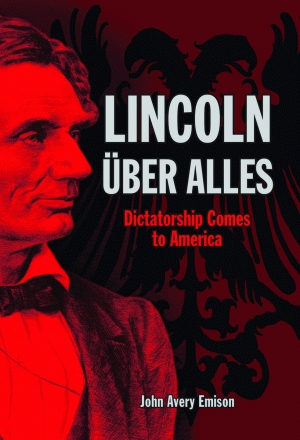
    Buchanans position on secession is described in some detail by John Avery Emison in his new book, Lincoln Über Alles: Dictatorship Comes to America. Its high time that Americans grow up, says Emison, and confront the reality of their own history, as opposed to the childish fairy tales concocted by the court historians of the Church of Lincoln. Source>>>


    Bookmark and Share

    Kentucky Joins Movement to Resist Abuses of Commerce Clause, 2nd Amendment

    10th Amendment Pledge

    In states around the country, there's a growing movement to address and resist two of the most abused parts of the Constitution -- the Commerce Clause and the 2nd Amendment. Already being considered in a number of state legislatures, and passed as law in Montana and Tennessee this year, the Firearms Freedom Act (FFA) is a state law that seeks to do just that.

    The latest to join the FFA movement? Kentucky. Pre-filed for the 2010 legislative session, HB87 seeks to "Create new sections of KRS Chapter 237, relating to firearms, firearm accessories and ammunition that are made in Kentucky, marked made in Kentucky, and used in Kentucky, to specify that these items are exempt from federal law"

    While the FFA's title focuses on federal gun regulations, it has far more to do with the 10th Amendment's limit on the power of the federal government. The bills in state houses contain language such as the following:

    "federal laws and regulations do not apply to personal firearms, firearm accessories, or ammunition that is manufactured in [this state] and remains in [state]. The limitation on federal law and regulation stated in this bill applies to a firearm, a firearm accessory, or ammunition that is manufactured using basic materials and that can be manufactured without the inclusion of any significant parts imported into this state."

    NULLIFICATION

    Some supporters of the legislation say that a successful application of such a state-law would set a strong precedent and open the door for states to take their own positions on a wide range of activities that they see as not being authorized to the Federal Government by the Constitution.

    The principle behind such legislation is nullification, which has a long history in the American tradition. When a state ‘nullifies' a federal law, it is proclaiming that the law in question is void and inoperative, or ‘non-effective,' within the boundaries of that state; or, in other words, not a law as far as the state is concerned.

    All across the country, activists and state-legislators are pressing for similar legislation, to nullify specific federal laws within their states.

    A proposed Constitutional Amendment to effectively ban national health care will go to a vote in Arizona in 2010. Fourteen states now have some form of medical marijuana laws - in direct contravention to federal laws which state that the plant is illegal in all circumstances. And, massive state nullification of the 2005 Real ID Act has rendered the law nearly void.

    ENOUGH IS ENOUGH

    Supporters say the growth of such a movement is long overdue.

    "For far too long elected officials and unelected bureaucrats at the federal level have passively forgotten or actively neglected the Tenth Amendment that guarantees rights not enumerated in the Constitution be left to the individual states," said Minnesota State Rep. Tom Emmer, who introduced an FFA in his state. "The willful disregard of the Tenth Amendment in relation to a citizen's right to bear arms isn't the only constitutional infringement that we should be worried about, but it is one that has been singled out by the new administration."

    "Enough is enough," urged Tennessee State Senator Mae Beavers. "Our founders fought too hard to ensure states' sovereignty and I am sick and tired of activist federal officials and judges sticking their noses where they don't belong."

    LITIGATION

    In October, the Montana Shooting Sports Association (MSSA) and the Second Amendment Foundation (SAF) filed a lawsuit in federal court in Missoula, MT to validate the principles and terms of the Montana Firearms Freedom Act (MFFA).

    "We feel very strongly that the federal government has gone way too far in attempting to regulate a lot of activity that occurs only in-state," explained MSSA President Gary Marbut. "The Montana Legislature and governor agreed with us by enacting the MFFA. It's time for Montana and her sister states to take a stand against the bullying federal government, which the Legislature and Governor have done and we are doing with this lawsuit. We welcome the support of many other states that are stepping up to the plate with their own firearms freedom acts."

    Even the most ardent supporters suggest that the real test will come if the federal courts rule against the FFA. Will they give up at that point, or will they follow in the footsteps of medical marijuana activists around the country?

    The latter faced down nearly the entire federal apparatus -- federal agencies who didn't recognize state law, countless federal raids and arrests, and a Supreme Court that ruled against their cause in 2005. Even with such stacked odds, they persisted in their state-level efforts, and today, enough states have medical marijuana laws that the federal government is unable (or unwilling) to oppose them.

    Only time will tell if gun rights activists have the same courage.

    Source: Campaign For Liberty

    Bookmark and Share

    Friday, November 6, 2009

    Oath Keeper Sheriff Richard Mack


    VIDEO: Oath Keeper Sheriff Richard Mack

    The sheriff is the most powerful law enforcement officer in the US and has the ultimate say in his county. No one supercedes his jurisdiction. The president of the US cannot tell your sheriff what to do, and in that same vein, not one of the auxiliary departments below the president can tell your sheriff what to do. To the contrary, when they are in his jurisdiction, he can tell them what to do. I pray for the day when a sheriff in this country will arrest an IRS agent for trespassing or for trying to victimize citizens in his county….


    Source: Buchanon.Org

    Bookmark and Share