Showing posts with label Cap and Trade. Show all posts

Saturday, July 4, 2009

50 things wrong with Cap and Tax: A Garden of Piggish Delights


Waxman-Markey is part power-grab, part enviro-fantasy. Here are 50 reasons to stop it.

By Stephen Spruiell & Kevin Williamson

T
he stimulus bill was the legislative equivalent of the famous cantina scene from Star Wars, an eye-popping collection of the freakish and exotic, gathered for dubious purposes. The Waxman-Markey cap-and-trade bill, known as ACES (the American Clean Energy and Security Act), is more like the third panel in Hieronymus Bosch’s Garden of Earthly Delights — a hellscape that disturbs the sleep of anybody who contemplates it carefully.


Two main things to understand about Waxman-Markey: First, it will not reduce greenhouse-gas emissions, at least not at any point in the near future. The inclusion of carbon offsets, which can be manufactured out of thin air and political imagination, will eliminate most of the demands that the legislation puts on industry, though in doing so it will manage to drive up the prices consumers pay for every product that requires energy for its manufacture — which is to say, for everything. Second, it represents a worse abuse of the public trust and purse than the stimulus and the bailouts put together. Waxman-Markey creates a permanent new regime in which environmental romanticism and corporate welfare are mixed together to form political poison. From comic bureaucratic power grabs (check out the section of the bill on candelabras) to the creation of new welfare programs for Democratic constituencies to, above all, massive giveaways for every financial, industrial, and political lobby imaginable, this bill would permanently deform American politics and economic life.

The House of Representatives, famously, did not read this bill before passing it, which is testament to either Nancy Pelosi’s managerial incompetency or her political wile, or possibly both. If you take the time to read the legislation, you’ll discover four major themes: special-interest giveaways, regulatory mandates unrelated to climate change, fanciful technological programs worthy of The Jetsons, and assorted left-wing wish fulfillment. We cannot cover every swirl and brushstroke of this masterpiece of misgovernance, but here’s a breakdown of its 50 most outrageous features.

SPECIAL-INTEREST SOPS
1. The big doozy: Eighty-five percent of the carbon permits will not be sold at auction — they will be given away to utility companies, petroleum interests, refineries, and a coterie of politically connected businesses. If you’re wondering why Big Business supports cap-and-trade, that’s why. Free money for business, but higher energy prices for you.

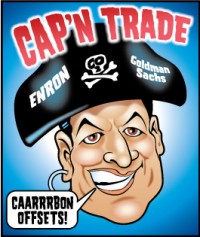
2. The sale of carbon permits will enrich the Wall Street investment bankers whose money put Obama in the White House. Top of the list: Goldman Sachs, which is invested in carbon-offset development and carbon permissions. CNN reports:

Less than two weeks after the investment bank announced it would be laying off 10 percent of its staff, ***Goldman Sachs confirmed that it has taken a minority stake in Utah-based carbon offset project developer Blue Source LLC. . . . “Interest in the pre-compliance carbon market in the U.S. is growing rapidly,” said Leslie Biddle, Head of Commodity Sales at Goldman, “and we are excited to be able to offer our clients immediate access to a diverse selection of emission reductions to manage their carbon risk.”

3. With its rich menu of corporate subsidies and special set-asides for politically connected industries, Waxman-Markey has inspired a new corporate interest group, USCAP, the United States Climate Action Partnership — the group largely responsible for the fact that carbon permits are being given away like candy at Christmas rather than auctioned. And who is lined up to receive a piece of the massive wealth transfer that Waxman-Markey will mandate? Canada Free Press lists:

Alcoa, American International Group (AIG) which withdrew after accepting government bailout money, Boston Scientific Corporation, BP America Inc., Caterpillar Inc., Chrysler LLC (which continues to lobby with taxpayer dollars), ConocoPhillips, Deere & Company, The Dow Chemical Company, Duke Energy, DuPont, Environmental Defense, Exelon Corporation, Ford Motor Company, FPL Group, Inc., General Electric, General Motors Corp. (now owned by the Obama administration), Johnson & Johnson, Marsh, Inc., National Wildlife Federation, Natural Resources Defense Council, The Nature Conservancy, NRG Energy, Inc., Pepsico, Pew Center on Global Climate Change, PG&E Corporation, PNM Resources, Rio Tinto, Shell, Siemens Corporation, World Resources Institute, Xerox Corporation.

One major group of recipients of the free money being given to industry in the form of carbon permits are the electric utilities, represented in Washington by the Edison Electric Institute. Along with the coal and steel businesses, the utilities are positioned to receive a huge portion of the carbon permits — some of which will be disguised as measures for consumers — and have become one of the nation’s highest-spending lobbies, working to ensure that their interests are served by cap-and-trade.

4. To the extent that the allowances actually generate government revenue, that money is going to be used for fraud-inviting projects of dubious environmental or economic value. Example: Some allowance money will be used to “build capacity to reduce deforestation in developing countries experiencing deforestation, including preparing developing countries to participate in international markets for international offset credits for reduced emissions from deforestation.” What are the chances of that being abused?

5. In addition to the permits, the bill also allows for the creation of “offsets” — the medieval-style indulgences of the carbon-footprint world. In fact, nearly all of Waxman-Markey’s carbon-reduction targets can be met with offsets alone through 2050, meaning decades before any actual reduction of greenhouse gases is required. That means huge new expenses for small businesses and consumers in return for basically zero environmental improvement. And how does one earn an offset to sell? Get a farm and cash in through such methods as, and we quote, “improved manure management,” “reduced tillage/no-tillage,” or “afforestation of marginal farmlands.” Translation: Plant some trees around the house and claim some extra credits on the land the government may already be paying you not to farm. And do a better job of handling your B.S. — but you’ll never do as good a job on that one as the authors of Waxman-Markey.

6. Because the cap-and-trade regime will disadvantage domestic refineries vis-à-vis foreign competitors, such as India’s powerhouse Reliance Industries, Waxman-Markey is attempting to buy them off with free permits — 2 percent of the national total will go to domestic refineries, at no cost.

7. Agribusiness is exempted from cap-and-trade controls, but the farm lobby will be given permits to sell and to profit from anyway. All carrot, no stick — precisely what this powerful industry lobby is accustomed to receiving from Washington.

8. Waxman-Markey strips the EPA of its oversight role when it comes to managing the offsets associated with American farms. At the behest of Cargill and other big players in the farm lobby, oversight will be entrusted to the USDA — basically a wholly owned subsidiary of the agriculture cartel, one of America’s most rapacious special-interest groups, which already is stuffed with subsidies and sops.

9. Waxman-Markey directs the EPA to ignore the real environmental impact of ethanol and other biofuels. The gigantic subsidies lavished on the farm lobby through the ethanol program encourage farmers to clear forest land to plant corn — a net environmental loss that the use of ethanol does nothing to offset. An earlier version of the legislation that would have accounted for land-use changes was altered at the farm lobby’s demand. Now, the EPA will be forbidden to rain the same pain on the ethanol gang that it’s going to rain on the rest of the economy — a minimum of five years’ (ahem) “study” is required before a ruling on whether ethanol should be treated the same as any other fuel, and the EPA, USDA, and Congress all must agree to act before Big Corn reaps what Waxman-Markey sows.

10. Rural electrical cooperatives are demanding that the offsets be awarded in proportion to historic emissions, and they probably will prevail. This means that high-polluting generators, such as the coal-fired plants typical of electric co-ops’ members, will be rewarded because they pollute more, while cleaner producers, such as those using nuclear and hydroelectric power, will be penalized.

11. The farm lobby will be rewarded for practices that do little or nothing to reduce greenhouse gases. One such practice is “no till” planting, in which farmers forgo plowing and plant seeds directly into the soil. Two peer-reviewed scientific papers suggest that no-till either does nothing to decrease carbon dioxide or actually increases the level of greenhouse-gas emissions by
upping emissions of nitrous oxide — a much more powerful greenhouse gas. Now it’s not clear that no-till will reduce greenhouse gases, but the practice does make weed-control more difficult, meaning that it supports the market for herbicides such as Monsanto’s RoundUp. Guess who’s spending millions lobbying for no-till?

12. Waxman-Markey provides an excuse for trade protectionism. The bill will give the Obama administration broad new powers to enact tariffs on imports from jurisdictions that have not had the poor sense to enact similar legislation, meaning that it invites both politically driven trade protectionism and retaliatory measures from abroad in the service of an empty green dream. As the New York Times puts it:

A House committee working on sweeping energy legislation seems determined to make sure that the United States will tax China and other carbon polluters, potentially disrupting an already-sensitive climate change debate in Congress. The Ways and Means Committee’s proposed bill language would virtually require that the president impose an import tariff on any country that fails to clamp down on greenhouse gas emissions. Directed primarily at China, the United States’ biggest manufacturing competitor, the provisions aim to protect cement, steel and other energy-intensive industries that expect to face higher costs under a federal emissions cap.

13. Waxman-Markey channels billions of dollars into subsidies for “international clean technology deployment for emerging markets.” David H. McCormick of the Treasury Department recently gave a speech on the establishment of an $8 billion fund for that purpose; those who showed up to gets the specs on this new gravy train included Sequoia Capital, the United Steelworkers Union, the Clinton Climate Initiative, Ernst & Young, Duke Energy, SunPower, Honeywell, Shell, ConocoPhillips, Credit Suisse, Chrysalix Energy Venture Capital, and Goldman Sachs. If you’re wondering who’s going to make real money off of Waxman-Markey, this list would be a pretty good place to start.

14. Naturally, Big Labor gets its piece of the pie, too. Projects receiving grants and financing under Waxman-Markey provisions will be required to implement Davis-Bacon union-wage rules, making it hard for non-union firms to compete — and ensuring that these “investments” pay out inflated union wages. And it’s not just the big research-and-development contracts, since Waxman-Markey forces union-wage rules all the way down to the plumbing-repair and light-bulb-changing level.

NON-CAP MANDATES
15. The renewable electricity standard is the big one here. This would require utilities to supply 20 percent of their power from renewable energy sources (or “increased efficiency”) by 2020. The Senate was unable to pass a smaller mandate in 2007, because favored sources of renewable energy (wind power, for instance) just don’t work in certain regions of the country, and regional blocs can wield a great deal of power in the Senate. These blocs may be less powerful this time around, because the Democrats within them will be under a great deal of pressure to pass this bill. The renewable standard would force utilities to rely increasingly on expensive sources of energy like wind and solar — expensive because they are capital-intensive and must be located far away from urban areas, necessitating long transmission lines. You can thank Congress for adding yet another charge to your monthly utility bill.

16. The bill would create a system of renewable electricity credits similar to the carbon offsets mentioned above — utilities that cannot meet the standard could purchase credits from other utilities. One way or another, however, the cost is getting passed along to you.

17. The renewable standard excludes sources of power like nuclear and coal gasification, and perhaps that’s to be understood. Even though these sources are cleaner than traditional coal-burning plants, they violate a number of green taboos. What’s less understandable is the way “qualified hydropower” is narrowly defined to exclude hydropower from Canada. Again, the thing to remember is that Congress is less concerned with greening the environment and more concerned with greening the pockets of parochial interests.

18. The legislation calls for the establishment of a Carbon Storage Research Corporation (CSRC) to steer $1 billion annually into the development of carbon-capture technologies. The CSRC would be funded via assessments on utility companies. Hear that? It’s the sound of another charge being added to your bill. Evidence suggests that subsidizing research into carbon-capture technology is either futile (in the case of traditional coal-powered plants) or unnecessary (the technology for sequestering emissions from gasification plants already exists).

19. The promotion of carbon capture will require a host of new regulations — the bill calls on the EPA to create a permitting process for geologic sequestration (burying captured carbon emissions in the ground), regulations to keep the buried carbon from escaping into the air, and regulations to keep it from escaping into the water supply. All we need now are carbon guards to throw the carbon in solitary confinement if it gets too rowdy in the prison yard.

20. The bill imposes performance standards on new coal-fired power plants to encourage the adoption of carbon-capture technology. Ratepayers would pay more for electricity because of the efficiency losses associated with carbon capture.

21. The bill regulates every light fixture under the sun. Actually, the sun might be the only light source that isn’t regulated specifically in this legislation. There are rules governing fluorescent lamps, incandescent lamps, intermediate base lamps, candelabra base lamps, outdoor luminaires, portable light fixtures — you get the idea. The government actually started down this road by regulating light bulbs in the 2005 energy bill. This bill merely tightens the regulations, which means the unintended consequences produced by the 2005 bill — more expensive light bulbs that burn out quicker — will probably get worse.

22. The bill extends its reach to cover appliances as well. Clothes washers and dishwashers, portable electric spas, showerheads, faucets, televisions — all these and more are covered specifically in the bill. You thought we were kidding when we said this bill represents the federal government’s attempt to expand its regulatory reach to cover everything. We weren’t.

23. Appliances will be required to come with “carbon output” labels, and retailers will get bonus payments for marketing those that are certified “best-in-class.” The bill sets up a payment schedule to reward the manufacturers of these “best-in-class” products: $75 for each dishwasher, $250 for each clothes washer, and so on. So go out and splurge on that new super-energy-efficient refrigerator — under this bill, you already made a $200 down payment.

24. The bill requires the EPA to establish environmental standards for residences, meaning a federally dictated one-size-fits-all policy for greening every home in America. When you’re retrofitting your home according to EPA guidelines, it will come as little comfort to know that the government is reimbursing you for your troubles, especially if you’re doing the work around April 15.

25. The bill would affect commercial properties, too. In fact, all buildings would be governed by a “national energy efficiency building code” that would require 50 percent reductions in energy use in all buildings by 2018, followed by 5 percent reductions in energy use every three years after that through 2030. No one disputes that these changes will be costly, but Waxman-Markey supporters argue that they will pay for themselves through lower energy bills. This argument holds up only if we assume that energy prices will stay flat or fall over time. But the aforementioned carbon caps instituted elsewhere in this legislation make that prospect highly unlikely. Businesses and homeowners will pay twice — once to retrofit their roosts and again when the energy bill arrives.

26. The bill instructs the EPA to regulate greenhouse-gas emissions from mobile sources such as cars, trucks, buses, dirt bikes, snowmobiles, boats, planes, and trains.

27. It instructs the EPA to cap and reduce greenhouse-gas emissions from non-mobile sources as well. These two items would be bigger news if the Supreme Court hadn’t already cleared the way for the EPA to regulate greenhouse-gas emissions. President Obama will probably move forward on this front even if Congress fails to pass the cap-and-trade bill. He has already announced a strict national fuel-efficiency standard for cars, and the implications for other sources of greenhouse-gas emissions are not good.

28. The bill calls on the EPA to establish a federal greenhouse-gas registry. Businesses would be required to collect and submit data on their emissions to the EPA, creating yet another compliance cost for them to pass on to their customers.

29. The bill undermines federalism by prohibiting states from creating their own cap-and-trade programs. Nearly half of all U.S. states have already taken some sort of action to cap greenhouse-gas emissions by forming regional compacts and implementing their own emission standards. Understandably, these states support a federal cap so that they are not at an economic disadvantage to states that do not cap emissions. If these states want to hamstring their own economies in the pursuit of green goals, that should be their business. States that don’t see any reason to do so should not be forced to share in their folly.

GREEN DREAMS
30. Utility companies are directed to start laying the groundwork for a glorious future in which everyone drives a plug-in car. The legislation directs them to start planning for the deployment of electrical charging stations along roadways, in parking garages, and at gas stations, as well as “such other elements as the State determines necessary to support plug-in electric drive vehicles.” (States are directed to consider whether the costs of planning or the implementation of these plans merit reimbursement. Either way, you wind up with the bill.)

31. The secretary of energy is required to establish a large-scale vehicle electrification program and to provide “such sums as may be necessary” for the manufacture of plug-in electric-drive vehicles, including another $25 billion for “advanced technology vehicle” loans. As if Detroit hadn’t gotten its hands on enough taxpayer money.

32. The bill directs the secretary of energy to promulgate regulations requiring that each automaker’s fleet be comprised of a minimum percentage of vehicles that run on ethanol or biodiesel.

33. It includes loan guarantees for the construction of ethanol pipelines. Nearly every energy bill in the last five years has included loan guarantees for the construction of ethanol pipelines. Apparently, would-be builders of this vital infrastructure are still having problems getting financing.

34. Congress passed (and Obama signed) a “cash for clunkers” program as part of the war appropriations bill this month. Under the program, you get a rebate for trading in a used car for one that gets slightly higher mileage. The Waxman-Markey bill takes this concept and applies it to appliances, electric motors — basically anything that can be traded in for a more energy-efficient version. These types of programs generally fail cost-benefit analyses spectacularly because more energy goes into the production of the new appliances than would have been used if the old ones had just run their course.

35. The bill includes $15 billion in grants and loans to encourage the manufacture of wind turbines, solar energy, biofuel production, and other sources of renewable energy that have benefited from decades of such largesse already. Another $15 billion is not going to make these energy sources cost-competitive. Only carbon rationing can achieve that. One suspects the Democrats know this; that’s why they are pushing a carbon-rationing bill. The $15 billion is just another sop to the green-energy lobby to help grease the skids.

36. The bill establishes within the EPA a SmartWay Transport Program, which would provide grants and loans to freight carriers that meet environmental goals.

37. The bill requires the secretary of energy to establish a program to make monetary awards to utilities that find innovative ways of using thermal energy, as if utilities needed an extra incentive to discover a new, cheap energy source.

38. It includes another $1.5 billion for the Hollings Manufacturing Partnership Program. This program pops up repeatedly in discussions of programs that both liberals and conservatives think should be eliminated. It is corporate welfare, pure and simple.

39. It includes $65 million for research into high-efficiency gas turbines, another gift to the corporate world with little environmental benefit.

40. It includes $7.5 million to establish a National Bioenergy Partnership to promote biofuels. Economic barriers to the commercial viability of biofuel as an energy source have proven to be so insurmountable that even with all of the federal mandates and subsidies already thrown their way, the ethanol companies lined up with everyone else for a federal bailout when the financial crisis hit. The last thing consumers need is another full-time, federally subsidized lobbying arm for that industry.

VARIOUS LEFT-WING WISH FULFILLMENT
41. One of Obama’s most reliable constituencies, college administrators, will be given billions of dollars to play with through the creation of eight “Clean Energy Innovation Centers,” university-based consortia charged with a mission to “leverage the expertise and resources of the university and private research communities, industry, venture capital, national laboratories, and other participants in energy innovation to support cross-disciplinary research and development in areas not being served by the private sector in order to develop and transfer innovative clean energy technologies into the marketplace.” Meaning that the famous business acumen of the federal government will be applied to the energy industry.

42. Another Obama constituency, the community-organizing gang — i.e., ACORN — will be eligible to receive billions in funding as the bill “a
uthorizes the Secretary [of Energy] to make grants to community development organizations to provide financing to businesses and projects that improve energy efficiency.” Think federally subsidized consultants paid $55 an hour to tell businesses to turn down their AC in the summer.

43. Waxman-Markey also enables Obama to indulge his persistent desire to use the tax code to transfer wealth from people who pay taxes to people who don’t — i.e., from likely Republican voters to likely Obama voters. The bill “amends the Internal Revenue Code to allow certain low income taxpayers a refundable energy tax credit to compensate such taxpayers for reductions in their purchasing power, as identified and calculated by the Environmental Protection Agency (EPA), resulting from regulation of GHGs (greenhouse gases).”

44. Not only will Waxman-Markey slip more redistribution into the tax code, it will establish a new monthly welfare check. It will create an “Energy Refund Program” that will “give low-income households a monthly cash energy refund equal to the estimated loss in purchasing power resulting from this Act.”

45. Another new class of government dependents will be created by Waxman-Markey: Americans put out of work by Waxman-Markey. The bill establishes a program to distribute “climate change adjustment assistance to adversely affected workers.”

46. Waxman-Markey will create yet another raft of government dependents, but of a different sort — bureaucrats. The bill creates: a new United States Global Change Research Program, a National Climate Change Adaptation Program, a National Climate Service, Natural Resources Climate Change Adaptation Strategy office at the White House, and an International Climate Change Adaptation Program at the State Department.

47. And since everybody else is getting a check, Bambi gets one, too, in the form of money for “domestic wildlife and natural resource adaptation.”

48. States also get in on the action. The legislation allows each state to set up a State Energy and Environment Development (SEED) account into which the federal government can deposit emission allowances. States can then sell these allowances and use the proceeds to support clean-energy programs. They must set aside a certain amount of the money to fund federal mandates, but they are given broad discretion to use the rest by making loans, grants, and other forms of support available to favored constituencies. It’s federalism, of a sort — the wrong sort.

49. And, of course, everything includes a health-care component, even cap-and-trade. Waxman-Markey requires the Department of Health and Human Services to develop a “strategic action plan to assist health professionals in preparing for and responding to the impacts of climate change.”

50. Waxman-Markey dumps money into questionable “partnerships” and grants to study “emerging careers” in “renewable energy, energy efficiency, and climate change mitigation.” The first career to emerge, of course, will be managing grants to study emerging careers.

That’s our Top 50. We could go on. And on.

When Nancy Pelosi was advising congressmen to back this beast, she said they should not worry about the words of the bill they had not read, but think about four others: “jobs, jobs, jobs, jobs.” The legislation offers Pelosi perverse vindication: Waxman-Markey will create a lot of jobs for Wall Street sharps, Big Business rent-seekers, ACORN hucksters, utility-company lobbyists, grant-writers at left-wing organizations, college administrators, light-bulb-policing bureaucrats, and an army of parasitic hangers-on. It’s up to the Senate to stop it.

Source: National Review Online

Bookmark and Share

Monday, June 29, 2009

Declaring War on the American Economy


By John Steele Gordon

The Cap-and-Trade bill that passed the House yesterday will be a declaration of war on the American economy if it ever is enacted into law. It is ostensibly supposed to help the American economy transition from the old, carbon-based industrial economy to the broad, sunlit (and presumably unpolluted) uplands of a post-industrial one. According to an infomercial masquerading as an AP news story, the “climate bill may spur energy revolution.” Overlooked by the AP and other minions of the left is the fact that that revolution has been underway, largely without the federal government’s help, for more than a generation now. In 1970 a one-percent increase in GDP meant a one-percent increase in oil consumption. Today its means less than a third of one percent increase in oil consumption. It would be considerably less than that had the left not brought the development and exploitation of nuclear power to a screeching halt thirty years ago because too many of them went to see The China Syndrome. (The producers, to be sure, arranged, in a stroke of commercial genius, for the movie to open twelve days before the accident at Three-Mile Island occurred.)

And as Kim Strassel pointed out yesterday in the Wall Street Journal, the so-called science behind this massive bill is looking increasingly shaky.

If it’s enacted in its present form, what the cap-and-trade bill will certainly do is

1) Massively increase federal power not only over the economy but over daily life as well. Building codes have always been the province of the states, but this bill, according to one blogger, would require federally mandated energy audits before you could change a window in your home and specifies the number and location of electrical outlets to be permitted;

2) Start a trade war with India and China by slapping tariffs on goods from countries that don’t conform to US standards on carbon emissions;

3) Act like the governor on a steam engine, increasingly slowing down the economy through energy taxes whenever the economy accelerates. In other words, its virtually guarantees economic stagnation at best. And most economists who are not working for liberals think it will be far more economically pernicious than that.

This last, at least, is in the great tradition of the Democratic Party. The party’s founder, Thomas Jefferson, tried to deal with the high-handed ways of the Royal Navy and French privateers by a blockade–not of their ports, but of ours. Thomas Jefferson, in other words, went to war with the American economy. In a series of acts beginning in December, 1807, that Congress passed at Jefferson’s behest, American merchants were forbidden to trade with any other country on pain of fines of $10,000 and forfeiture of goods. The U.S. Navy was dispatched to help enforce the act by stopping vessels leaving American ports. Port cities (which at that time were all large American cities and many small ones) plunged into depression. Smuggling across the Canadian border grew so extensive that Jefferson actually declared parts of northern New England to be in a state of rebellion. The New England economy came close to collapse as it was then heavily dependent on foreign trade. (The American merchant marine at this time–mostly New England owned and built–was second in size only to Britain’s.)

The Embargo Act was, politically and economically, an utter disaster, as anyone who understood anything about commerce, economics, and human nature could have foreseen. Indeed, Jefferson’s Secretary of the Treasury, Albert Gallatin, did understand and wrote the president, “As to the hope that it may. . . induce England to treat us better, I think is entirely groundless. . . . Government prohibitions do always more mischief than had been calculated; and it is not without much hesitation that a statesman should hazard to regulate the concerns of individuals as if he could do it better than themselves.”

Good advice from a very wise man who did this country many a good service. Too bad Thomas Jefferson didn’t take it. Nor, alas, will his present-day successor if he gets a chance to sign this utterly misbegotten bill.

Source: Commentary Magazine

Sunday, June 28, 2009

Democrats begin to Defect, while a Star Continues to Emerge

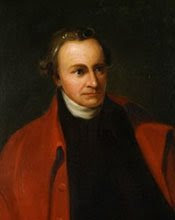
"The Constitution is not an instrument for the government to restrain the people, it is an instrument for the people to restrain the government — lest it come to dominate our lives and interests" - Patrick Henry

Yesterday, 211 Democrats and 8 Republicans in the US House of Representatives voted in favor of one of the largest tax increases in US history. The Waxman-Markey Climate Control Bill, commonly referred to as the Cap-and-Trade bill, will undoubtedly bankrupt American companies, destroy American jobs, create an enormous government bureaucracy, strip away more of our freedoms and significantly raise energy costs on every single American.

Although, it is regrettable that such a bill could ever pass the House; I did take solace in two things. First, 42 Democrats voted against this legislation. That's right, 42 brave souls stood up against Nancy Pelosi, the wicked witch of Washington, and one of her most beloved henchmen, Henry Waxman (commonly referred to as the Rat Man by both his friends and enemies - and for good reason).
Now some of you might say, how is this encouraging? After all, the bill still passed. True, but when was the last time you saw 42 members of the Democratic party go against the wishes of Nancy Pelosi? Even more rare, when was the last time you saw a single Democrat vote against anything having to do with "saving" the world or putting an end to climate change (which, if I might inject here, has been going on since the creation of the world and will continue to go on regardless of what man does to prevent it). This vote shows that many Democrats are coming to the sad (sad for them only) realization that their party, controlled by socialist radicals and nut jobs (i.e. Obama, Pelosi, Reid, Kennedy, etc.), is overreaching (i.e. it's shoving too much down the throats of the American people too fast). As time goes by and the policies of Obama, Pelosi and Reid continue to pit the United States government against the American people, I believe that we will begin to see more and more Democrats defect and go against the bidding of their former masters.
The second promising sign that I took away from last night's vote, is the fact that John Boehner, the House Minority Leader from Ohio, is continuing to emerge as the de facto leader of the Republican Party. Last night, Boehner held the floor for well over an hour, discussing the energy bill and deriding it for the freedom grabbing, tax increasing atrocity that it really is. There were parts of Boehner's speech that were absolutely captivating. So much so, that a noticeably irritated Henry Waxman felt compelled to interrupt Boehner and complain that he was taking too long (heaven forbid anybody read or debate the largest tax increase in American history before voting on it).


As I watched highlights of Boehner's speech, I found myself thinking, "Finally, there's an articulate opposition voice to Obama's policies other than Rush Limbaugh and Mark Levin." I first noticed Boehner's massive potential when he blasted Obama's stimulus package earlier this year in one of the most passionate and entertaining speeches I have ever seen.


These are definitely not the times for weak cowards, and John Boehner doesn't appear to be one.

Doesn't it feel good . . . isn't it refreshing to finally hear someone in America (the land of the free) clearly explain why socialism doesn't work?


Source: Rightbest Blog

Eight Republicans Who Voted For Cap & Trade - With Phone Numbers

rino_big

Yesterday, Cap and Trade passed the House Of Representatives with a vote of 219 vs. 212.

Eight Republicans helped the Democrats make it happen. Had they voted against it, the measure would have failed.

Here are their names, phone numbers, and web addresses. Please feel free to let them know what you think of their votes.

Bono Mack (CA) 202-225-5330 http://bono.house.gov/
Castle (DE) 202-225-4165 http://www.castle.house.gov/
Kirk (IL) 202-225-4835 http://www.house.gov/kirk/
Lance (NJ) 202-225-5361 http://lance.house.gov/index.html
Lobiondo (NJ) 202-225-6572 http://www.house.gov/lobiondo/
McHugh (NY) 202-225-4611 http://mchugh.house.gov/
Reichart (WA) 202-225-7761 http://reichert.house.gov/
Chris Smith (NJ) 202-225-3765 http://chrissmith.house.gov/

Here are the 44 Democrats who had the strength to stand against this idiotic tax increase. Kudos to them for recognizing Obama’s folly and doing the right thing.

ltmire
Arcuri
Barrow
Berry
Boren
Bright
Carney
Childers
Costa
Costello
Dahlkemper
Davis
Davis
DeFazio
Donnelly
Edwards
Ellsworth
Foster
Griffith
Herseth
Sandlin
Holden
Kirkpatrick
Kissell
Kucinich
Marshall
Massa
Matheson
McIntyre
Melancon
Minnick
Mitchell
Mollohan
Nye
Ortiz
Pomeroy
Rahall
Rodriguez
Ross
Salazar
Stark
Tanner
Taylor
Visclosky
Wilson

Source: The Robalution

Boehner: Climate bill a 'pile of s--t'


Minority Leader John Boehner (R-Ohio) had a few choice words about House Speaker Nancy Pelosi's (D-Calif.) landmark climate-change bill after its passage Friday.

When asked why he read portions of the cap-and-trade bill on the floor Friday night, Boehner told The Hill, "Hey, people deserve to know what's in this pile of s--t."

Using his privilege as leader to speak for an unlimited time on the House floor, Boehner spent an hour reading from the 1200-plus page bill that was amended 20 hours before the lower chamber voted 219-212 to approve it.

Eight Republicans voted with Democrats to pass the bill; 44 House Democrats voted against it. Pelosi's office declined to comment on Boehner's jab. But one Democratic aide quipped, "What do you expect from a guy who thinks global warming is caused by cow manure?"

Even though Sen. Majorty Leader Harry Reid (D-Nev.) holds the bill's fate in his hands, House Republicans intend to hammer Speaker Pelosi's signature climate-change measure over recess.

And GOP Conference Chairman Rep. Mike Pence (Ind.) said "we have only just begun to fight” as he left the Capitol Friday night.

Pence encouraged GOP rank-and-file lawmakers to hold energy summits in their districts over the Independence Day recess. In the recess packets sent home with members, he even included directions on how to organize energy summits.

The goal of holding an energy forum is to “educate your constituents about the Democrats’ national energy tax legislation and let them know what 'all of the above' solution you support.”

"All of the above” solution is a reference to the Republicans' plan that would increase the use of and exploration for domestic energy supplies.

Further, officials with the House GOP's campaign arm, the National Republican Congressional Committee, confirm that they will run with paid media over recess in districts of conservative Dems who voted for the bill. The official would not reveal details on the ad buys at this time.

One Democrat was upset that his leaders would needlessly force vulnerable Dems to vote for a bill that will come back to haunt them. Mississippi Rep. Gene Taylor (D) voted against the measure that he says will die in the Senate.

"A lot of people walked the plank on a bill that will never become law," Taylor told The Hill after the gavel came down.

Source: The Hill

Cap and Tr8tors Can Change Vote by July 2 Deadline!


Cap and Tr8tors Can Change Vote by July 2 Deadline!

You have 4 Days left to call your representative!
_______
8 Republicans who voted for Cap and Trade

The following republicans voted FOR the largest tax bill ever passed by a session of Congress.

Any good work they have done has been for naught. Unless they change their votes by the deadline, Wed, July 2nd, they will for ever be a member of the Cap and Tr8tors.

HR 2454 RECORDED VOTE 26-Jun-2009 7:17 PM
BILL TITLE: American Clean Energy and Security Act

#capandtr8tors is the Twitter tag to use on this topic.
_______

http://www.teapartypatrio...

1) Click on their link.
2) Select the 'Contact' tab.
Contact their local office as they are not in DC and home on vacation.

Mary Bono Mack R (CA)
Mike Castle R (DW)
Mark Steven Eirk R (IL)
Leonard Lance R (NJ)
Frank LoBiondo R (NJ)
John McHugh R (NY)
Dave Reichert R (WA)
Chris Smith R (NJ)

Time left for the Cap and Tr8tors to change their vote ...
04 Days, 05 Hours, 03 Minutes, 42 Seconds.

http://www.teapartypatrio...

Source: The Daily Paul

Saturday, June 27, 2009

Ball and Chain= Cap and Trade

The biggest scam of all: Cap and Trade


Vincent Gioia
It is truly amazing that anyone really familiar with the so-called cap-and-trade bill could actually accept this legislation or in Congress, vote for it.

First, it is erroneous to think that it would have any effect on global warming because carbon dioxide is not the cause, it is the effect but unfortunately that battle won in the halls of science is lost in the halls of congress.

Second, it is also erroneous to say that the bill would cut U.S. greenhouse-gas emissions because most "greenhouse-gas emissions" are water vapor - carbon dioxide is a relatively small portion of such emissions.

The House bill is falsely alleged to cut U.S. greenhouse-gas 17 percent below 2005 levels by 2020 and 83 percent by 2050. It would also establish a new Renewable Electricity Standard (RES), which would force utilities to supply a minimum amount of their electricity from renewable energy sources. The result will be: (1) everything used by the public will increase in price because of increased costs to producers from the need to acquire "carbon credits" for their operations will be passed on to consumers and, (2) requiring utilities to change their the means of power production from whatever is being used now to "renewable energy sources," however defined, will necessarily increase the cost of electricity to homeowners because new "sources" will be more expensive to use that currently used fossil fuels.

The bill supposed to result in achieving carbon-dioxide emission targets by establishing a cap-and-trade system, which would require heavy emitters of carbon dioxide, and the oil and gas industry, to buy annual emissions permits from the government or through a secondary market. It is not rocket science to understand that any money spent on acquiring "annual emissions permits" is simply another expense of utilities and by law and public utility regulations in all states public utilities are guaranteed to earn minimum profits since they are regulated monopolies. In order to "earn" their minimum profits, the cost of electricity to consumers, residential and commercial, has to be increased.

The plan, as written by the House Energy and Commerce Committee, would auction a small percentage of the available permits, or allowances, directly to companies. The rest, more than 85 percent, would be given away to selected industries, local utility companies, states and Indian tribes. The idea itself is ludicrous but it would be nice if congress could explain why Indian tribes would be given available permits - surely casinos don't emit much "greenhouse gas", unless you consider cigarette smoke in that category.

Democrats and Republican supporters contended the legislation would help reduce U.S. reliance on foreign oil, increase the use of renewable energy such as solar and wind power and increase employment in clean energy industries. How ridiculous that is. Most oil is used to produce fuel for the transportation industry, cars for example. How will solar power and windmills power automobiles and trucks? Not only that, it has been established that production of renewable fuels such as ethanol consume more energy than produced by the products and also involve substantial emissions of "greenhouse gas," e.g. carbon dioxide. The claim of reducing either reliance on foreign oil or reduction of greenhouse gas is a plain lie.

Obama said "This is a jobs bill" and would increase employment in clean energy industries. There may well be new jobs created but they will be more than offset by the numbers of jobs lost. As manufacturing costs increase businesses will have no choice but to reduce employment as will businesses that depend on those manufactured products. Increased unemployment will also reduce consumer income thereby accelerating the downward spiral of our economy. House Republican Leader John A. Boehner said the bill will cost the economy up to 2.7 million jobs and he may be underestimating the effect.

"When it comes to energy, Washington Democrats, I think, are poised to make matters worse by imposing a job-killing energy tax, courtesy of Speaker Pelosi. This is going to force small businesses and their workers and families to pay more for electricity, gasoline, and other products that are made in America that have high energy content."

The basic idea behind cap-and-trade is simple: Government experts assess how much pollution can be "safely" put into the environment, then shares (sometimes called permits or allowances) equaling that amount are given or auctioned by the government to those who have historically emitted the pollutant. How do you suppose "safe" limits of carbon dioxide can be determined? Will continued emission of carbon dioxide exhaled by us be taken into account?

Polluters then must return to the government enough permits to cover their emissions every year. If they fall short of permits, emitters must buy them from those who have a surplus. The number of permits available decreases annually until a "safe" level of emissions level is reached.

The bill would direct 2 billion free allowances to domestic and international conservation, known as "offsets," which would allow companies to buy emissions permits by effectively paying farmers here and abroad to preserve trees and employ environmental planting practices. I would like to form a business to sell emissions permits by using the money to "preserve trees" by letting them continue to grow; would anyone like to join me?

The legislation would require utilities that provide more than 4 million megawatt hours of electricity a year to buy a certain amount of electricity from renewable sources; thus assuring the cost of electricity will increase.

The amount starts at just 6% in 2012 and gradually increases to 20% in 2020, although utilities could meet up to 8% of the mandate through reduced energy usage by their customers. In other words, the government will figure out some way to make us use less energy (a very broad term) other than by increasing the cost - I wonder what that may me, government controlled thermostats?

Right now renewable energy accounts for about 8.5% of domestic electricity generation, but the House bill's renewable mandate would not recognize all of that as renewable. Hydropower, for example, which makes up a large chunk of current electricity generation, is not all counted as renewable toward the new mandate, nor is geothermal energy.

A new amendment added by speaker Pelosi requires the president to impose trade tariffs on trade partners that do not limit their carbon-dioxide emissions by 2020. To get representatives farm states on board, provisions easing rules on corn-based ethanol production and putting the permit program under the Agriculture Department rather than the Environmental Protection Agency was included.

The bill would have far reaching effects on energy users at all levels of the economy, from giant manufacturers to utilities to individuals. For instance, new government imposed buildings standards would be mandated and some household items will be required to use less energy than they do now. These items include backyard spas, lamps located above art work, drinking-water dispensers and light bulbs in outdoor light fixtures. Are you prepared to live with that?

The bill would force companies to phase out allegedly inefficient products of the kinds described and replace them with allegedly more efficient - and more expensive and less desirable - versions. For example presently used incandescent light bulbs, now costing less than a dollar, will have to be replaced by required compact florescent light bulbs (those curly things), that already cost more and will cost still more in the future when they are the only light game in town.

The bill would also make changes to the government's Energy Star program, which recognizes dishwashers, refrigerators and other appliances that save energy. The tougher standards would mean these "energy saving" products would cost more than regular products and it would take longer for consumers to recoup the extra costs through savings on their energy bill.

"It doesn't do any good to have high-price, energy-efficient products if people will just pay to have their old appliances fixed," said Kevin Messner, vice president of government relations for the Association of Home Appliance Manufacturers.

If you think you can avoid this by repairing older appliances, think again, everything will wear out sooner or later.

Source: American Thinker

Climate Bill's Passage Represents 'nothing more than unrestrained exercise of raw political power, arm-twisting and intimidation'


The U.S. House of Representatives narrowly passed global warming bill (219-212 vote) will no doubt be hailed by many as “historic” or “landmark” or “The Bill of the Century.”

This passage of this bill does not signify any great “green revolution” or “growing” climate “awareness” on the part of Congress. Instead, the methods and manner that the Pelosi led House achieved final passage, represents nothing more than unrestrained exercise of raw political power, arm-twisting, intimidation and special interest handouts.

The House of Representatives passed a bill it did not read, did not understand. A bill that is based on crumbling scientific claims and a bill that will have no detectable climate impact (assuming climate fear promoters are correct on the science and the bill is fully implemented – both implausible assumptions).

Proponents of the bill made spectacular claims in their efforts to impress the urgency of the bill on their colleagues. Democratic Congressman G.K. Butterfield reported claim that the bill “'will literally save the planet” reveals just how out of touch scientifically, politically and economically many of the bill's supporters have become.

To illustrate just how delusional some of the supporters of the bill have became, imagine if in 1909 the U.S. Congress passed a bill attempting to predict climate, temperature and the energy mix powering our national economy in the year 2000. (not to mention sanctimonious claims about "saving the Earth.") Any such attempt would have been ridiculed, but somehow in 2009, attempting to control the economy and climate of the year 2100 is seen as reasonable by many.

If we actually faced the man-made “climate crisis” proponents claim, we would all be doomed if we had to rely on this bill save us. A May 2009 scientific analysis of the bill revealed its temperature impact to be “scientifically meaningless."

Sorry Congressman Butterfield, far from “saving the planet”, this bill will instead be nothing more than all economic pain for no climate gain. (See: Analysis: Climate Bill is 'Scientifically Meaningless' – Temp Reduction By 2050 of Only 9/100 of one Degree F )

Many environmental groups opposed the bill because it failed to actually reduce emissions. (See: Obama's global warming plan would result in U.S. burning MORE coal in 2020 & Greenpeace Opposes Waxman-Markey...'bill chooses politics over science' )

President Obama attempted to call the bill a job creator and proponents cited a Congressional Budget Office report to downplay the cost to Americans. But these arguments failed to hold up under the close light of scrutiny. (See: Rebuttal: Obama Tries to Sell Cap-And-Tax as a Jobs Bill ) Even fellow Democrats failed to parrot these mythical claims. Democrat Congressman John Dingell of Michigan was blunt, calling Cap and trade a "great big" tax in April.

Even Obama advisor Warren Buffett failed to tow the rhetorical line on the climate bill. Buffet came out strongly opposed to cap and trade, saying it would be “a huge, regressive tax.”

The climate bill now moves to the Senate where it faces a much tougher road ahead. The best news of the climate bill's passage is that the American public, which has wholeheartedly rejected man-made global warming fears, will now be awakened to what their representatives in Washington are up to.

Rep. Artur Davis, D-Ala., a member of the Congressional Black Caucus who voted against the bill, realized Americans were not concered about global warming, saying: “There is no public outcry to pass this legislation. It's an institutional push.”

Democrat Congressman Mike Doyle of Pennsylvania reported his constituent calls were “running 9-1 against' the climate bill.

Current polling data reveals that the American people “get it” when it comes to man-made global warming fears. Given the wealth of recent polling data showing Americans are growing increasingly skeptical, Congressmen and Senators are simply not hearing any clamor from voters to "act" to "solve" global warming.

In fact, the opposite is true, voters are rebelling against the unfounded climate fears and the so-called "solutions" in growing numbers. Below is a small sampling of recent polling data on global warming.

1) Gallup survey found global warming ranked dead last in the U.S. among ENVIRONMENTAL issues – March 2009

2) Gallup Poll Editor: Gore has 'Failed' -- 'The public is just not that concerned' about global warming – May 2009

3) Zobgy Poll: Only 30% of Americans support cap-and-trade -- 57% oppose – April 2009

4) "Gallup Poll: Record-High 41% of Americans Now Say Global Warming is Exaggerated" - March 11, 2009

5) Rasmussen Poll found Only 34% Now Blame Humans for Global Warming - 'Lowest finding yet' -- 'reversal from a year ago!'

Now that the bill has cleared the house and heads to the Senate (where they will be preparing their own version of a cap-and-trade bill) the American people will awake to the reality that this purely climate symbolic bill with real economic and lifestyle impacts may actually become law.

An American public that is aware of a “non-solution” global warming bill has the potential to literally shut down Washington with phone calls, emails and faxes. Thus far, global warming bills have been a distant possibility somewhere in the future. With the passage of this bill, it is now game on.

Despite the American people's rejection of warming fears and climate taxes, Congress may persist in pushing them for other non-scientific reasons. Hint, hint. See: Dem. Senator calls cap-and-trade 'the most significant revenue-generating proposal of our time.'

Beyond just economics, lifestyles changes will be in order under the new climate regime. As a June 7, 2009 Washington Post editorial stated: “Why does Congress, and not the market, need to dictate these changes?” The Post noted the climate bill “contains regulations on everything from light bulb standards to specs on hot tubs; it will reshape America's economy.” Also see: 19th Century Living: Under climate plan 'Americans allowed to emit same carbon volumes as citizens did in 1867')

In May, House speaker Nancy Pelosi declared “Every aspect of our lives must be subjected to an inventory” in order to battle global warming and reduce our carbon footprints.

In addition, even the two strongest proponents of man-made global warming fears – NASA's James Hansen and UK's James Lovelock -- are now ridiculing the Congressional cap-and-trade approach as “ineffectual” and “verging on a gigantic scam.” Adding to that, Green Party presidential nominee Ralph Nader has also voiced opposition to cap-and-trade. Remember, these are the words of scientists and activists who believe in a looming human caused climate “crisis.”

Americans are becoming aware that the debate is not "over" as more than 700 prominent international scientists publicly dissenting, including many who are reversing their views on climate fears and declaring themselves skeptical. Americans are becoming aware that there has been no significant global warming since 1995, no warming since 1998 and global cooling for the past few years. As Kimberly Strassel of the Wall Street Journal noted in a June 26, 2009 article, the “Democrats are attempting to “quickly jam the climate bill through Congress because global warming tide is shifting.” The article noted that the “Scientific debate roaring back to life” as the “number of skeptics is swelling everywhere.”

As the Senate considers global warming cap-and-trade legislation that will raise energy prices during a massive economic downturn, curious voters will soon be asking their Senators the following basic questions:

1) What impact will this bill have on temperatures? (Answer: "Meaningless")

2) What will the bill cost? (Answer: Trillions)

3) Why are you voting for a bill that will have huge economic impacts and harm the poor and seniors on fixed incomes the most -- but will not have a measurable climate impact?

4) Why are more and more scientists publicly rejecting man-made climate fears and why has the Earth failed to warm as predicted?

The answers to the above questions will likely cause massive angst with many Democrats, particularly in rust belt states.

These questions will have to be answered as all eyes turn to the U.S. Senate. But, never underestimate the ability of Congress to offer non-solutions to problems that don't even exist.

Stay tuned...


Source: The Climate Depot

Inhofe: Dems should celebrate now because Cap and Trade is dead in the Senate


Pelosi and Barack can do-si-do all night long over the House's passage of the Knee-Cap and Trade bill. But Sen. Jim Inhofe (R.Ok) says the party is over when it gets to the Senate.

From this morning's Countywide News.

Passing President Obama’s “cap and trade” energy program would cost the average Oklahoma family $3,200 a year, Sen. Jim Inhofe said Friday, but he’s confident the measure will be killed in the Senate no matter what happens in the House of Representatives.

The Tulsa Republican, a longtime critic of what he considers “this hoax called global warming,” made his latest statements during a morning stop in Shawnee while House members in Washington were preparing to vote on the controversial issue.

“Between the years of 1998 and 2005, I was the only member of the United States Senate who would take on what I call ‘the Hollywood elitists’ and the United Nations on this hoax called global warming and I went through seven years of purgatory on that issue.

“But now I’ve been redeemed and the vast majority of the scientific community has now said Inhofe’s right and the United Nations is wrong and those individuals … have now said ‘no, the science is not there and these are natural cycles.”

At the time of the interview Friday morning, he said House Speaker Nancy Pelosi was only two votes short of winning and predicted that if she brought the question up for a vote, it would indicate she had found them.

“It doesn’t matter,” he declared flatly, “because we’ll kill it in the Senate anyway.”

Asked if he was confident that would be the case, Oklahoma’s senior senator said he was “absolutely certain.” He noted that it would take 60 votes to break an anticipated Republican filibuster over cap and trade and predicted the most the Democrats can muster is about 34.

Sometimes in America preserving the country from utter devastation literally comes down to a handful of patriotic Americans, and if Inhofe is right, millions of us will be watching for the GOP to be those Americans who stand on the tracks and face down this Global Warming freight train speeding out of the House of Representatives.

Source: Examiner.Com

Friday, June 26, 2009

Arizona Looks to Outlaw Global Warming Legislation


One state looks to ensure its citizens do not have to pay for climate change efforts

Climate change is a controversial topic. Some believe man is causing the world to warm. Others point out that the Earth has undergone solar warming and cooling for millions of years and that current temperatures are well within historic levels. A recent report challenging AGW theory showed significant support with 31,478 U.S. researchers and scientists, many of whom hold Ph.D's, signing a statement that they believe that man has not played a part in the current warming trend.

Arizona is now close to becoming the first state to outlaw climate change legislation. The state Senate voted Monday, 19-10 to approve a bill banning the Department of Environmental Quality from enacting or enforcing measures with language pertaining to climate change. The bill is now awaiting House approval.

The bill will likely pass and be signed into law thanks to a switch in power. Formerly, Janet Napolitano (D) was governor of the state, but she left to join Barack Obama's Cabinet. Napolitano was replaced by Jan Brewer (R), who has not indicated a strong desire to support AGW theorists.

If Senate Bill 1147 passes it will block rules passed by the DEQ that set harsher emission standards. The proposed increases were hastily pushed through by the former governor, despite complaints from industry leaders. It would also end work on "cap and trade" carbon legislation, which has been opposed by the utility industry. Such a scheme could help to raise power prices for the state's citizens significantly.

A passage could also give the state means to challenge the federal government in court over the proposed Waxman-Markey bill, which would put over $1,600 in yearly costs on American citizens to cut carbon emissions. The legislation, which has also received criticism for potentially hurting farmers, is currently making its way through a Democrat controlled House and Senate, awaiting Barack Obama's approval.

by Michael Andrews

Source: The Daily Tech

Stop Cap-and-Trade


Congress could vote on "cap-and-trade," yet another attempt to impose a hidden tax on all of us, at any time. House leadership may not have the votes needed to pass the plan, so it is crucial you voice your opposition to your congressman.

Click here to get contact information for your representative, and urge him to oppose this new tax scheme!

Source: Campaign For Liberty