Showing posts with label Dictatorship. Show all posts

Tuesday, December 8, 2009

When folks swarmed The People's House


WASHINGTON – The folks who sneaked into the president's state dinner are part of a long tradition of people showing up as they please at the People's House. It's just that the tradition vanished ages ago.

Americans staked their claim to the White House in muddy boots on fine carpet, picnicked on the grounds, parked their carriages and then their cars outside and tromped inside to look for the man, often finding him. They did not need invitations, engraved or otherwise.

Many were ordinary people. Others were social climbers, gate crashers, fence jumpers, patronage job seekers, cranks and crazies.

Why so loose? A child's primer from the Civil War explained that there is an essential difference between an imperious monarch and an American president.

"How are emperors and kings protected?" it asked. "By great troops of guards; so that it is difficult to approach them. How is the president guarded? He needs no guards at all; he may be visited by any persons like a private citizen."

Try that now.

Tareq and Michaele Salahi more or less did. The Virginia couple's caper angered President Barack Obama, mortified his troop of guards, left a mum White House social secretary doubtlessly embarrassed and sent ripples of fear through lawmakers that the security breach, if achieved by a malcontent, might have caused a "night of horror," as one put it.

No, it's not the 1800s anymore. Or the 1900s, for that matter.

Thomas Jefferson wanted the Executive Mansion, opened in 1800, to be accessible, not a palace separated from serfs.

Even the idea of stationing guards in and around the complex was considered inappropriate through the 19th century; their presence was only tolerated when the city itself was threatened in wartime.

So says a federal report that reviewed White House security and access after a disturbed pilot crashed his small plane on the grounds and a man sprayed bullets from outside the fence, both in 1994. The report, rich in capturing the history of openness at the White House, was written by a panel that recommended the closing of Pennsylvania Avenue to traffic outside. That happened in May 1995.

Few remember now that until World War II, the public could freely roam the White House property, gates opening to the masses in the morning and closing at night. The attack on Pearl Harbor was one of many events that tightened security several significant notches.

"The gates at the beginning were more to keep cows out than they were to keep people out," said Donald Ritchie, the Senate historian. "This was a very open government and very open city."

Historian Doris Kearns Goodwin cited accounts of "backwoodsmen with their muddy boots standing in line with diplomats."

Abraham Lincoln welcomed visitors who routinely lined up for hours seeking employment, Goodwin said in an interview. When his secretary told him, "you don't have time for these ordinary people," he is said to have replied "You're wrong." He considered the visitors his "public opinion baths."

Facing frequent death threats, Lincoln used policemen in plain clothes with concealed arms to serve as "doormen" in the mansion, while uniformed guards were posted outside.

His bodyguard at Ford's Theatre had left his post, either to drink at a nearby saloon or watch the play from the gallery, when John Wilkes Booth fatally wounded the president.

Despite the assassination, access eased again after the Civil War.

In a ritual that lasted through the first quarter of the 20th century and the assassinations of James A. Garfield and William McKinley, presidents and their wives would come to the East Room most days to say hello to members of the public who had stopped by. Edith Roosevelt, Teddy's wife, used to say life in the White House was like living above the store because average people came in so easily, Ritchie said.

For all the assaults on presidents, none has been injured by an intruder actually on the property.

It's a wonder.

The British torched the house in 1814 after President James Madison had fled. Chaotic, drunken crowds spilled into the residence for the inaugural reception of Andrew Jackson in 1829, forcing the president to escape.

Several drivers literally gatecrashed and got through in their vehicles until 1976, when reinforced gates replaced old wrought iron ones. A man tested the new defenses in his pickup, slamming into the gates at 25 miles an hour. They didn't buckle. Now, obstacles prevent vehicles from getting that far.

In 1994, a deranged pilot slammed his plane into the lawn when President Bill Clinton wasn't home, and another man fired a semiautomatic assault rifle, hitting the North Facade and puncturing a West Wing window while Clinton was elsewhere in the complex.

The people protected the People's House that day — three nearby citizens subdued the gunman before authorities got to him.

Today, people still tour White House staterooms, submitting advance requests through members of Congress. It's a faint echo of the ethic willed down from the ages that the people have a right to be there.

The husband and wife who slipped into the Nov. 24 state dinner were better dressed than the drop-bys of old, but caused more of a stir.

Commenting on the open mansion of the early 1800s, the author James Fenimore Cooper wrote: "I have known a cartman to leave his horse in the street and go to a reception room to shake hands with the President.

"He offended the good taste of all present," he went on, "because it was not thought decent that a laborer should come in dirty dress on such an occasion; but while he made a trifling mistake in this particular he proved how well he understood the difference between government and society."

Cooper meant that the ragged cartman did not belong in high social circles but very much belonged in that room with the president — his political equal.

Source: Yahoo News

Bookmark and Share

Friday, December 4, 2009

Is Obama Really Hypocritical on Signing Statements? Yup.


Was I unfair in calling Barack Obama “hypocritical” in issuing his (otherwise sensible and constitutional) signing statements last week? Hypocrisy is a strong charge. On the other hand, Obama explicitly denounced the “theory of George Bush that he can make laws as he is going along” by using signing statements and then flatly promised not to use any such statements when in office. See for yourself.


So maybe hypocrite is not so hyperbolic in this context. Is there any defense for Obama? Not really.

It is true that his entire OLC team has been on the record in favor of certain signing statements and the President’s power to ignore unconstitutional statutes. On the other hand, a high-profile ABA Task Force, including folks like Harold Koh and Kathleen Sullivan, did categorically denounce ALL signing statements of the kind that President Obama recently produced (he’s already got six so far, about one per month). The ABA as a whole has adopted the report and ABA Presidents routinely denounced President Bush’s use of such signing statements as “contrary to the rule of law” and ignoring “fundamental principles” of separation of powers. (In other words, they sounded like Obama used to, before he became President). Charlie Savage of the NYT won a Pulitzer for writing about Bush’s supposedly abusive use of signing statements during the Bush era. Will this same crowd go after President Obama as well? Well, four days have passed (and four months have passed since Obama’s first signing statements back in March as John Elwood at Volokh has documented) and, as far as I can tell, Koh, Sullivan, and the ABA remain mum.

Source: Opinio Juris

Bookmark and Share

Friday, November 13, 2009

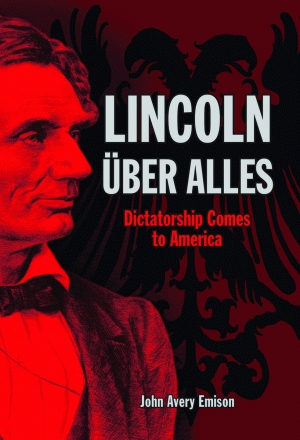
When Dictatorship Came to America


The presidential oath of office contains a pledge to defend and protect the Constitution of the United States, and by implication the liberties of the American people that the document is intended to preserve. In light of this, can you name which of the delegated powers in the U.S. Constitution allow the president to invade his own country, mass murder his own American citizens, and bomb, burn and plunder their cities? Can you explain how such acts would be consistent with protecting the constitutional liberties of those unfortunate citizens? If you think you can, then congratulations, you are a Lincoln Scholar. If not, do not despair. You are in decent company, including the five living past presidents as of 1861, namely, Martin Van Buren, John Tyler, Millard Fillmore, Franklin Pierce, and James Buchanan. Lincolns predecessor, President James Buchanan of Pennsylvania, stated the truth when he said the following:

Has the Constitution delegated to Congress the power to coerce a State into submission which is attempting to withdraw . . . from the Confederacy [of states]? If answered in the affirmative, it must be on the principle that the power has been conferred upon Congress to declare and to make war against a State. After much serious reflection, I have arrived at the conclusion that no such power has been delegated to Congress or to any other department of the federal government (Senate Journal, 36th Congress, 2nd Session, 4 December 1860, 15–16).

Unlike Lincoln, James Buchanan was a constitutionalist. His opinion that a president has no constitutional right to invade his own country and murder his fellow citizens has relegated him to the bottom of every ranking of American presidents by the American history profession for generations. This doesnt mean he was wrong, only that a large segment of the history profession is hopelessly corrupt. Buchanan understood, as did nearly everyone prior to Lincoln, that the states did not give up any of their sovereignty when they ratified the Constitution; they merely delegated several distinct powers to the central government that was designed to act for their mutual benefit.

Buchanans position on secession is described in some detail by John Avery Emison in his new book, Lincoln Über Alles: Dictatorship Comes to America. Its high time that Americans grow up, says Emison, and confront the reality of their own history, as opposed to the childish fairy tales concocted by the court historians of the Church of Lincoln. Source>>>


Bookmark and Share

Tuesday, August 11, 2009

Obama’s Embrace of a Bush Tactic Riles Congress


WASHINGTON — President Obama has issued signing statements claiming the authority to bypass dozens of provisions of bills enacted into law since he took office, provoking mounting criticism by lawmakers from both parties.

President George W. Bush, citing expansive theories about his constitutional powers, set off a national debate in 2006 over the propriety of signing statements — instructions to executive officials about how to interpret and put in place new laws — after he used them to assert that he could authorize officials to bypass laws like a torture ban and oversight provisions of the USA Patriot Act.

In the presidential campaign, Mr. Obama called Mr. Bush’s use of signing statements an “abuse,” and said he would issue them with greater restraint. The Obama administration says the signing statements the president has signed so far, challenging portions of five bills, have been based on mainstream interpretations of the Constitution and echo reservations routinely expressed by presidents of both parties.

Still, since taking office, Mr. Obama has relaxed his criteria for what kinds of signing statements are appropriate. And last month several leading Democrats — including Representatives Barney Frank of Massachusetts and David R. Obey of Wisconsin — sent a letterto Mr. Obama complaining about one of his signing statements.

“During the previous administration, all of us were critical of the president’s assertion that he could pick and choose which aspects of Congressional statutes he was required to enforce,” they wrote. “We were therefore chagrined to see you appear to express a similar attitude.”

They were reacting to a statement Mr. Obama issued after signing a bill that expanded assistance to the International Monetary Fund and the World Bank while requiring the administration to pressure the organizations to adopt certain policies. Mr. Obama said he could disregard the negotiation instructions under his power to conduct foreign relations.

The administration protested that it planned to carry out the provisions anyway and that its statement merely expressed a general principle. But Congress was not mollified. On July 9, in a bipartisan rebuke, the House of Representatives voted 429 to 2 to ban officials from using federal money to disobey the restrictions. And in their July 21 letter, Mr. Frank and Mr. Obey — the chairmen of the Financial Services Committee and the Appropriations Committee — asked Mr. Obama to stop issuing such signing statements, warning that Congress might not approve more money for the banking organizations unless he agreed.

In March, Senator Charles E. Grassley, Republican of Iowa, sent Mr. Obama a letter criticizing a signing statement that challenged a statute protecting government whistle-blowers who tell lawmakers privileged or “otherwise confidential” information. He accused Mr. Obama of chilling potential whistle-blowers, undermining the intent of Congress in a way that violated his campaign promises. The White House said it intended only to reaffirm similar reservations made by previous presidents.

Other laws Mr. Obama has said he need not obey as written include format requirements for budget requests, limits on whom he may appoint to a commission, and a restriction on putting troops under United Nations command.

After Mr. Bush transformed signing statements from an obscure tool into a commonplace term, Mr. Obama’s willingness to use them has disappointed some who had hoped he would roll back the practice, not entrench it.

“We didn’t think it was an appropriate practice when President Bush was doing it, and our policy is such that we don’t think it is an appropriate practice when President Obama is doing it,” said H. Thomas Wells, who just stepped down as president of the American Bar Association.

In 2006, the association called the practice unconstitutional and said presidents should veto legislation if it had flaws, giving Congress a chance to override the pronouncements.

But other legal experts argued that signing statements were lawful and appropriate because it was impractical to veto important bills over small problems. Among them, Walter Dellinger, who helped develop the legal framework for signing statements as a Clinton administration official, said Mr. Obama was using the mechanism appropriately, and the problem with Mr. Bush’s statements was that he cited dubious legal theories.

“The fact that a previous or subsequent president might refuse to comply with laws that are valid is not a reason for this president to decline to assert his authority with regard to laws that are invalid,” Mr. Dellinger said.

Mr. Dellinger signed a 2006 essay defending signing statements with other former Clinton officials, including David Barron and Martin Lederman, who now run the Justice Department’s Office of Legal Counsel. They work with White House lawyers Daniel Meltzer and Trevor Morrison, along with Office of Management and Budget officials, to produce Mr. Obama’s statements.

Since the 19th century, presidents have occasionally signed bills while calling a provision unconstitutional. But the practice was rare until President Ronald Reagan. He and his successors, including Bill Clinton, began issuing signing statements much more frequently and challenging far more provisions.

The practice peaked under Mr. Bush, who challenged nearly 1,200 provisions of bills over eight years — about twice the number challenged by all previous presidents combined, according to data compiled by Christopher Kelley, a Miami University of Ohio professor.

Mr. Obama has attached signing statements to 5 of the 42 bills he has signed, focusing on 19 specific provisions. He also challenged, without listing them, “numerous provisions” in a budget bill requiring officials to obtain permission from a Congressional committee before spending money. It contained dozens of such requirements.

In the presidential campaign, the Republican nominee, Senator John McCain of Arizona, promised never to issue a signing statement. By contrast, Mr. Obama said it was a legitimate way “to protect a president’s constitutional prerogatives” when used with greater restraint than Mr. Bush.

“Restraint,” Mr. Obama and his campaign said then, included not issuing “signing statements that undermine the legislative intent” or “nullify or undermine Congressional instructions as enacted into law.”

But in March, when he issued a presidential memorandum on signing statements, Mr. Obama defined restraint as citing only “interpretations of the Constitution that are well founded,” a subtle shift that provides greater leeway.

Still, unlike Mr. Bush, Mr. Obama has not mentioned the Unitary Executive Theory, an expansive view of executive power that conflicts with Supreme Court precedent. His only invocation of his commander-in-chief authority was limited, taking aim at a requirement that he get permission from a military subordinate before taking an action.

“He has not pushed the envelope as far as the Bush administration in making the kind of claims that Bush made,” said Phillip Cooper, a Portland State University professor who studies signing statements. “But he is still using it in ways that were controversial before George W. Bush came to office.”

Source: New York Times
Bookmark and Share

Friday, July 17, 2009

Cheney ‘ordered CIA to hide plan’


Former US Vice-President Dick Cheney gave direct orders to the CIA to conceal an intelligence programme from Congress, US media reports say.

The existence of the programme, set up after 9/11, was hidden for eight years and even now its nature is not known.

CIA director Leon Panetta is said to have abandoned the project when he learnt of it last month.

He has now told a House committee that Mr Cheney was behind the secrecy, the unnamed US sources say.

There has been no comment from Mr Cheney.

War of words

The claims come amid an increasingly bitter row between the CIA and Congress over whether key information was withheld about other aspects of the agency’s operations.

House Speaker Nancy Pelosi has claimed that the CIA misled her about interrogation methods including waterboarding, while other senior Democrats have quoted Mr Panetta as admitting that his agency regularly misled Congress before he took office.

Details of the newly-revealed secret programme have still not been divulged, but sources say it did not relate to the CIA’s rendition programme, interrogation methods or a controversial domestic surveillance project.

Officials quoted by the New York Times say the programme was launched by anti-terror operatives at the CIA soon after the 2001 attacks, and involved planning and training but never became fully operational.

Another unnamed official told AP it was an embryonic intelligence-gathering effort, aimed at yielding intelligence that would be used to conduct covert operations abroad.

Sources have told a number of US media outlets Mr Cheney personally instructed the CIA to withhold information about the programme from Congress.

Mr Panetta - who took over directorship of the CIA under President Obama’s administration - is said to have learnt about the programme only on 23 June.

The next day he called an emergency meeting with congressional intelligence committees to tell them about its existence and to say that it was being cancelled, the reports say.

Veto threat

The allegations come as Democrats in Congress are trying to push through new rules that would increase the number of members of Congress who are told about covert operations.

The White House is threatening to veto the bill, fearing that operational secrecy could be compromised.

The CIA has not commented on the reports of Mr Cheney’s role.

“It’s not agency practice to discuss what may or may not have been said in a classified briefing,” said spokesman Paul Gimigliano.

“When a CIA unit brought this matter to Director Panetta’s attention, it was with the recommendation that it be shared appropriately with Congress. That was also his view, and he took swift, decisive action to put it into effect.”

A CIA spokesman insisted earlier this week that “it is not the policy or practice of the CIA to mislead Congress.”

SOurce: RINF News

Bookmark and Share

Thursday, July 9, 2009

Beware William Tell's Second Arrow


William Tell, seen here immortalized in bronze next to a likeness of his son, is a hero not just to Swiss patriots, but to all those in whom the desire for freedom is irrepressible.


"You Swiss are so proud of your 500,000-man citizen militia.... But what will you do if a 1,000,000-man German Army comes marching across your border?"

"That's easy. Each of us will shoot twice, and go home." --


A reported conversation between a German and a Swiss diplomat, circa 1939.


Seven hundred years ago, when Switzerland was under the domination of the Hapsburgs, a dissolute colonial overlord named Hermann Gessler sought to humiliate the residents of Altdorf, the capital of the central Swiss canton of Uri.


Gessler instructed his minions to erect a tall pole in the town square, at the top of which would be displayed his cap. Every Swiss man who entered the square would be required to pay fealty to Gessler, and the foreign imperial power he represented, by bowing before his cap.


One local resident, a man who distinguished himself by both his virtuosity with a crossbow and his contemptuous hostility toward bullies. Trying to force him to genuflect before another man, let alone his empty cap, would be a bit like trying to relocate the Matterhorn one shovel-full at a time. So while others prostrated themselves before Gessler's headwear, William Tell stood erect, burly arms folded across his broad chest, slowly shaking his head as his derisive laughter echoed through the town square.


Tell's defiance became known to Gessler, as did his reputation as a marksman. The Hapsburg stooge was worried about the possibility of Tell's rebellion becoming contagious. Endowed with the vicious creativity that so often replaces character in creatures of his kind, Gessler abducted Tell's young son, forcing William to leave his mountain home and stand before him.


Gessler told Tell that his son would be placed in the town square with an apple atop his head. Tell was placed at a considerable distance from his son and told that he was to shoot the apple from his child's head; failure to do so on his first shot would bring about the death of his son at the hands of Gessler's soldiers.


According to the legend, Tell hestitated not at all in fitting an arrow to his crossbow and letting fly, cleaving the apple without harming his child.


Tell's feat, and the composure with which he carried it off, were sufficient to impress even the porcine, self-enraptured Gessler.


As Tell collected his son and turned to leave, a second arrow fell from his coat. Noticing this, a puzzled Gessler asked Tell why he'd bothered to grab a second arrow, since the first shot would either have succeeded or brought about the death of his son.


Fixing the despot with an unflinching stare, Tell replied: "That second arrow was for you, if the first had wounded my boy."


Not long afterward, Tell's second arrow found its intended destination as Tell and his countrymen rose up against the foreign occupation, leading to the eventual creation of the Swiss Confederacy in the late 13th Century
.


A true citizens' militia and its leader: Henri Guisan, appointed commander-in-chief of the Swiss militia during WWII, inspects the troops. Thanks to Guisan's leadership and strategic vision, Switzerland deterred a planned Axis invasion and was able to remain independent during the European bloodletting.

Owing to its tradition of resolute individualism, the unexcelled marksmanship of its citizen militia, and its decentralized political system, the Swiss have managed to avoid entanglement in the affairs of other nations and independence from foreign domination.


Efforts have been made to break Switzerland to the saddle of "internationalism": In 1798, the French revolutionary army invaded and occupied Switzerland, inflicting on it a centralized "Helvetic Republic" that lasted five years.


In 1939, as recounted in Stephen P. Halbrook's book Target: Switzerland, the German military drew up plans to invade and occupy Switzerland in the mistaken belief that its citizen militia would be no match for the Wehrmacht.


Under the leadership of Colonel Henri Guisan (at the time, it was the tradition that no officer would be appointed "general" unless the country actually went to war), the militia prepared a strategy called the "national redoubt": In the event of a German invasion, the militia would retreat into a series of fortified installations in the Alps and wage unremitting guerrilla war for as long as it took to drive the invaders from their land.


Confronting the prospect of fighting an entire country under arms, and horrified by the price that would be paid to pry the Swiss militia from its Alpine redoubts, the German High Command decided to leave Switzerland alone. What this means, of course, is that Switzerland actually won its war without suffering the hideous losses inflicted on any of the combatant nations.


A decade ago, another campaign -- this one more subtle than threats of military occupation -- was mounted to destroy Swiss independence. Beginning in 1997, Switzerland, which rescued tens of thousands of Jews from the Holocaust, was besieged by spurious claims that its renowned banking system was hoarding gold stolen from victims of the Nazis.


Stories were put into circulation describing the cynical heartlessness of banking officials in turning away aging survivors of Nazi cruelty; those stories invariably proved to be as substantial as cotton candy and as reliable as Jim Cramer's investment advice.


Nonetheless, a global campaign of defamation and invective, spearheaded by the coprogenetic Edgar Bronfman Sr. and eagerly abetted by the Clinton administration, indelibly branded the Swiss as Holocaust profiteers, thereby setting the stage for a shake-down that continues to this day.


No matter that on three prior occasions -- in 1946, as a result of the post-WWII Washington Accord; in the mid-1950s; and in 1962 -- the Swiss banking industry had conducted comprehensive, diligent, and transparent investigations regarding its wartime gold holdings.


Nor did it matter that the Clinton administration's inquiry actually exonerated the Swiss of claims that they had hoarded "victim gold" stolen from Jews who suffered and perished at the hands of the Nazis. The defamation campaign succeeded in prying some $14 billion worth of gold from the Swiss treasury and -- more importantly -- inducing the Swiss electorate to enact a new constitution that (among other dreadful features) repudiated the link between the Swiss franc and gold.


The Imperial Regime in Washington apparently believes it has reduced the heroic Swiss to a state of subservience, because its most recent demands savor of the same arrogant, unwarranted self-assurance that led Herr Gessler to place his hat atop the pole in Altdorf's town square.

This is the ugliest spot in Switzerland. I'm kidding, sort of.

Last year, Washington tried to impose a $780 million fine on the Swiss for their refusal to enforce U.S. tax laws within their own country.

Next week, the Regime intends to press its claims in court -- that is, in its own courts -- in the hope of forcing the Swiss to turn over confidential information on some 52,000 Americans who have private accounts protected by Swiss law.


To their eternal credit, and the benefit of those who cherish freedom everywhere, the Swiss are responding to Washington's imperial bullying with the equivalent of William Tell's laughter, augmented by an upraised middle digit.


Earlier this year, the Swiss People's Party (SVP) began a campaign urging their fellow citizens and elected leaders to resist Washington's imperial blackmail. After the Swiss government capitulated in late February to Washington's demand to pay a $780 million fine and disgorge the names of Americans who had opened private banking accounts, the SVP -- the nation's largest political party, which combines tradtionalist populism with enticing hints of libertarianism -- angrily demanded the repatriation of Swiss gold stored in the Swiss National Bank in the U.S.


The party also demanded a ban on the sale of U.S. commercial and government bonds in Switzerland (a sound proposal, if only because the sale of fraudulent financial instruments is a crime), an end to the Swiss government's role as a diplomatic intermediary between Washington and various national governments disinclined to act as U.S. colonies, and a refusal by Geneva to help Washington free itself from the tarbaby it created at Gitmo by taking in detainees freed from the detention facility.


Not everything about the SVP is entirely commendable, but in mounting this pressure campaign it was acting squarely in the noble tradition of William Tell and Henri Guisan. And the party's efforts may have helped the Swiss political class regain its backbone and virility: The Swiss government has announced that it will forbid UBS AG to comply with any order from the US central government requiring it to surrender confidential banking information -- and that Swiss authorities would seize that information, if necessary.


Already, major Swiss banks have announced that, of necessity, they will no longer accept American clients because of disclosure and paperwork requirements being pressed on them by Washington's commissars for international wealth extraction.


These extraordinary measures, notes Bill Bonner, are being undertaken by Swiss officials in order to preserve their country's traditional role "as a protector of foreigners' money." To that end, as well as the protection of its own citizenry and their economic interests, the Swiss are "sharpening their knives and tightening their borders," Bonner writes. That is to say, they seem to be recovering a hint of the intransigent patriotism that led them to evict the Hapsburgs, throw of Bonaparte's yoke, and stare down the Wehrmacht.


Washington, the focus of evil in the modern world, is displaying the behavior we would expect terminally corrupt collectivist kleptocracy: It needs revenue to satisfy its retinue of parasitic constituencies, has the power to seize it in defiance of the law, and believes that all people everywhere should genuflect before its demands. It is behaving pretty much the way Gessler did before he was brought down by Tell's second arrow.


Wouldn't it be delicious if Switzerland's resistance proved to be the precipitating event that brought down Washington's wretched empire of debt and deceit?

Source: Pro Libertate
Bookmark and Share

Monday, June 29, 2009

European Union's Lisbon Treaty fuels flames of dissent across continent


The Lisbon Treaty is expected to take a key step towards becoming law across the European Union this week when Germany's highest court rules that it is broadly compatible with the country's constitution.

The much-anticipated judgment will mean that only three out of the EU's 27 member states will still have to complete formal ratification of the treaty - Poland, the Czech Republic and Ireland.

The former two countries merely need their presidents' signatures on the legislation to finalise the process. Ireland, where voters rejected the Treaty last year, will stage a new referendum in October - with the government increasingly confident of a "Yes" vote this time round after the EU assured Ireland of its independence over taxation, security, defence, abortion, and workers' rights.

Politicians across Europe are now looking forward to a day when the controversial treaty gives the EU more streamlined institutions - with greater central power and, for the first time, a new "President of Europe" to represent all the member states around the world.

In Britain, the government has refused demands for a referendum - despite a pledge in Labour's 2005 general election manifesto to hold a public vote on the Lisbon Treaty's predecessor, the European Constitutional Treaty, which collapsed after being voted down in France and the Netherlands.

Recently, however, it has been the Conservatives who have faced difficulties on the treaty. Both David Cameron and William Hague, the Eurosceptic shadow foreign secretary, have publicly pledged that, even if the treaty completes its ratification process in October with an Irish "Yes" vote, they "will not let matters rest."

Kenneth Clarke, the pro-Brussels shadow business secretary, stirred up a hornets' nest by claiming that his party's "settled policy" was not to reopen the treaty once it became law. His comments led to Mr Cameron privately reassuring Tory backbenchers that the party was not softening its tough line on Europe, as revealed by The Sunday Telegraph last week.

Internal Tory troubles over Europe were also heightened last week when the party announced details of its new allies in a new "anti-federalist" group in the European parliament which sees the Tories sitting alongside politicians from a range of parties - mainly from Eastern Europe - some of which have uncomfortable views on homosexual rights and immigration.

The group represents eight countries - above the seven-nation threshold required to receive funding and staffing from the parliament.

The announcement was made on the same day as the election of the new Speaker of the House of Commons - attracting criticism that Mr Cameron was seeking to divert attention away from his new alliance in Strasbourg.

Last week a Finnish Euro-MP pulled out of the 55-strong grouping, which includes 26 Tories and is expected to be the fourth biggest alliance in the newly elected parliament, because some of its members were "too extreme."

Hannu Takkula told The Sunday Telegraph that his British colleagues were not the problem and added: "Some other groups have policies that are too extreme and policies that are too much against Europe."

Two of the parliamentary grouping's members used to belong to the far-right League of Polish Families, which supports capital punishment, and whose youth wing has been accused of attacking gay rights marches. Another MEP in the group, from Latvia, belongs to a party which supports an annual march commemorating former Latvian members of the Waffen-SS.

While the Tories ponder their uncomfortable new European bedfellows, leaders of some of Europe's separatist movements are celebrating the progress of the treaty towards full ratification. They are convinced that the more powerful the EU's own institutions become, the weaker the nation state - and the stronger the case for granting breakaway regions their independence.

The European Union has always had a strong hold over regional policy - including supplying funding - and regional leaders across the continent sense a fresh shift towards breakaways. Regions will have, for example, powers to challenge decisions at the European Court of Justice for the first time, rights which have so far been the preserve of national parliaments. Some 300 different regions already have offices in Brussels.

As well as these greater powers, the proliferation of even smaller states among some of the EU's newer members - including Slovakia and Slovenia - is encouraging those fighting for local independence elsewhere.

Source: The Telegraph