Showing posts with label UK. Show all posts

Thursday, February 11, 2010

UK recruits army of child spies to report on ‘anti-social neighbours’


Child spies will be encouraged to report their neighbours as part of the latest drive to cut thuggery and anti-social behaviour on estates.
As part of a campaign launched yesterday, youngsters will look for residents with untidy or litter-strewn surroundings and then try to persuade them to clean up their homes.


Bookmark and Share


Judge calls MI5 “devious, dishonest and complicit in torture”


MI5 faced an unprecedented and damaging crisis tonight after one of the country’s most senior judges found that the Security Service had failed to respect human rights, deliberately misled parliament, and had a “culture of suppression” that undermined government assurances about its conduct.


Read The Rest Here


Bookmark and Share


Friday, February 5, 2010

Taxi drivers ordered to remove the Cross of St George from their cabs


Taxi drivers ordered to remove the Cross of St George from their cabs

Over at the Express, a really quite disgraceful story. Apparently, taxi passengers in Southampton had complained foreign drivers could not understand English. So a group of drivers put St George’s Cross stickers in their cars, bearing the slogan “English Speaking Driver”.
Southampton Council has called them racists, and said that they will remove their licences.


Bookmark and Share


Saturday, January 30, 2010

UK.gov uses booze to lure London kids into ID scheme

By John Oates

Young people in London are getting the chance to get their hands on an ID card, the lucky so-and-sos.

The next stage of the Home Office's attempts to get the cards accepted is to target those privacy-..disregarding, Facebook-..obsessed youths in the capital. People aged between 16 and 24 years old who hold a current or recently expired passport can apply for a card from 8 February.

Read The Rest Here


Bookmark and Share

Friday, January 29, 2010

How the march of officialdom is destroying cherished ways of life

A man in Ayr is facing a criminal trial after he was "caught" blowing his nose behind the wheel of his car.

Michael Mancini was given a £60 fixed penalty notice after a policeman decided he was "not in control of his vehicle" when he wiped his nose with a tissue. Mancini maintains that he was in stationary traffic and had put his handbrake on. He refused to pay the fine, and will now face a trial later this year.

This isn't a one-off, by any means (indeed, the policeman who gave Mancini his ticket was PC Stuart Gray – who recently issued a £50 fixed penalty to a man who accidentally dropped a £10 note in the street). It's symptomatic of life in this country today, which is fast becoming so illiberal that it's almost as if normal life is unlawful.

Read The Rest Here

Bookmark and Share

Sunday, December 20, 2009

Every parent a suspect


..
..The criteria have changed slightly, but the Vetting and Barring Scheme still creates an atmosphere of suspicion and fear"Soft intelligence" is the phrase used by the head of the Independent Standards Authority (ISA), Sir Roger Singleton, in explanation of the sort of information his quango will seek to vet 9 million people who have contact with children. It's a pity this ghoul of bureaucratic suspicion doesn't use the more easily understood words of "rumour" and "unfounded and malicious gossip" because that is what soft intelligence is. It will not be proven by a court or any kind of formal hearing but will linger like a bad smell around the names of many innocent people, who of course will not be able to challenge the decisions of the ISA.

Read The rest Here


Bookmark and Share

Saturday, December 12, 2009

London Police Continue War Against Photography


The promise to ease up on photographers in the United Kingdom has turned out to be just another government LIE. Police in London are continuing their war against photography as evidenced by this video.

According to the photographer who was a working journalist:

It had taken less than two minutes from the first click of my camera. My subject was the Gherkin, an iconic London landmark photographed hundreds of times a day and, as it turned out, the ideal venue to test claims from a growing number of photographers claiming they cannot take a picture in public without being harassed under anti-terrorist laws. [...]

By the time they looked at my images, threatening me with arrest for obstruction if I didn’t show them, the officers had stopped a second photographer.

Read The Rest At Orwell's Dreams

Bookmark and Share

Terror police to monitor nurseries for Islamic radicalisation

by Alex Ralph and Sean O’Neill

Nursery-age children should be monitored for signs of brainwashing by Islamist extremists, according to a leaked police memo obtained by The Times.

In an e-mail to community groups, an officer in the West Midlands counter-terrorism unit wrote: “I do hope that you will tell me about persons, of whatever age, you think may have been radicalised or be vulnerable to radicalisation … Evidence suggests that radicalisation can take place from the age of 4.”

The police unit confirmed that counter-terrorist officers specially trained in identifying children and young people vulnerable to radicalisation had visited nursery schools.

Read The Rest AT Orwell's Dreams


Bookmark and Share

Friday, December 11, 2009

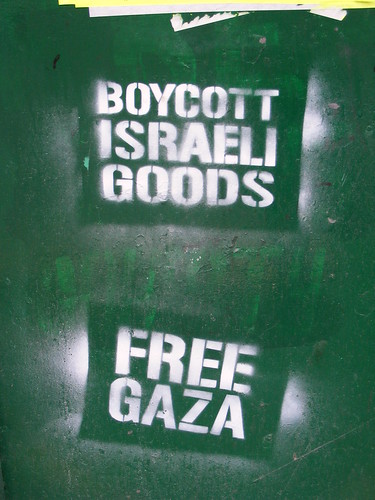
UK issues new guidance on labelling of food from illegal West Bank settlements


Stickers could read 'Israeli settlement produce' , but move is not a boycott, says Foreign Office

Britain has acted to increase pressure on Israel over its West Bank settlements by advising UK supermarkets on how to distinguish between foods from the settlements and Palestinian-manufactured goods.

The government's move falls short of a legal requirement but is bound to increase the prospects of a consumer boycott of products from those territories. Israeli officials and settler leaders were tonight highly critical of the decision.

Until now, food has been simply labelled "Produce of the West Bank", but the new, voluntary guidance issued by the Department for the Environment, Food and Rural Affairs (Defra), says labels could give more precise information, like "Israeli settlement produce" or "Palestinian produce".

Nearly 500,000 Jewish settlers live in East Jerusalem and the West Bank, which were conquered in the 1967 war. The British government and the EU have repeatedly said Israel's settlement project is an "obstacle to peace" in the Middle East.

EU law already requires a distinction to be made between goods originating in Israel and those from the occupied territories, though pro-Palestinian campaigners say this is not always observed.

Separately, Defra said that traders would be committing an offence if they did declare produce from the occupied territories as "Produce of Israel".

Foods grown in Israeli settlements include herbs sold in supermarkets, such as Waitrose, which chop, package and label them as "West Bank" produce, making no distinction between Israelis and Palestinians. A total of 27 Israeli firms operating in settlements and exporting to the UK have been identified: their produce includes fruit, vegetables, cosmetics, pharmaceuticals, plastic and metal items and textiles.

Other retailers selling their products include Tesco, Sainsbury's, Somerfield, John Lewis and B&Q.

Goods from inside Israel's 1967 borders are entitled to a preferential rate of import duty under an agreement with the EU. Palestinian goods from the West Bank, Gaza and East Jerusalem also enjoy duty-free or reduced-tariff treatment. Settlement products fall outside these two categories.

"This is emphatically not about calling for a boycott of Israel," a Foreign Office spokesman said. "We believe that would do nothing to advance the peace process. We oppose any such boycott of Israel. We believe consumers should be able to choose for themselves what produce they buy. We have been very clear both in public and in private that settlements are illegal and an obstacle to peace."

The TUC general secretary, Brendan Barber, welcomed the public clarification that marking produce from illegal settlements on occupied territory as "produce of Israel" was illegal, but said the government should have gone further.

Barbara Stocking, Oxfam's chief executive, said: "We support the right of consumers to know the origin of the products they purchase. Trade with Israeli settlements – which are illegal under international law – contributes to their economic viability and serves to legitimise them. It is also clear from our development work in West Bank communities that settlements have led to the denial of rights and create poverty for many Palestinians."

Dani Dayan, the Argentinian-born leader of the Yesha Council, which represents Israeli settlers, said the decision was the "latest hostile step" from Britain. "Products from our communities in Judea and Samaria should be treated as any other Israeli product," he said, using an Israeli term for the West Bank.

Israeli officials said they feared this was a slide towards a broader boycott of Israeli goods. Yigal Palmor, Israel's foreign ministry spokesman, said his country's produce was being unfairly singled out.

"It looks like it is catering to the demands of those whose ultimate goal is the boycott of Israeli products," he said. "The message here will very likely be used by pro-boycott campaigners. It is a matter of concern."

He said the issue of different European customs tariffs should not extend to different labelling on supermarket shelves. "It is a totally different thing and not required by the EU."

Israel came under intense US pressure early this year to halt construction in settlements, but has only adopted a temporary, partial freeze. Palestinian leaders say they will not restart peace negotiations until there is a full settlement freeze in line with the US road map of 2003.

The Palestine Solidarity Campaign said it welcomed the new guidance but urged Defra to go further: "The government must seek prosecutions of companies which smuggle settlement goods in under false labels.

"We have received many calls from people who were distressed when they bought goods labelled 'Produce of the West Bank' because they thought they were aiding the Palestinian economy, then realised they were economically aiding Israel's illegal occupation.

"Particularly following Israel's massacre in Gaza, consumers have been shocked at Israel's war crimes and want to take action. They do not want to feel complicit in Israel's occupation by buying stolen goods."

'Customers will now have honest information'

The most recent government figures suggest only about £800,000 of food products, about three-quarters of it olive oil (below right), was imported from occupied Palestinian territories in the three years between 2006 and 2008.

Sainsbury's, which sells dates and small amounts of basil and tarragon, welcomed "the greater clarity on how to label produce from occupied territories".

"This allows us to fulfil our commitment of providing customers with clear and honest information about the origins of their food," the supermarket chain said."We have full traceability back to settlement and/or grower."

Waitrose also said it would be following the guidance on the small number of West Bank lines it sold. "We source a small selection of herbs from the West Bank area, grown on two Israeli-managed farms, on which a Palestinian and Israeli workforce have worked side by side for many years," said a spokesman.

"We are not motivated by politics. Instead our policy is to ensure high standards of farming and worker welfare on the farms from which we source. Our buyers … have visited the two farms in the West Bank to ensure that worker welfare meets the high standards that we insist on. As part of our normal sourcing policy we will be carrying out an audit on these farms in the next six months."

This year the Co-op began selling Fairtrade olive oil from the West Bank – a move hailed by Gordon Brown, who said it meant British shoppers could help Palestinian farmers make a living.

Toby Quantrill, head of public policy for the Fairtrade Foundation, said farmers in Palestine faced barriers to trade which jeopardised opportunities to trade internationally on equal terms with people making similar products

Source: The Guardian


Bookmark and Share

Climategate reaches the British House of Lords


There is the issue of the science, which I had previously taken as given; but many people’s faith is being tested. We are often told that the science is settled. I suppose that is what the Inquisition said to Galileo. If so, why are we spending millions of pounds on research? The science is far from settled. – Lord Turnbull Dec 8th 2009

House of Lords, 8 December 2009: Lord Turnbull: My Lords, on first reading the Committee on Climate Change’s latest progress report, I found it an impressive document. It was broad in scope and very detailed. But the more I dug into it the more troubled I became. Below the surface there are serious questions about the foundations on which it has been constructed. There are questions in four areas-the framework created by the Climate Change Act 2008, the policy responses at EU and UK level, the estimate of costs and finally the scientific basis on which the whole scheme of things rests. I will consider each in turn.

Unlike many of those involved in the climate change field, I have no pecuniary interest to declare, but I am a founder trustee of the Global Warming Policy Foundation, which seeks to bring rationality, objectivity and, above all, tolerance to the debate.

I have long been in the camp of what might be called the semi-sceptics. I have taken the science on trust, while becoming increasingly critical of the policy responses being made to achieve a given CO2 or global warming constraint. First, let us look at the Climate Change Act, which has been highly praised, even today, as the most comprehensive and ambitious framework anywhere in the world-a real pioneering first for the UK. However, it has serious flaws. It starts by imposing a completely unworkable duty on the Secretary of State to reduce greenhouse gas emissions by 80 per cent by 2050, even though many of the actions required lie outside his control. It would have been better, as the noble Lord, Lord Crickhowell, and I argued, for the duty to be connected to what the Secretary of State can control, such as his own actions and policies, and not the outcome, which he cannot.

In the Act’s passage through Parliament, the target was raised from 60 per cent to 80 per cent, with little discussion of its costs or feasibility. It is a simple arithmetic calculation to show that if the UK economy continues to grow at its historic trend rate, we will need, only 40 years from now, to produce each £1,000 of GDP with only 8 per cent of the carbon we use today. That is a cut of [92] per cent. Many observers think that this is implausible. A recent report by the Institution of Mechanical Engineers reported that the rate of improvement in carbon intensity/productivity would need to quadruple from the 1.3 per cent achieved in the five years up to the recession to around 5.5 per cent. It would need to be even higher at the end of the period to make up for what the noble Lord, Lord May, calls falling behind the run rate.

Professor Dieter Helm has pointed out that the measurement system used in the Kyoto framework and in the UK’s carbon accounts is a misleading guide to what is really being achieved. The carbon accounts use the territorial method-that is, the emissions from UK territory. In this way, the UK is able to claim that CO2 emissions have been reduced, but that is a misleading way of measuring a nation’s carbon footprint and its impact on the world. It should include the carbon in its imports. If this was done it would show that we are going backwards, since we would be forced to take responsibility for the manufacturing that we have outsourced to such countries as China but are still consuming. The current method is, of course, politically very convenient as it allows us to label China as the world’s largest emitter. The embedded carbon calculation is, I accept, far more complicated, but it is far more honest.

Benches in the House of Lords Chamber are coloured red. In contrast, the House of Commons is decorated in green. Image from Wikipedia.

Another flaw in the framework is that the targets are unconditional. It is a legal duty, irrespective of what other countries achieve. Some, including me, argue that there should be two targets: one of which is a commitment, and a higher one which we will argue for internationally but only undertake as part of an agreement. Ironically, this is precisely the approach that the EU is taking with its 20 per cent reduction target by 2020, which would be raised to 30 per cent as part of an international agreement. The danger is that by going it alone we could face a double whammy, paying for decarbonising our own economy, yet still having to pay for the costs of raising our sea defences if others do not follow suit.

Secondly, let us consider the specific policies that have been adopted. Current EU policy follows two inconsistent paths. On the one hand, the ETS seeks to establish a common price for CO2, against which various competing technologies can be measured. The market share of each is determined by the relative costs. This is attractive to economists, since it allows the cost per tonne of CO2 abated to be equalised at the margin, thereby ensuring that the cost of achieving any CO2 target is minimised. The problem is that, despite its theoretical attractions, the ETS is failing. It provides no clear signal on the price of carbon on which investors can base their decisions. The committee, in this report, estimates that the ETS CO2 price in 2020 will be around €22 per tonne. The committee has rightly identified the central contradiction in its own report: the carbon price will be too low and too uncertain to stimulate the low-carbon investments needed to validate the committee’s projections.

At the same time, the EU is following a different approach under its 20:20:20 plan-to achieve a 20 per cent reduction in CO2 by 2020, with 20 per cent of energy coming from renewables. In this way, it predetermines a market share for a technology-renewables-rather than letting the merit order decide. The danger is that in pressing to achieve this target, which implies that over 30 per cent of electricity generation will come from renewables, some renewables capacity will be created which will be more expensive than other responses.

There is also a lack of clarity about the true cost of wind power, once we factor in the cost of retaining a large amount of underutilised conventional capacity, and the extension of the grid. The noble Lord, Lord Reay, has said more than enough on that so I do not need to follow that line of argument.

There is illogicality in the treatment of nuclear energy in the climate change levy. It is ridiculous that nuclear power, as a low-carbon source, is still in the taxable box. For 50 years, a major experiment has been conducted just 20 miles off our coast. France has generated three-quarters of its electricity from nuclear power. The French believe that it has been a huge success, delivering electricity which is secure, cheap and stable in price. France’s carbon intensity is 0.3 of a tonne per $1,000 of GDP, compared to 0.42 in the UK, 0.51 in Germany-so much for it being a market leader-and 0.63 in the US. However, the French option has barely been considered in this country.

As part of the EU plan, 10 per cent of road fuel is mandated to come from biofuels, but by the time this was enacted the credibility of first-generation biofuels had collapsed. Finally, our policy framework lacks balance. It is almost exclusively focused on mitigation through CO2 reduction, The Institution of Mechanical Engineers has argued for what it calls a MAG approach, with effort being committed not just to mitigation but to adaptation and geo-engineering.

Thirdly, there is the issue of cost. All we had to go on at the time when the target was set more ambitiously was the estimate by the noble Lord, Lord Stern, of 1 per cent of GDP. Many people were sceptical at the time and probably even more are now, including, it seems, the noble Lord, Lord Stern, himself. It was reported in the press last week that he now thinks that it might be 2 per cent, but could rise to 5 per cent. I hope he will clarify this when he speaks to us shortly.

In the document that we have before us, the committee says that it previously estimated that costs in 2020 would be about 1 per cent of GDP. That is consistent with its view that it might get to 2 per cent by 2050. In the new report it simply reaffirms the 1 per cent figure in just one paragraph in 250 pages. That is it. I have to say to the noble Lords, Lord Krebs and Lord May, that I do not think that that is adequate. It is difficult to relate these figures to what we are observing on the ground about the difficulties and costs of bringing on stream different technologies such as offshore wind and CCS.

One of the problems bedevilling the debate is the lack of transparency over the huge cross-subsidies that are being created by the renewables obligation and the regime for feed-in tariffs. There is no assurance that their extent is commensurate with the benefits in CO2 abated. My electricity costs me 11p per kilowatt hour. If I erected a wind turbine, I could sell the power I produced to the grid for a whopping 23p. I think I would go out and buy a gizmo which linked my inward meter to my outward meter. That excess cost is averaged over the bills of consumers as a whole, but how much is it in total, or for individual consumers? Here I differ from the noble Lord, Lord May. The whole issue of cost must be given far more attention. The Government cannot ask people to make radical changes to their lifestyle without being more open about the costs that they are being asked to bear.

I accept that “do nothing” is not the right option. Some measures, such as energy efficiency, heat recovery from waste and biomass, and stopping deforestation are probably justified on their own merits. More nuclear power which, in turn, would open the way for electrification of our transport fleet would enhance security of supply. Other measures may be justified as pure insurance, given the uncertainty that we face. But what is badly needed is a consistent metric that allows us to judge whether any given objective is being achieved at minimum cost. The recent book by Professor MacKay, the newly appointed scientific adviser at DECC, provides an excellent starting point. I also very much welcome the intervention by the noble Earl, Lord Selborne, debunking the waste hierarchy and the act of faith that that embodies.

There is the issue of the science, which I had previously taken as given; but many people’s faith is being tested. We are often told that the science is settled. I suppose that is what the Inquisition said to Galileo. If so, why are we spending millions of pounds on research? The science is far from settled. There are major controversies not just about the contribution of CO2, on which most of the debate is focused, but about the influence of other factors such as water vapour, or clouds-the most powerful greenhouse gas-ocean currents and the sun, together with feedback effects which can be negative as well as positive.

Worse still, there are even controversies about the basic data on temperature. The series going back one, 10 or 100,000 years are, in the genuine sense of the word, synthetic. They are not direct observations but are melded together from proxies such as ice cores, ocean sediments and tree rings.

Given the extent to which the outcome is affected by the statistical techniques and the weightings applied by individual researchers, it is essential that the work is done as transparently as possible, with the greatest scope for challenge. That is why the disclosure of documents and e-mails from the Climatic Research Unit is so disturbing. Instead of an open debate, a picture is emerging of selective use of data, efforts to silence critics, and particularly a refusal to share data and methodologies.

It is essential that these allegations are independently and rigorously investigated. Naturally, I welcome the appointment of my old colleague, Sir Muir Russell, to lead this investigation; a civil servant with a physics degree is a rare beast indeed. He needs to establish what the documents really mean and recommend changes in governance and transparency which will restore confidence in the integrity of the data. This is not just an academic feud in the English department from a Malcolm Bradbury novel. The CRU is a major contributor to the IPCC process. The Government should not see this as a purely university matter. They are the funders of much of this research and their climate change policies are based on it.

We need to purge the debate of the unpleasant religiosity that surrounds it, of scientists acting like NGO activists, of propaganda based on fear, for example, the quite disgraceful government advertisement which tried to frighten young children-the final image being the family dog being drowned-and of claims about having “10 days to save the world”. Crude insults from the Prime Minister do not help.

The noble Lords, Lord Krebs and Lord May, and their eminent colleagues on the CCC have a choice. They can take the policy framework as given, the policy responses as given, the costs as given, and the science as given, and then proceed to churn out more and more sophisticated projections, or-as I hope-they can apply the formidable intellectual firepower they command and start to find answers to many of the unsolved questions.

Source: Whats Up With That

Bookmark and Share

Tuesday, December 8, 2009

Privacy's about more than the paparazzi


The kind of protection the HRA offers is largely of use only to the rich. The law should tackle everyday intrusions head on

The Queen's demand that press photographers abide by their own professional code of conduct and not stake out Sandringham over the Christmas holiday carries with it an implied threat of legal action under the ad hoc privacy laws that are being formed in the courts.

Article 8 of the Human Rights Act (HRA) guarantees the right to privacy and family life, which has been used by a number of well-known people to give them a private space away from long-range cameras – today's Guardian editorial mentioned Fabio Capello and Princess Caroline of Monaco.

Although it seems right to give people what the editorial calls "a zone of privacy", this of course is privacy for the few who can afford to go to court, or threaten legal action. It does not seem to occur to our legislators that it is thoroughly inequitable, not to say illogical, to protect the head of state from the media, but not the public from a much greater intrusion by the state and its agencies.

Privacy is not an unqualified right, but it certainly must be held to mean the same for high and low, that is to say it is a quality that each one of us can aspire to and which is guaranteed by the law if we need. It is easy to argue that Capello and the royal family live under intolerable intrusion and that their experiences are nothing like the ordinary members of the public but to me the comparison seems invalid.

Celebrities and the public suffer different forms of intrusion. If we are to allow the construction of a body of law that protects the rich and famous, it is surely wrong not consider the huge expansion of CCTV systems, the use of automatic number plate recognition (ANPR) cameras to track journeys and store the data, and the plans for accessing data from all communications. The total effect of these systems will in the long run be much more serious than anything Capello has suffered on holiday, however much he is owed our sympathy.

This is a very delicate area, but my feeling is that the privacy laws being made on the back of the HRA underline problems with the act because it guarantees nothing upfront but instead requires people to go to law to establish their rights. It would be much more effective to create a proper body of privacy legislation that specifies acts that illegally damage or compromise a person's privacy, and this would apply to the state, the press and the big corporations that gather and store personal details.

When I argue with lawyers about the effectiveness of the HRA they always say that its beauty lies in its vagueness, which allows for much more flexibility in protecting people's rights. I can see their point but surely law that only protects the rich from one type of intrusion is hardly working in the favour of the common good, or indeed universal rights.

Source: The Guardian

Bookmark and Share

Monday, December 7, 2009

UK Alert: Stop the Pirate-Finder General!


Lord Peter Mandelson, the UK's First Secretary of State, has introduced a bill to grant himself (and future politicians) the power to re-write Britain's core copyright legislation with almost no Parliamentary debate, using fast-track secondary legislation. If you're in Britain, call your MP now, and tell him or her that no Secretary of State should be able to rewrite copyright law on a whim!

In the UK, the Labour administration's impatience to pass its "Digital Economy" agenda risks throwing balanced, deliberate reform of copyright law utterly out of the window. With no warning or consultation, the draft Digital Economy bill now includes a provision granting the Secretary of State — currently Lord Peter Mandelson — the power to make statutory instruments that can re-write Britain's Copyright, Design and Patents Act with almost no Parliamentary debate.

Once the Digital Economy Bill is passed by Parliament, the Secretary of State could use sweeping powers to effect wide-ranging changes to the copyright system to swiftly meet the needs of one set of interest holders:

The Secretary of State may by order amend Part 1 [of the Copyright, Designs and Patents Act] or this Part for the purpose of preventing or reducing the infringement of copyright by means of the internet, if it appears to the Secretary of State appropriate to do so having regard to technological developments that have occurred or are likely to occur.

This would allow those who lobby for more draconian copyright enforcement the ability to bypass the normal democratic process, and grant them an effective veto on new Internet technologies that concerns them.

The only way to stop constant ratcheting up of punishments and restrictions on innovation is to ensure that such broad powers are never granted. Call your MP now, and tell him or her that no Secretary of State should be able to rewrite copyright law on a whim.

Suggested message to your MP

All MPs can be contacted via the House of Commons switchboard at:
+44 (0)20 7219 3000

"I'm calling to state my opposition to Lord Mandelson's proposals to change our copyright law to benefit a few industries, and his attempts to make wide-ranging changes through secondary legislation. Please make it clear to the government that in its current form, its Digital Economy bill and any related statutory instruments affecting copyright law will damage the digital economy, not build it." (Add your own comments.)

After your call, let the UK's Open Rights Group know what your MP said here.

Bookmark and Share

Sunday, December 6, 2009

Political correctness has replaced British Politics!


Just a note to point out that the global financial meltdown we are experiencing now can be placed fairly and squarely at the feet of political correctness and social engineering - courtesy of the now ruling Democratic Party in the USA. While this fact is well known over there, you won't hear it mentioned in the UK, beyond Gordon Brown's mumble "..global financial crisis ... started in America...". Perhaps someone should ask him how and why it started in America! You don't believe me? Read about it and watch a video here

If you agree with what you read here, please help civilisation by linking to this site whenever and wherever you can. After all (to paraphrase Edmund Burke) for political correctness to triumph it only requires that sensible people do nothing!

Have you ever stopped to wonder why 40% of people don't bother to vote anymore? Have you ever stopped to wonder why, which ever party is in power, nothing ever gets any better? Have you ever stopped to wonder why all the three major political parties in the UK have broadly the same policies? The answer is simple - political correctness. This left wing ideology has very cleverly, and by stealth, replaced British politics. The PC Brigade effectively hold a gun to the head of political parties - none of the main parties now dare suggest any policy that is not politically correct otherwise the PC Brigade will label them the 'nasty' party. Witness the Conservative party policy U turns. In a desperate effort to lose their 'nasty' party label they have become Blue Labour, a slightly diluted form of New Labour!

So we now have the three main parties all occupying the same small piece of 'centre ground'. Many people don't vote on the grounds that it is pointless - you will get the same whoever wins. Some people don't vote because they realise that politically correct policies are what has got us into this mess in the first place.

Other people don't vote because they realise that career politicians are a self seeking, corrupt bunch of freeloaders who they wouldn't trust to run their whelk stall while they were on holiday. Notice that I say career politicians - this is the new breed of politicians that haven't ever entered the real world of work. They have left school, gone to university and then blagged a job as a 'research assistant' to a MP before realising that with most of our laws now made abroad, the job was such a well paid doddle that they could do it themselves. They have never had to hold down a proper job, they have no management or other skills, hold no real political views and tend to migrate to whichever party looks most likely to win power. To survive in this fantasy environment all you need to do is to be politically correct. You can read more about this, the political parties and how the New Labour ministers got there under Politicians/ Parties on the navigation bar.

So what is political correctness, how did it start and how did it become so successful? Political correctness is first and foremost an attack on free speech, clear thinking and discussion. Political correctness is perpetrated by the left in politics as a cover for their flawed ideology - a sort of cultural Marxism. By cloaking their strange ideas under the cover of not wishing to offend anyone (which naturally appeals to peoples' better nature), they try to bypass debate and give a 'received wisdom' which must not be questioned. And anyone who disagrees with this 'received wisdom' must therefore be a really nasty person and deserves to be ostracised by their peers. This peer pressure is instrumental in enforcing and expanding political correctness.

For example, if you question whether unfettered immigration into this country is necessarily a good thing or perhaps whether immigrants should be health checked, then you must be a nasty bigoted 'Little Englander'. Come on everyone - shout him down with cries of 'racist'. Of course, only the hard of thinking could be drawn into this charade - anyone with an ounce of common sense can see right through it.

So how did it all start? Political Correctness started in a think tank (called The Frankfurt School) in Germany in 1923. The purpose was to find a solution to the biggest problem facing the implementers of communism in Russia. Why wasn't the wonderful idea of communism spreading? Read the short history here, the full history and purpose here or watch a 22 minute documentary here.

The Frankfurt school recommended (amongst other things):

  1. the creation of racism offences
  2. continual change to create confusion
  3. the teaching of sex and homosexuality to children
  4. the undermining of schools and teachers' authority
  5. huge immigration to destroy national identity
  6. the promotion of excessive drinking
  7. emptying the churches
  8. an unreliable legal system with bias against the victim of crime
  9. dependency on the state or state benefits
  10. control and dumbing down of media
  11. encouraging the breakdown of the family

Sound all too familiar? Yes - Great Britain 1997 onwards......

The basic idea is to make the country wholly dependent on the State. By the dumbing down of education, the creation of huge state sector employment and large scale immigration, New Labour has effectively created a captive audience to vote for them or Blue Labour, should the Conservatives actually get back into power.

If the Conservatives did get back into power, nothing much would change. David Cameron has already shown his true politically correct credentials many times but none so shamelessly as when he sacked the well respected Patrick Mercer, just for speaking the truth. Patrick Mercer wasn't being a racist, he was just commenting on how in Army life you get picked on if you have some different feature whether it is black skin, ginger hair, being fat or just lazy. My Father did me a great service many years ago when pointed out that 'sticks & stones would break my bones but names would never hurt me'. Thanks for instilling some common sense in me, Dad!

But of course, political correctness has made common sense a thing of the past. If you catch a burglar in your house then it's probably best to help the poor soul by carrying your possessions to the front door lest he should trip up and hurt himself and it's you that end up in court!

After all, you won't get much help from the Police, who have been effectively neutralised by the fast tracking of university graduates whose only experience of life has been obtained in the liberal atmosphere of education. Probably best not to complain to them about their lack of attendance when your car has been vandalised or you will probably get a letter back from a Superintendent pointing out that vandals are victims as well (read it here). And just in case any real policemen still exist, the Politically Correct Brigade has turned the Police Force in on itself by claims of institutional racism.

If they do actually succeed in getting a villain into court (only 1 for every 100 crimes committed) then the Magistrates hand out such lenient sentences (as laid down by the very Politically Correct 'sentencing advisory panel') that there is no deterrent. If you do end up in prison (extremely unlikely as New Labour have deliberately refused to build anything like enough new places) the prison officers are told to call you by your first name and not say anything that may upset you! As your cell is now your home, you are allowed to smoke there but Prison Officers who want to search it for drugs now have to give you 30 mins notice of their visit so that they don't put themselves at risk from the smoke oh and also to give you enough time to move your drugs elsewhere. Just in case you do get bored, you can keep yourself amused by repeatedly taking the prison governor to court over trivial matters that you think violate your human rights (no pornography etc) - all paid for by legal aid!

Travellers can descend upon your area, dump old cars and shit everywhere with impunity. You try doing it in your front garden and see what happens! They are allowed to bypass the normal planning controls that are so strictly enforced on the rest of us and cost local councils hundreds of thousands of pounds in court cases and clean-ups. Who pays? Why you do of course - just check your council tax bill!

Illegal immigrants (if caught) are rarely deported. Those that are deported are just the more honest ones who don't know how to play the system or haven't been coached by the National Coalition of Anti-Deportation Campaigns which is funded by your lottery money! Oh and have you got a long way to come to get here? Why not hijack an airliner for the trip? Don't worry, we will still let you stay!

Would you like a black coffee? NO! You can't say that! It's coffee without milk and Local Authorities spend a fortune of our money on making their employees attend courses on Newspeak and Diversity training!

Our British humour has suffered badly. We can't tell jokes anymore in case it's considered racist or it upsets anyone. Don't these Politically Correct people realise that the clue is in the word "joke",which my dictionary quite rightly defines as "something said in fun or jest" or "to say something in fun or teasing rather than in earnest?"

Try organising an event or trip and you find yourself tied up in the endless red tape created by the Health & Safety Executive. These people are all part of the 'Nanny State' (state control) which insists in sticking its nose into every aspect of our lives and telling us how to live it!

Just in case there is anyone left in the country that might still be enjoying themselves - let's ban smoking, fox hunting and let feminists launch a totally unfounded attack on men as rapists.

That is the sad state of the UK today. But overwhelmed by their own success with political correctness, the left have something else just as sinister up their sleeve so they can expand their power and control over us even more - the Great Global Warming scam! Same methodology - an idea to appeal to peoples' better nature - let's save the planet - and the same way of enforcing it by peer pressure. Just watch what happens to any scientist who breaks ranks or disagrees - they get the same treatment that Galileo got from the medieval church. David Bellamy was the first I think. It takes a brave man (or a self sufficient one) to come out against these things publicly when you know your future livelihood may be at risk.

Politically correct people can't stand reality or see that things have evolved to be as they are for good reasons. Politically correct people remind me of ostriches - they bury their heads in the sand and then proceed to talk out of the only orifice that still remains above ground.

So don't let anyone fool you that political correctness is just about being "nice to people", tolerant and treating them with proper respect. That's called good manners. Political correctness has been deliberately designed to subvert free speech, debate and common sense, replacing these with a ruthlessly enforced set of left wing ideas. Far from being tolerant, politically correct people are the most intolerant of all people and have the worst manners. They refuse to debate subjects (as their views don't stand up to the most elementary scrutiny), preferring just to scream abuse at you.

To read more about how political correctness has replaced British politics and how it affects specific subjects, just select them on the sidebar. In case you get too depressed doing so, I have included some lighter reading as well.

Source: Source: Political Correctness - The Awful Truth


Bookmark and Share

Police U-turn on photographers and anti-terror laws


Don’t use anti-terror laws to prevent pictures being taken, officers told

Police forces across the country have been warned to stop using anti-terror laws to question and search innocent photographers after The Independent forced senior officers to admit that the controversial legislation is being widely misused.

The strongly worded warning was circulated by the Association of Chief Police Officers (Acpo) last night. In an email sent to the chief constables of England and Wales’s 43 police forces, officers were advised that Section 44 powers should not be used unnecessarily against photographers. The message says: “Officers and community support officers are reminded that we should not be stopping and searching people for taking photos. Unnecessarily restricting photography, whether from the casual tourist or professional, is unacceptable.”

Chief Constable Andy Trotter, chairman of Acpo’s media advisory group, took the decision to send the warning after growing criticism of the police’s treatment of photographers.

Writing in today’s Independent, he says: “Everyone… has a right to take photographs and film in public places. Taking photographs… is not normally cause for suspicion and there are no powers prohibiting the taking of photographs, film or digital images in a public place.”

He added: “We need to make sure that our officers and Police Community Support Officers [PCSOs] are not unnecessarily targeting photographers just because they are going about their business. The last thing in the world we want to do is give photographers a hard time or alienate the public. We need the public to help us.

“Photographers should be left alone to get on with what they are doing. If an officer is suspicious of them for some reason they can just go up to them and have a chat with them – use old-fashioned policing skills to be frank – rather than using these powers, which we don’t want to over-use at all.”

Section 44 of the Terrorism Act allows the police to stop and search anyone they want, without need for suspicion, in a designated area. The exact locations of many of these areas are kept secret from the public, but are thought to include every railway station in and well-known tourist landmarks thought to be at risk of terrorist attacks.

Many photographers have complained that officers are stopping them in the mistaken belief that the legislation prohibits photographs in those areas. Forces who use Section 44, most commonly London’s Metropolitan Police, have repeatedly briefed and guided frontline officers on how to use the powers without offending the public.

But privately senior officers are “exasperated, depressed and embarrassed” by the actions of junior officers and, particularly, PCSOs who routinely misuse the legislation. One source said that an “internal urban myth” had built up around police officers who believe that photography in Section 44 areas is not allowed.

The aberrations have resulted in nearly 100 complaints to the police watchdog. Since April 2008 every complaint made by a member of the public about the use of Section 44 powers, unlike other complaints, must be forwarded to the Independent Police Complaints Commission. In the past 18 months there have been 94 complaints. Eight of these specifically mentioned the fact that the issue arose around photography. Acpo’s communiqué has been welcomed by rank-and-file police officers and photographers alike.

Simon Reed, the chairman of the Police Federation, which represents England and Wales’s 140,000 rank-and-file officers, said: “I think some new guidance will be welcome.”

New orders: The message to officers

This is the message circulated by Andy Trotter, of the Association of Chief Police Officers, to police forces in England and Wales.

“Officers and PCSOs are reminded that we should not be stopping and searching people for taking photos.

“There are very clear rules around how stop-and-search powers can be used. However, there are no powers prohibiting the taking of photographs, film or digital images in a public place. Therefore members of the public and press should not be prevented from doing so.

“We need to co-operate with the media and amateur photographers. They play a vital role as their images help us identify criminals.

“We must acknowledge that citizen journalism is a feature of modern life and police officers are now photographed and filmed more than ever.

“However, unnecessarily restricting photography, whether from the casual tourist or professional is unacceptable and worse still, it undermines public confidence in the police service.”

A personal viewpoint: ‘I was reminded why I left the police’

I spent 27 years as a PC in the Met, but it was during a trip to my old police station with a friend late last year that I was starkly reminded why I eventually decided to leave.

Since 2003 I have been living in France, where I coach a children’s rugby team not far from Toulouse. But last December my sister needed to see a specialist in Harley Street so I went with her and a rugby friend of mine back to London for the week.

While my sister went to the doctors I suggested to my friend, Will, that we should go and take a look at Albany Street police station near Regent’s Park, which was where I spent my first eight years as a copper.

It’s the kind of station that looks like something out of Dixon of Dock Green, it has a lovely little blue police light outside the entrance and I asked Will whether he’d take a picture of me standing underneath it. Within seconds we found ourselves approached by two PCSOs who told us that we were not allowed to take photographs of police stations.

I didn’t want to be a sad old git by telling stories of my past and the nostalgia I felt for the place. So instead I said: “We’re tourists. We want a picture of that Blue lamp, it’s iconic and it represents London bobbies.” But they didn’t want any of it and ordered us to stop taking photographs. The second PCSO started asking Will for his details which he began to give before I informed him that he was under no obligation to do so.

I’d clearly failed what the police call “the attitude test” because they radioed for back-up from inside the police station and we were soon joined by a police constable. Often during my time as a policeman I would hear this policy. If someone was bolshy, argumentative or challenging in any manner, refusing to play by the police rules and not willing to show deference, then they had failed the “attitude test”.

I guess I hoped the PC would show more common sense but he repeated the same line, that the police station was in a “sensitive zone” and that we had to stop taking photographs. Eventually we gave up and walked away.

Source: Orwell's Dream

Bookmark and Share

Thursday, December 3, 2009

UK cops still having problems with suspected terrorists carrying cameras


It’s beginning to look a lot like Christmas, which can only mean one thing. Terrorists are out to kill us.

No, I’m not talking about the usual suspects who wage War on Christmas by wishing everybody Happy Holidays instead of Merry Christmas.

I’m talking about those brazen terrorists who strap digital cameras to their bodies and immerse themselves in crowded public places under the pretense that they are photographing Christmas lights.

Anybody with any sense knows that they will use those photos to … well, I don’t know … maybe do a before-and-after comparison once they bomb the place? Your guess is as good as mine.

But thanks to the sharp-eyed police officers of the United Kingdom, citizens can sleep well because those culprits are being weeded out one-by-one with the help of the new anti-terrorism law that turned all photographers into suspected terrorists.

The latest suspect is Andrew White, a 33-year-old man with a shaved head and goatee. And a camera. In other words, he fits the profile of a terrorist perfectly.

Police told the Daily Mail that he was stopped for “taking too many photographs in a busy shopping area.”

Source: Photography Is Not A Crime


Bookmark and Share

Wednesday, December 2, 2009

ID cards now available. Count me out


People in Manchester can now sign up for an ID card. Let's use the occasion to say a firm no to the database state

I will be making a trip to the Identity and Passport Service's registration centre in Manchester at 1pm today. I will not be registering for an identity card. Instead, I will be joining friends from No2ID and other campaigns in demonstrating against the identity scheme. Our message is simple – "Don't be a guinea pig, stop the ID card con!"

I expect to see more protesters than volunteers at the registration centre; 96% of respondents in a recent Manchester Evening News online poll opposed the scheme. Fewer than 2,000 people in the north-west have "expressed interest" in the ID cards, and that number includes opponents like myself.

Despite lack of interest, the government is still pushing ahead with the scheme, spending £230,000 every day to bring it about. Its current claims are that it is a cheap, convenient way to prove your identity.

An ID card costs £30 initially, compared with £77.50 for your first adult passport – but for now you need a passport to apply for an ID card. Regardless, the ID card scheme costs every taxpayer about £300. It would save money if the government instead gave everyone a free adult passport when they turn 16. The passport cost has also increased from £42 in 2005, only £8 of which can be justified for meeting international standards for the insecure "e-Passports".

I don't need to carry about vast quantities of paperwork with me on a daily basis to prove my identity or address. I rarely need anything more than my bank card to talk to my bank. A card that lives in my wallet is something I'm more likely to lose – and risk the fine for not reporting a lost ID card..

Clearly, I don't want an ID card and shouldn't register. But why am I protesting against it? It's a voluntary scheme, and people can take it or leave it, right?

The ID card may well be voluntary, but the underlying national identity register database reeks of compulsion. Registering for a card means being tracked for life by the largest state database system in the western world, which has no equivalent in European ID card systems.

The Home Office is keeping quiet about the fines for not keeping your information up to date on this database, the vast numbers of faceless bureaucrats who will have access, and their inability to keep it secure. They don't like to remind us that from 2011 we'll be forced on to the database to get a passport, and after that perhaps for a Criminal Records Bureau check, and then ...

I don't think it's fair for the government to trick people into this database state, which is likely to be scrapped after the general election. That's why I'm spreading the word – "Don't be a guinea pig, stop the ID card con!"

Source: The Guardian

Bookmark and Share

Monday, November 30, 2009

'This isn't the Britain we fought for,' say the 'unknown warriors' of WWII Read more: http://www.dailymail.co.uk/news/article-1229643/This-isnt-Brita


Sarah Robinson was just a teenager when World War II broke out.

She endured the Blitz, watching for fires during Luftwaffe air raids armed with a bucket of sand.

Often she would walk ten miles home from work in the blackout, with bombs falling around her.

As soon as she turned 18, she joined the to do her bit for the war effort.

Soldiers

Some WWII soldiers, and families of those lost in the war, have complained society today shows no sign of the effort they made to help

Hers was a small part in a huge, history-making enterprise, and her contribution epitomises her generation's sense of service and sacrifice.

Nearly 400,000 Britons died. Millions more were scarred by the experience, physically and mentally.

But was it worth it? Her answer - and the answer of many of her contemporaries, now in their 80s and 90s - is a resounding No.


They despise what has become of the Britain they once fought to save. It's not our country any more, they say, in sorrow and anger.

Sarah harks back to the days when 'people kept the laws and were polite and courteous. We didn't have much money, but we were contented and happy.

'People whistled and sang. There was still the , our country, which we had fought for, our freedom, democracy. But where is it now?!'

Royal Navy

Sarah Robinson, who joined the Royal Navy when she was 18, says the Britain she once knew no longer exists

The feelings of Sarah and others from this most selfless generation about the modern world have been recorded by a Tyneside writer, 33-year-old Nicholas Pringle.

Curious about his grandmother's generation and what they did in the war, he decided three years ago to send letters to local newspapers across the country asking for those who lived through the war to write to him with their experiences.

He rounded off his request with this question: 'Are you happy with how your country has turned out? What do you think your fallen comrades would have made of life in 21st-century Britain?'

What is extraordinary about the 150 replies he received, which he has now published as a book, is their vehement insistence that those who made the ultimate sacrifice in the war would now be turning in their graves.

There is the occasional bright spot - one veteran describes Britain as 'still the best country in the world' - but the overall tone is one of profound disillusionment.

'I sing no song for the once-proud country that spawned me,' wrote a sailor who fought the Japanese in the Far East, 'and I wonder why I ever tried.'

'My patriotism has gone out of the window,' said another ex-serviceman.

In the Mail this week, wrote about 'our debt of dignity to the war generation'.

But the truth that emerges from these letters is that the survivors of that war generation have nothing but contempt for his government.

They feel, in a word that leaps out time and time again, 'betrayed'.

New Labour, said one ex-commando who took part in the disastrous Dieppe raid in which 4,000 men were lost, was 'more of a shambles than some of the actions I was in during the war, and that's saying something!'

He added: 'Those comrades of mine who never made it back would be appalled if they could see the world as it is today.

'They would wonder what happened to the Brave New World they fought so damned hard for.'

Nor can take any comfort from the elderly.

His 'hug a hoodie' advice was scorned by a generation of brave men and women now too scared, they say, to leave their homes at night.

Immigration tops the list of complaints.


'This Land of Hope and Glory is just a land of yobs and drunks'

'People come here, get everything they ask, for free, laughing at our expense,' was a typical observation.

'We old people struggle on pensions, not knowing how to make ends meet. If I had my time again, would we fight as before? Need you ask?'

Many writers are bewildered and overwhelmed by a multicultural Britain that, they say bitterly, they were never consulted about nor feel comfortable with.

'Our country has been given away to foreigners while we, the generation who fought for freedom, are having to sell our homes for care and are being refused medical services because incomers come first.'

Her words may be offensive to many - and rightly so - but Sarah Robinson defiantly states: 'We are affronted by the appearance of Muslim and Sikh costumes on our streets.'

Hoodie

This picture of a teenage hoodie making a disrespectful gesture at Tory leader David Cameron illustrates a wartime WAAF's comments that Britain has become 'a land of yobs and drunks'

But then political correctness is another thing they take strong issue with, along with politicians generally - 'liars, incompetents and self-aggrandising charlatans' (with the revealing exception of Enoch Powell).

The loss of British sovereignty to the European Union caused almost as much distress. 'Nearly all veterans want Britain to leave the EU,' wrote one.

Frank, a merchant navy sailor, thought of those who gave their lives 'for King and country', only for Britain to become 'an offshore island of a where and hold sway. Ironic, isn't it?'


'Our culture is draining away and we are forbidden to say anything'

As a group, they feel furious at not being able to speak their minds.

They see the lack of debate and the damning of dissenters as racists or Little Englanders as deeply upsetting affronts to freedom of speech.

'Our British culture is draining away at an ever increasing pace,' wrote an ex-Durham Light Infantryman, 'and we are almost forbidden to make any comment.'

A widow from Solihull blamed the Thatcher years 'when we started to lose all our industry and profit became the only aim in life'.

Her husband, a veteran of Dunkirk and , died a disappointed man, believing that his seven years in the Army were wasted.

'It is 18 years since I lost him and as I look around parts of today you would never know you were in England,' she wrote.

'He would have hated it. He also disliked the immoral way things are going. I don't think people are really happy now, for all the modern, easy-living conveniences.

'I disagree with same-sex marriages, schoolgirl mothers, rubbish TV programmes, so-called celebrities and, most of all, unlimited immigration.

'I am very unhappy about the way this country is being transformed. I go nowhere after dark. I don't even answer my doorbell then.'

A Desert Rat who battled his way through El Alamein, Sicily, and was in despair.

'This is not the country I fought for. Political correctness, lack of discipline, compensation madness, uncontrolled immigration - the "do-gooders" have a lot to answer for.

'If you see youngsters doing something they shouldn't and you say anything, you just get a mouthful of foul language.'

Undoubtedly, some of the complaints are 'grumpy old man' gripes, as the veterans themselves recognise - from chewing gum on pavements and motorists using mobile phones to the march of computerisation ('why can't I just go to the station and buy a railway ticket?') and the dearth of pop music tunes you can hum.

But it is the fundamental change in society's values which they find hardest to come to terms with.

Bring back birching and hanging, the sanctions they grew up with, they say. Put more bobbies back on the beat.

'We were rigidly taught good manners and respect for older people,' said a wartime WAAF, 'but the nanny state has ruined all that. Television programmes are full of violence and obscene language.

This Land of Hope and Glory is in reality a land of yobs, drug addicts, drunkard youths and teenage mothers who think they are owed all for nothing.'

Aged 85, she has little wish to go on living.

For others, the strength of character that got them through the war is still helping them to survive the disappointments of peacetime.

A crofter's son from who served on the Arctic convoys taking supplies to found the immediate post-war years hard.

Soldiers

Soldiers of the British Expeditionary Force leave the UK for France aboard a troopship to help the French Resistance during WWII

'In those days we had no welfare support from any source. It was as though we had served our country to the full and were then forgotten.

'However, we were very resilient and determined to make a go of it, and many of us, including myself, succeeded.

'How times have changed now, with the countless many clamouring to get welfare benefits for the asking.'

A medic who made it through Dunkirk and D-Day thought the fallen would be appalled by the lack of manners in modern life and the worship of celebrities, plus 'the patent dishonesty of politicians'.

Another common issue was their bemusement at the idea anyone could live in constant debt.

'We were brought up to believe that if you hadn't the money, you waited till you had!' one wrote.

However, this particular man was unusual among the 150 respondents in believing that there were many pluses to modern life.

He even had a good word to say about the European Union and felt it would appeal to the fallen 'if only for maintaining the peace in Europe over the past 60 years or so'.

He praised the breaking down of class barriers in Britain compared with the years when he was young and 'infinitely' increased prosperity.

'More clothes, cars, holidays abroad, home ownership. As a young teacher in the Fifties I had one suit (Army issue) and the luxury of a sports jacket and flannels at the weekend.

'Education has made vast progress. In my early days I taught classes of 50. Only five per cent of children went on to further education compared with over 40 per cent today.

'The emancipation of women has also been a huge plus, with the introduction of the Pill a large contributor. Before the war, women teachers were dismissed as soon as they married.'

A Land Girl who laboured on farms in Devon during the war agreed that 'we have so much to be grateful for.

'So much progress has been made to transform the standard of living since the war.'

But she could not help asking whether people were any happier.

She bemoaned the advent of the Pill and the collapse of sexual morality. 'In my day, drugs were unknown, families remained together, divorce was a rarity and children felt secure.


'We're now controlled by Germany and France. What a sad irony!'

'Were our sacrifices made so hooligans may run wild? And aggressive behaviour be accepted as the norm by TV interviewers and society in general?'

A captain with a Military Cross for valour under fire thought Britain was still the best country in the world.

The 'occasional' sight of parents and nicely dressed children gave an otherwise gloomy veteran of the Italian campaign a sense that 'what we did all those years ago was not for nothing'.

A grandmother, the widow of a Royal Marine who took part in the D-Day landings, felt the had descended into chaos but was grateful for a pensioner's free television licence, 'which brings art, travel and animals into my home', and being able to text her grandchildren.

Just being alive was a bonus. 'Although I hate what is happening to our country, I am so happy to be here, grumbling, but remembering better, happier days,' she wrote.

But one of the bitterest complaints of the veterans was that their trenchant views on many of the matters aired here were constantly ignored by those in authority.

Their letters of complaint to councillors and MPs went unanswered.

It was as if they didn't matter, except when wheeled out for the rituals of Remembrance Day.

Graves and poppies

One person complained it is not right those lost in the World Wars are only remembered publicly on Remembrance Day

'Why do so many of the British public confuse sentimentality with genuine concern for others?' asked one letter-writer.

But this was the generation honoured in Remembrance services last weekend, showered with gratitude and teary-eyed sentiments as their dwindling ranks marched unsteadily past the Cenotaph and other war memorials throughout the UK.

The overall impression any reader of the letters gets is that this generation feel unheard, unwanted and unimportant.

This remarkable collection of their thoughts should give us pause for reflection.

They may be deemed beyond their sell-by date (and many of their views may seem unacceptable, flouting every sort of 'ism' imaginable) but, by their deeds of 60-plus years ago, they have won the right to be listened to and their disillusionment noted with respect.

In one letter in this collection, an RAF mechanic quoted a poem about comrades who fell in battle: 'I mourned them then, But now surviving in a world, Indifferent to their hopes and dreams, I grieve more for the living.'


Source: http://www.dailymail.co.uk/news/article-1229643/This-isnt-Britain-fought-say-unknown-warriors-WWII.html#ixzz0YLQYtsQE
Bookmark and Share

Friday, November 13, 2009

Ehud Olmert could face war crimes arrest if he visits UK


• Prosecution of Israelis likely, says solicitor
• Lawyers working on use of universal jurisdiction

Ehud Olmert, Israel's prime minister during the Gaza war, would probably face arrest on war crimes charges if he visited Britain, according to a UK lawyer who is working to expand the application of "universal jurisdiction" for offences involving serious human rights abuses committed anywhere in the world.

Neither Olmert nor Tzipi Livni, the foreign minister during the Cast Lead offensive, and a member of Israel's war cabinet, would enjoy immunity from prosecution for alleged breaches of the Geneva conventions, predicted Daniel Machover, who is involved in intensifying legal work after the controversial Goldstone report on the three-week conflict. Neither are ministers any longer.

Prosecutions of Israeli political and military figures remain likely despite the failure to obtain an arrest warrant for Ehud Barak, the defence minister, when he visited the UK earlier this month, he said. In the Barak case a magistrate accepted advice from the Foreign Office that the minister enjoyed state immunity and rejected an application made on behalf of several residents of the Gaza Strip.

"This needs to be tested at the right time and in the right place," Machover said. "One day one of these people will make a mistake and go to the wrong country and face a criminal process — and then it'll be a matter for the courts of that country to give them a fair trial: that's what the Palestinian victims want."

The death toll for the war was some 1,300 Palestinians and 13 Israelis. Israel insists it acted in legitimate self-defence in response to rocket attacks by Hamas.

Police sources denied a claim that police maintain a "watch list" of Israeli officers who would face arrest if they try to enter the country.

In 2005 General Doron Almog was tipped off that he was about to be arrested before leaving a plane at Heathrow airport. Last month a former chief of staff, General Moshe Ya'alon, cancelled a visit to Britain, apparently for fear of arrest. Ami Ayalon, former head of the Shin Bet security service, faced an arrest warrant in the Netherlands following a complaint by a Palestinian who said he had been tortured.

The development of universal jurisdiction has been boosted by the Goldstone report, which urged Israel to conduct an independent inquiry into alleged war crimes. Failing that, other governments were advised to try suspects using universal jurisdiction. Another option was for the UN security council to refer allegations to the international criminal court. Israel refused to co-operate with the report, which also accused Hamas of war crimes.

But the law is complex and developing unevenly. Lawyers in Germany were this week unable to obtain an arrest warrant for the current Israeli army chief of staff, Lieutenant General Gabi Ashkenazi, because German law grants immunity to guests invited on state visits. Spain is considered legally "dangerous" by the Israelis.

Machover confirmed that he was working with other lawyers in the EU and elsewhere "in an increasingly organised fashion in different jurisdictions. It's not just about Palestine. It might be about Rwanda or Afghanistan," he said.

Israel's Ha'aretz newspaper reported today that officers of the Israel Defence Forces who took part in the Gaza operation have been asked to consult legal experts at the foreign ministry, where they are instructed how to behave abroad and in some cases advised not to visit certain countries.

The ministry said it was "aware of efforts undertaken by Palestinian groups and their supporters to harm IDF officers through legal and public relations means, and is working to prevent such efforts."

Source: The Guardian

Bookmark and Share

Thursday, October 22, 2009

From bully state to Stasi state

Thanks to everyone who came to the London leg of The Bully State book launch. Last night's drinks party at the Westminster Arms near Parliament Square was attended by a wide range of politicos from a variety of groups including the Adam Smith Institute, the Taxpayers Alliance (and its sister campaign Big Brother Watch), Liberal Vision, The Freedom Association and several more.

Guests also included a number of bloggers – among them Guido Fawkes and Dick Puddlecote – plus one or two corporate visitors, including a consultant to the oil industry aka Big Bad Oil.

Last night's event was noticeably more political than our party in Edinburgh which felt more like a gathering of friends and family (which, in some cases, it was). Within the Westminster village I detect a far stronger desire to fight back against the nanny/bully/Stasi state. In Scotland, one or two individuals aside, there seems to be a general acceptance that nothing can be done about it and we just have to lump it.

BTW, I was driven to refer to a Stasi state by Duncan Bannatyne's article in last Sunday's Observer which I have already commented upon HERE. This passage in particular stood out:

Smoking should be banned in cars, and particularly any vehicle with children in it. On a school visit I met a 12-year-boy who wanted to be an athlete who told me that every morning his mother lit up when she was driving to school, even though he'd begged her to stop. He should be able to report her to the police.

It should also be illegal to smoke at home in front of children. I accept that enforcing such a law would be difficult, but it would send a message that such behaviour is unacceptable.

Last night I pointed out that the only way this could be enforced is for neighbours or family members to report people who smoke in front of children to the police. It makes you wonder what sort of society Bannatyne wants to create. Smoke-free, undoubtedly, but the means of achieving that are so terrible to contemplate that it beggars belief that anyone in public life would promote such policies.

Actually, I think Bannatyne has done us a favour and scored a huge own goal. As president of No Smoking Day he has demonstrated the lengths to which the anti-tobacco will go to achieve a "smoke-free" (sic) world.

Roll on No Smoking Day 2010. Thanks to Bannatyne's appalling comments he has given us all the ammunition we need.

PS. The Bully State: The End of Tolerance can be ordered on Amazon HERE.

Source: Taking Liberties


Bookmark and Share