Read The Rest Here

 By Victor Thorn
By ABE SELIG
Social media sites like Facebook, YouTube and Twitter, along with a slew of blogs, are playing an increasing role in the growing participation of young Israelis in protest rallies in the east Jerusalem neighborhood of Sheikh Jarrah, activists and journalists familiar with the situation there told The Jerusalem Post on Monday.
Activists and journalists both described a situation in which protesters were relying on the Internet to try and affect change on the ground and raise awareness of the arrests made during demonstrations in the neighborhood.
“It’s all Facebook, e-mails and Twitter,” said Didi Remez, a human rights activist, who has become noticeably involved in the Sheikh Jarrah protests as of late. Remez was arrested during a protest there last Friday.
Below is one example of a recent video not pulled from YouTube… (my comment)
Remez also said that distant audiences, like American Jews, who might be deprived of Sheikh Jarrah coverage due to the mainstream media’s lack of interest, were instead staying abreast of the situation via social networking sites.
“The American media is for some reason refusing to cover this,” he said. “Even though it’s becoming a major issue in Israel. And still, despite that, there’s a lot of awareness [of this issue] among Jewish Americans, the reason being that they are increasingly connected through Facebook, Twitter, blogs and so on.”
“They’re getting information on this without The New York Times,” Remez continued. “So, something that hasn’t been covered at all by the [American] mainstream media, is still getting coverage through new media, and I think that’s a statement about the decline of the mainstream media and maybe a larger comment on the shift away from it.”
Others echoed Remez’s comments, but added that another advantage of social media was its ability to counter police statements about Sheikh Jarrah they said the mainstream media often parroted.
“This is an issue that the media hasn’t really been covering, and when they have, they’ve mostly relied on police statements that portrayed the protesters as a handful of extreme leftists or anarchists, which is simply not true,” said Lisa Goldman, a Tel-Aviv based freelance journalist who has used Facebook, Twitter and blogs to follow the Sheikh Jarrah protests.
“What the social media outlets have been able to provide is a direct source of information that isn’t filtered through the mainstream media,” she said, adding that in this vein, the use of new media had been “absolutely crucial.”
Additionally, Goldman added, social media outlets had also served as a tool to awaken the mainstream Left to the goings-on in Sheikh Jarrah, including, but not limited to, the emerging issue of police behavior towards protesters there, which the Jerusalem Magistrate Court has even censured – ruling last week that the arrests of 17 protesters during a rally two weeks ago was illegal.
“The silent Israeli Left is finally waking up,” she said. “And it’s a result of the way some young people are using social media. It’s been very effective in raising awareness among the moderate Left, who are seeing that the police are suppressing free speech.”
Goldman also pointed to the participation in last Friday’s rally of Prof. Moshe Halbertal, who helped draft the IDF code of ethics and who has been active in disputing the United Nation’s Goldstone Report, as an example of figures who would certainly not be considered extreme, but who have joined the Sheikh Jarrah fray.
Hagai El-Ad, the director of the Association for Human Rights in Israel and one of the 17 protesters arrested two weeks ago, added that the use of new media to circumvent the mainstream media, which, he said, was often “reluctant to cover hard issues, or blatantly hostile,” was spreading rapidly.
“However, it’s not just new media [at play in Sheikh Jarrah],” he said. “I think there’s a need to [step back] from the tactics being used there, and zoom in on the core issue, which is the moral outrage of Jerusalemite families being thrown out of their homes and living in tents in the street. That’s the essential injustice here, and I think it’s a fuel of its own.”
Yet El-Ad did concede that the use of new media was a driving force behind the success of the Sheikh Jarrah protest organizers.
“They are a courageous group of young people, who are functioning without any real budget or resources,” he said. “But they are cleverly online, and they’ve been able to translate that into real movement on the ground – it’s not just a Facebook group that people add their names too.”
“Yes, the mobilization happens online,” El-Ad added, “but the end result is the most classic form of civil protest.”
 by Glenn Church in AustraliaAustralian internet laws, already some of the world’s strictest, are becoming even more defined.
 ..
..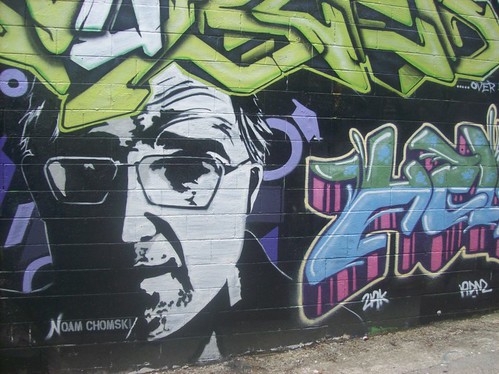
On Sunday, the last day of his 81st year, Noam Chomsky gave a speech on Gaza in Watertown, Mass., at the behest of Newton Dialogues on Peace and War. They raised alot of money for the Gaza Freedom March. I heard a rumor that the original venue for the speech, Eliot Church in Newton, had dropped the speech under pressure, saying that the speech was “controversial” and had not gone through the appropriate processes for church events. I emailed Newton Dialogues. Dave Ascher responded. If you read between the lines of his response below, it is clear that the Eliot Church came under pressure because of the political nature of the Chomsky speech.
As you read this, remember one thing: This suppression of free speech took place in the heart of abolitionist territory. 150 years ago, Boston-area churches helped lead the movement that forced politicians to come out against slavery. Those churches asserted that All [Americans] are created equal. That same principle is being defiled by scared Bostonians today. Why? Because of the Israel lobby, because of the construction of Jewish identity around Israel, because of fears of persecution that have caused an empowered group to overlook the persecution of others. Dave Ascher:
I have been asked to reply to your inquiry about the Chomsky/Gaza fundraiser that our group, Newton Dialogues on Peace and War, had planned to have in Newton this past Sunday. As an active member of the group, I have been one of the central figures involved in organizing the event and have been privy to virtually all the emails and phone conversations that went on involving the change of venue.
I can confirm that the venue was indeed changed and on fairly short notice. At the new venue we had a turnout of about 200 people, which was considerably more than the capacity of the new space and the event raised significantly more money for the Gaza Freedom March than we’d anticipated.
The change of venue was due in large part to a failure on our part, as the sponsors of the event, to communicate and coordinate our plans well enough with the original venue. This might not have been a reason for cancellation in itself, but there was also a set of circumstances (pastor on vacation, short notice, Thanksgiving holiday) that conspired to make things difficult to straighten out.
We have heard that the church received phone calls after our notices were sent out. We do not really know the substance of those calls nor whether they came from nervous parishioners who recalled the hysteria in Newton when Chomsky came to speak to a club at one of the high schools or from people who wanted to alert the relatively-inexperienced assistant pastor of the possibility of this event being different from the used book sale to raise money for the homeless or from people in the community who have attempted to disrupt other events in Newton over the past several years that included speakers who are critical of the Government of Israel’s actions toward the Palestinians and its neighbors (like Lebanon).
After a lot of last minute phone calls and emails a venue was located at a church in neighboring Watertown, about 1-1/2 miles from the original venue. We were told that there were demonstrators from “The David Project” outside the church on Sunday morning, protesting the event, but nobody showed up in the evening to disrupt or demonstrate and all went smoothly.
We plan to re-schedule Chomsky to speak at the original venue, in the City of Newton, about Israel’s actions and policies toward the Palestinians as soon as we can arrange it after the New Year.
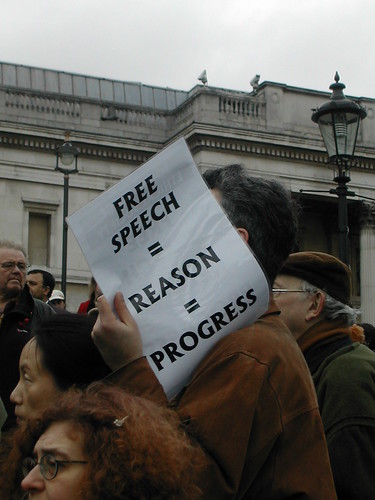
Since March of this year, The Berkeley Daily Planet (BDP) has been struggling against a campaign by three long-time critics to scare away advertisers and shut the paper down, based on accusations that its publication of letters to the editor and op-eds critical of Israel constitute an anti-semitic bias.
On November 27th, the local controversy came to national attention when the New York Times published an article in its Business Section – “In a Home to Free Speech, a Paper is Accused of Anti-Semitism”
Jim Sinkinson, who has led the campaign against the BDP, is quoted as saying: “We think that [publisher Becky O’Malley] is addicted to anti-Israel expression…If she wants to serve and please the East Bay Jewish community, she would be safe avoiding the subject entirely.” Ms. O’Malley denies any personal or editorial bias, and says “I think that is unusual to say the least that anybody would think that they could dictate a whole area of the world that is simply off limits for discussion….” She points out that the Planet has always had an open-forum policy of printing all letters from local readers that are not obscene or defamatory.
Not covered in the New York Times article was the community response to the censorship campaign. Although many advertisers have been frightened away, readers have spoken out to protect free speech in their town and to keep the BDP alive. Scores of people have weighed in with supportive letters to the editor, and many Jewish residents signed petitions letting it be known that Mr. Sinkinson and his two allies in no way speak for the Jewish community. In addition, a coalition of local peace and justice groups — including Jewish Voice for Peace-Bay Area — took out a series of ads to expose the facts of Palestinian life under Occupation, to support the BDP free-speech policy, and to provide desperately needed advertising revenue to the paper.
–www.berkeleydailyplanet.com/pdfs/07-02-09.pdf: See Jewish Voice for Peace ad in page 14
–www.berkeleydailyplanet.com/pdfs/07-09-09.pdf: See statement of Jews who support the Daily Planet in page 28
–www.berkeleydailyplanet.com/pdfs/07-30-09.pdf: See Bay Area Friends of Sabeel ad in page 28
Now, in immediate response to publication of the New York Times article, people from around the country have been moved to write to the BDP. Of some 20 letters to the BDP editor generated by the article, all but two supported the Planet and deplored the cynical use of charges of anti-semitism as a censorship tactic.
Notwithstanding reader support, BDP advertising revenue has been drastically reduced as a result of the campaign against it, together with the impact of the economic recession. To support the BDP’s commitment to free speech, you can write to the editor at opinion at berkeleydailyplanet.com. Consider also contributing to the paper’s Fund for Local Reporting.
– Carol Sanders
Source: Jewish Voice For Peace

California State Senator Leland Yee, Ph.D
While California may lead the nation in providing legal protections for student speech rights, a report released today showed nearly 70 percent of our public universities are violating state law or the US Constitution through policies restricting free expression.
The Foundation for Individual Rights in Education (FIRE) conducted a rigorous study of restrictions on speech at America's colleges and universities. Within California, ten California State University campuses and five University of California campuses received a "red light" rating, meaning the schools have at least one policy that clearly and substantially restricts freedom of speech in violation of law.
"It is certainly disheartening that rather than serving as public forums of free expression, many of our public universities are restricting speech and violating state law and the Constitution," said Senator Leland Yee (D-San Francisco). "This report clearly highlights the need to continue our efforts in protecting student speech rights and prohibiting retaliation against students, faculty and workers."
"Shockingly, FIRE's research demonstrates that a majority of California's public universities are restricting student speech protected by both the Constitution and state law," said Will Creeley, FIRE's Director of Legal and Public Advocacy. "If challenged in court, these policies will fall. The fifteen UC and CSU campuses earning a 'red light' rating from FIRE should consider themselves on notice."
Yee has authored two laws to protect such rights at California campuses. AB 2581 (2006) made California the first state in the nation to specifically prohibit censorship of college student press and explicitly granted free speech rights to students. SB 1370 (2008) further protects school employees from retaliation for assisting students in exercising such speech rights.
One of the more egregious violations has taken place at Southwestern College, a community college in Chula Vista. Campus administrators deemed the entire public campus a censorship zone except for a narrowly defined area referred to by FIRE as a "free speech patio." FIRE has referred to the policy as "utterly indefensible."
San Francisco State University also had policies that attempted to restrict student speech activity to narrowly defined "public forum areas," as well as prohibited distribution of literature to the "Student Union Plaza behind the blue lines marked on the pavement" and required students to "obtain authorization from the Student Activities Office."
Earlier this year, a student club at UC Berkeley faced a $3,200 security fee to host a controversial speech about the Arab-Israeli conflict. In clear violation of a Supreme Court decision, students were told that uniformed officers would be required for the event because of the subject matter of the presentation. As a result of public criticism and possible legal action, university officials withdrew the unlawful security fee.
To read the full report titled "Spotlight on Speech Codes 2010: The State of Free Speech on Our Nation's Campuses," visit www.thefire.org. FIRE works to protect fundamental rights on campus including the freedom of speech and expression; religious liberty and freedom of association; freedom of conscience; and due process and legal equality.
For his efforts to protect student speech rights, Senator Yee has been honored with several awards including the Freedom of Information Award by the California Newspaper Publishers Association; Distinguished Service to Journalism Education Award by the Journalism Association of Community Colleges; Champion of Journalism Education Award by the California Journalism Education Coalition; Beacon Award by the First Amendment Coalition; and the Friend of Scholastic Journalism Award by the Journalism Education Association
 Decades of determined silence, or aiding and abetting both illegal settlement expansion and vicious attacks on dissenting critics of Israeli state policy have created a kind of “blowback” in the institutional Jewish world.
The new targets of the settlers’ linguistic paramilitary forces, aka the rightwing pro-Israel punditocracy and their followers, aren’t just the usual suspects like Jimmy Carter or Archbishop Tutu. They’re now mainstream, moderate, demonstrably Israel-loving institutional Jews. This is a moment of truth for many of these targets. Faced with new pressure from their right-wing flank, some will fold and adapt to a more McCarthyite environment, especially if loss of funding is threatened. Others will stand strong and even be radicalized.
So, who are the new targets of occupation-supporters like Caroline Glick (Whither American Jewry?) and Isi Liebler (Candidly Speaking: Marginalize the renegades) of the Jerusalem Post and Walter Bingham (Expose the Renegades) in Arutz Sheva? For starters, there’s former Jewish Council for Public Affairs director Hannah Rosenthal, whose principled concern for the Jewish community and for Israel is undeniable. She is the newly appointed head of the US Office to Monitor and Combat Anti-Semitism:
Shortly after the announcement of Rosenthal’s nomination, conservative Jewish web sites began to attack her, some of them declaring that Obama appointed an anti-Israeli to fight anti-Semitism. Rumors brewed that she had accused Israel of systemically strengthening anti-Semitism. Bloggers argued that her appointment would cause Jews and Israelis to cast doubt on Obama and his relationship with Israel.
Then there’s the the popular San Francisco Jewish Film Festival, known for its diverse approach to programming, and the Jewish Federation in San Francisco, which (lightly) funds the Festival. Not used to getting hate mail from Jews, and being called anti-Semitic and anti-Israeli, the Federation has been under tremendous pressure to cave in to calls for excessively McCarthyite control over funding recipients; the Film Festival has already lost tens of thousands of dollars and half its board, with no sign of the campaign dying any time soon.
The Federation board wisely said no to an absurd proposal to bar partnerships with any individuals or groups who “defame Israel” (good luck defining that), but they did support a resolution passed by the General Assembly of the Jewish Federations of North America barring partnerships with groups that support Boycotts, Divestment and Sanctions.
(Presumably, Time’s Joe Klein, who recently came out in support of a suspension of aid as a way to get the Israelis to actually freeze settlements, could still speak at a Federation-supported venue. Jewish Voice for Peace, however, which promotes selective divestment and sanctions as a way to end Israel’s occupation, would continue to get no funds or support from the Federation. In fact, the Federation would be duty-bound to oppose JVP, according to the resolution. As more mainstream Jewish groups openly advocate against support for 501c3s that support extremist settlers, it’s not clear how this resolution will play out.) Of course, there is the unprecedented smear campaign against Richard Goldstone, including coordinated condemnation of his report in Conservative synagogues across America, and yet he has continued to hold strong and defend his work with tremendous integrity. And then, there are the ongoing attacks on the new moderate AIPAC alternative, J Street, which puts forth an agenda not entirely different from what Netanyahu himself at least says he wants - two states that preserve as they call it, “a Jewish democracy”. Finally, there is the very surprising Glenn Beck (pictured above) attack on the Anti-Defamation League for their new report “Rage Grows in America: Anti-Government Conspiracies,” which calls out Beck in particular in a wide-ranging condemnation of hate-mongers. Surprising because the ADL can typically be counted on to overlook hate-mongering and Holocaust-abuse in the service of a rightwing “pro-Israel” agenda, but in this case has done the right thing in identifying this truly scary trend for which Beck has become the figurehead. As MJ Rosenberg writes in his new column at Media Matters
:
Glenn Beck is, not surprisingly, in a state of rage about the ADL report. He defends himself by asking the ADL to “name the person who has been more friendly to Israel” (the predictable defense). This, of course, is utterly irrelevant. The issue here is not Israel but the United States. It is here where Beck spreads his hate, not Israel. And then Beck turns on the ADL itself. Beck said that the Anti-Defamation League itself has “much to do with the plight of the Jewish people.” I don’t know what plight Beck is referring to, perhaps the Holocaust which so often pops into his head and out of his mouth. But, obviously, the ADL fought for the victims of the Holocaust, not its perpetrators. The Holocaust was the product of professional hate mongers, the mob who listened to them, and politicians who came to power on their backs. That is precisely the combination the ADL is worried about now.
It’s tempting to sit back and say, “I told you so.” As Israel is learning all too well regarding increasing numbers of intransigent settlers and religious fanatics who profess open contempt for their own country, you can’t help create a monster and then expect it not to try to devour you. But one hopes that all of the targets of these nasty charges will a) put into perspective the war of words versus the war of lives and homes being waged, for example, in Sheikh Jarakh in East Jerusalem right now and that b) they’ll resist efforts at intimidation precisely because Jews who love Israel should care about the rights of Palestinian Israelis getting evicted from Sheikh Jarakh, as well as the rights of their peace-loving Jewish neighbors. There is only one logical conclusion after reading Rabbi Arik Ascherman’s moving and terrifying account of what’s happening in East Jerusalem: justice for Palestinians is justice, and peace, for Jews. Supporting the ongoing evictions and terrorization of Palestinians is the last way in the world to show love of Israel.
-Cecilie Surasky
Source: Jewish Voice For Peace's Muzzle Watch
Even as the White House preaches tolerance toward Muslims and Sikhs, it is practicing intolerance, signaling that anyone who challenges the leaders of an embattled America is cynical, political and -- isn't this the subtext? -- unpatriotic... We should dread a climate where the jobs of columnists and comedians are endangered by dissent.
Maureen Dowd, New York Times, September 30, 2001
That was 2001, the Republicans were in the White House and liberals were busy lecturing us on the dangers of a climate where dissent is considered unpatriotic. Now it's 2009 and the liberals hold Congress and the White House and are busy creating a climate where dissent is un-American and the subtext is... criminal.
 Where the worst that people like Maureen Dowd or Jacob Weisberg could dig up as examples of the Bush Administration creating a climate of intimidation was an offhand comment about Bill Maher praising the courage of the 9/11 terrorists or putting a positive spin on news from Iraq-- those days are now long behind us. If post 9/11, a few columnists faced public outrage for their comments, today the Obama Administration openly orchestrates political attacks against its media critics.
Whether it's FOX News or Rush Limbaugh or CNBC-- the Obama Administration has openly and shamelessly targeted dissenting media figures. And even told the press how they were going to do it. And naturally the same defenders of the press who furrowed their brows when Ari Fleischer suggested that maybe an obnoxious comedian should think twice before calling the 9/11 terrorists courageous and the US Air Force cowardly... are cheering the media crackdown on.
Obama's top people did their tour of the Sunday Morning talk shows to spread the message to a cooperative state run media that FOX News was to be sidelined. White House Chief of Staff Rahm Emanuel said, "it's important not to have the CNN's and the others of the world being led and following Fox, as if what they're trying to do is a legitimate news organization."
Had the Bush Administration gotten into the business of deciding that cable news networks with a liberal bias are not legitimate news organizations, the furor would have been endless. And the same columnists repeating the Obama Administration's talking points today, would have been the first to point out that this would mean that the government now gets to decide what a legitimate news network is or isn't, based on its level of favoritism to the White House.
Back in 2005, when the Bush Administration was merely paying less attention to the press and focusing on getting its message out through PR firms, Eric Boehlert at Salon hysterically claimed that this was part of a giant plot by the Bush Administration to destroy the press altogether. Boehlert wrote, "The Bush administration has been at war with the media from Day One. Is its real goal to undermine the press itself -- and thereby eliminate inconvenient truths?..." Boehlert then went on to give a description of the Bush Administration that could all too easily apply to the Obama Administration, "the Bush administration's well-documented mastery of cold-blooded political hardball, its record of contempt for journalism, its cavalier willingness to cross ethical lines in dealing with the press, and its arrogant assertion that it alone creates and controls reality".
But Boehlert's accusations would be far better directed toward the Obama Administration, whose White House Communications Director Anita Dunn gloated publicly;
"Very rarely did we communicate through the press anything that we didn't absolutely control... Whether it was a David Plouffe video or an Obama speech, a huge part of our press strategy was focused on making the media cover what Obama was actually saying as opposed to why the campaign was saying it. One of the reasons we did so many of the David Plouffe videos was not just for our supporters, but also because it was a way for us to get our message out without having to actually talk to reporters. ... We just put that out there and made them write what Plouffe had said as opposed to Plouffe doing an interview with a reporter. So it was very much we controlled it as opposed to the press controlled it."
There could hardly be a better textbook case of contempt for journalism and arrogance in believing that it and it alone controls reality.
 At no time did the Bush Administration create an Operation Matthews to target Chris Matthews. Or go on talk shows to announce that the White House no longer considers CNN a news outlet. Mostly the Bush White House dealt with the media's liberal bias by trying to talk around them. By contrast the Obama Administration is not satisfied with having the allegiance of the majority of the press, but actually conducts wars against that fraction of the media that it does not yet control.
Naturally Boehlert sees no attempt by the Obama White House to create its own reality by trying to intimidate and directly attack media outlets that broadcast reports critical of its policies. These days he works at Media Matters pushing the Obama Administration's segregation of dissenting media outlets line, specifically FOX News. The thinking apparently is that the first step is to prevent any other media outlets from repeating any stories that FOX News breaks. After all nothing can be allowed to interfere with the White House's media echo chamber in which reporters repeat White House talking points to the public and back to the White House again.
That is not journalism. It is very literally propaganda. And calling on the media to segregate dissenting reporters and channels from the propaganda stream is an attempt by a faltering administration to create its own reality in defiance of the actual reality outside. The Obama Administration has tried to create its own economic reality, its own military reality, its own diplomatic reality and above all else, its own spin reality. And to do that, to make sure that the public hears nothing but the White House talking points day in and day out, you need control of the press.
Lenin's technique for seizing power in a city was to first grab the telegraph office in order to be able to control communications, then the electricity to control power, the railway stations to control transportation, the police stations to control enforcement, and ration cards to control food distribution. The first step though was to control communications. And when Anita Dunn, who considers Mao her favorite political philosopher, boasts about the Obama campaign's ability to control the media and feed unfiltered propaganda to he American public... the key word remains, "control".
And the stunning hypocrisy of the media, which repeatedly accused the Bush Administration of suggesting that its dissenters are unpatrotic or unamerican, in turning around now and calling FOX News "unamerican", as Jacob Weisberg does in a Newsweek column, demonstrates not only their bias, but their fundamental lack of standards of any kind. Boehlert and Weisberg and Dowd are not journalists, though they do get up to wave the ink stained flag and salute the masthead at every occasion. Rather they are propagandists willing to say anything to promote whatever the liberal agenda might be at the moment.
 But the fallacy of both the White House and its adoring media fans is in believing that controlling the media also means controlling the American public. Health care nationalization isn't failing because of FOX news, it's failing because the public doesn't like what it sees. FOX news played its part, but the Obama administration's combination of deceit and incompetence sealed the deal. And while the rest of the media is content to explain the White House's talking points to America, FOX News is actually asking the hard questions about the people in power.
If dissent is now unamerican and if repeating the White House's talking points has become the essence of true journalism, then the claims made about the White House during the Bush Administration have finally come true... one administration later.
Source:

The Cornell Daily Sun
Student activism is a long-standing tradition at Cornell, and the University's creed pledges full and equal protection of students' rights; but there is a devil in the details.
Cornell's policies on harassment, tolerance, respect and civility contain so-called speech codes - "Trojan horses" embedded within University guidelines that limit the scope of free speech on campus.
William Creeley, director of legal and public advocacy for the Foundation for Individual Rights in Education, addressed this topic, and the overlying issue of students' First Amendment rights, yesterday evening in Goldwin Smith Hall. "There's a discrepancy," he said. "They promise with one hand and take away with the other."
Cornell's commitment to free expression is clear: "Because it is a special kind of community, whose purpose is the discovery of truth through the practice of free inquiry, a university has an essential dependence on a commitment to the values of unintimidated speech," University policy states. "To curb speech on the grounds that an invited speaker is noxious, that a cause is evil or that such ideas will offend some listeners is therefore inconsistent with a university's purpose."
Yet, Cornell received a "red light" rating from FIRE on the grounds that it "has at least one policy that both clearly and substantially restricts freedom of speech."
"Most universities maintain policies that limit free speech on campus," Creeley said. "The numbers really are shocking." 67 percent of private universities and 77 percent of public institutions have unconstitutional speech codes.
Public universities, as government entities, are bound by the First Amendment. Private institutions draft their own codes of conduct that students must comply with upon matriculation.
Though Cornell is openly in favor of student expression, harassment violations under University policy like "making bias-motivated jokes or statements" are not included in protected speech. This stipulation, among others, could be easily stretched.
"They would not and do not match up to strict legal standard," Creeley said. "If you tell a joke from The Daily Show to your fellow student you are engaging in bias-motivated jokes or statements. Is an administrator necessarily going to punish a student for that? Perhaps not. The problem is that Cornell gives them the discrepancy to do so."
"You put your academic career in the hands of an administrator who may not be inclined to agree with you and he has a policy to back him up," Creeley said.
Though administrators currently do not appear to be taking liberal advantage of the loopholes in Cornell's policy, they would be complying with University codes if they chose to.
The legal basis for university policies that interfere with the freedom of speech is the freedom of assembly. Private institutions have a constitutional right to establish a university under a specific creed.
Konstantin Drabkin '11 stressed the importance of free expression, even when one's views are in the minority. "[We] have the right to the freedom of speech," Drabkin said. "Professors are going to tell you things you don't believe. ... It can be difficult when you're sitting in a lecture of 300 people to raise your hand and speak for your beliefs, but that's what you've got to do."
Creeley responded that generally professors are entitled to their own opinions but these opinions cannot influence a professor to lower a student's grade because of his or her own biases.
"We believe in students being strong enough to participate in the rough-and-tumble of democracy," Creeley said. "We have a saying at FIRE: If you go through four years of college and you're never offended by something, you should ask for your money back."
FIRE is non-partisan, non-profit 501(c)(3) organization. They coordinate legislation in defense of freedom of speech, due process, legal equality, religious liberty and sanctity of conscience.
"We really practice what we preach and that's what makes us unique," Creeley said.
FIRE is broad in its representation, defending groups as diametrically opposed as evangelical Christian organizations and the American Civil Liberties Union.
"The great thing about free speech is that sooner or later everyone's free speech gets challenged, no matter what side of the political spectrum you're on."
Details about the University's FIRE rating can be found at www.thefire.org.
When will Bucknell University realize that trying to suppress free speech is one of the best ways to help the speakers get their message out? Human Events is the latest publication to shine the light of shame on Bucknell's frequent actions to shut down the expression of the Bucknell University Conservatives Club (BUCC). The article, coauthored by FIRE Program Officer Peter Bonilla and BUCC President Travis Eaione, describes how Bucknell administrators flouted its commitment to free speech and bent its policies out of shape in order to shut down BUCC's satirical "affirmative action bake sale" and BUCC's distribution of "Obama stimulus dollars" in protest of government spending on the federal economic stimulus.
FIRE takes no position on the social, economic, and political issues that BUCC was protesting, but we have brought all our resources to bear on exposing Bucknell's outrageous violations of freedom of expression. Peter and Travis do a wonderful job describing what happened after BUCC's bake sale was shut down over a technicality:
BUCC dutifully reapplied to hold the bake sale again, taking special care to get the paperwork exactly right. This time, however, [Dean Gerald] Commerford said that the bake sale violated Bucknell's discrimination policies — even with optional, satirical pricing — and that BUCC would never, ever be able to hold such an event at Bucknell. In a conversation BUCC recorded, Commerford said, "It's a political issue, ok; it needs to be debated in its proper forum, ok, and not on the public property on the campus."
Bucknell is certainly no "marketplace of ideas" like universities are supposed to be. Commerford insists that BUCC may never raise any kind of discussion on affirmative action unless it occurs in exactly the time, place and manner that Bucknell dictates. By controlling the forum, Bucknell is trying to control the message, too. Affirmative action, it seems, may not be the subject of spontaneous debate at Bucknell.
Peter and Travis add:
It is a sad day when universities use speech codes and other means to make student debate less free on campus than on the public sidewalk. It is even worse when they do so selectively, as Bucknell has done with its singling out of conservative speech for censorship.
Perhaps worst of all, however, is the condescension that Bucknell has shown its own students by deciding they just aren't adult enough to openly debate important issues. Are we really to believe that the students of this well-regarded university are so brittle that they must be protected from such upsetting controversies?
Indeed, Bucknell administrators made quite a mess of interpreting the "Sales and Solicitation" policy in order to find ways to shut down BUCC's expression. When administrator Judith Mickanis was asked about shutting down the distribution of Obama stimulus dollars, she wrote:
I said that consistently permission was needed to hand out anything from Bibles to other matter. You just can't hand things out without approval. ... [G]roups can solicit only from behind tables, not out in the open like they were doing.
That's right: according to her, students were not allowed to distribute any literature of any kind to other students in one of the most public areas of campus—except with prior permission, and certainly not "out in the open"! Bucknell made such a hash of the policy that recently it changed the name of the policy to "Sales and Promotions." (Stay tuned for more on the revisions to the policy.) We have yet to see whether Bucknell students will once again be allowed to engage in one of America's oldest free speech traditions "out in the open."
Bucknell is on FIRE's Red Alert list because it is truly one of the worst universities in the country when it comes to oppressing speech. (See FIRE's full-page ad in U.S. News & World Report's "America's Best Colleges" issue.) Peter and Travis conclude:
Bucknell is getting a new president next year, and BUCC plans to keep engaging students on issues that affect them. In the meantime, citizens who care about freedom of speech should join the many alumni and others who have written President Mitchell at brian.mitchell@bucknell.edu urging him to truly level the playing field for conservatives on campus.
Thanks to Human Events for running the article. Now it's up to Bucknell to start behaving like a true marketplace of ideas—and up to us to keep pressing Bucknell to do so.

A federal law governing hate speech violates Canadians' charter rights to freedom of expression, the Canadian Human Rights Tribunal has ruled.
The development could give more ammunition to those who complain that the Canadian Human Rights Commission, which refers cases to the tribunal, is engaging in censorship by attempting to restrict what people say on the Internet.
The decision, released in Ottawa Wednesday, also seems to call into question whether the tribunal should be involved at all in policing online content through Section 13 of the Canadian Human Rights Act.
“This case raises questions about the substance of the law itself,” said Michael Geist, a University of Ottawa law professor who holds the Canada Research Chair in Internet and E-commerce Law. “This will only build the momentum for another examination of how we approach this.”
At issue was a complaint lodged with the tribunal against Marc Lemire, webmaster of freedomsite.org. Ottawa lawyer Richard Warman alleged that the messages posted on the site were discriminatory and exposed minority groups to “hatred and contempt,” key language under Section 13 of the law.
Mr. Lemire responded by requesting that the law be “declared inoperative” because it is inconsistent with the Charter of Rights and Freedoms. Tribunal member Athanasios Hadjis agreed. He wrote in the ruling that the law was originally intended to be “remedial, preventative and conciliatory in nature,” rather than a means to hand out penalties.
Section 13 defines it as “discriminatory” for an individual or group “to communicate telephonically or to cause to be so communicated … any matter that is likely to expose a person or persons to hatred or contempt” based on characteristics such as race, religion, sexual orientation, and so on.
Advocates call the law a necessary control on hate speech in an age where the Internet makes the spread of messages easier and faster. Opponents say it's censorship and has no place in a free society.
The tribunal's decision, which will likely be appealed, is not binding beyond Mr. Lemire's case. However, it moves the debate forward, said University of Windsor law professor Richard Moon.
“It creates a new situation in which all the different legal and political actors have to think about what their response is,” Prof. Moon said.
In 2008, Prof. Moon wrote a report for the CHRC about the role of Section 13 in the Internet age that said the law should be repealed. He wrote that Internet use means that “any attempt to exclude all racial or other prejudice from the public discourse would require extraordinary intervention by the state.”
But Mr. Warman, who brought the case, disagrees.
“There is no unlimited right to speech,” he said. “The fact is, this was a hate website and it attracted hate.”
Mr. Warman cited postings by a visitor to freedomsite.org that, in a separate case, the tribunal called “as vile as one can imagine and not only discriminatory, but threatening to the victims.”
Mr. Lemire said webmasters are not responsible for content on message boards.
“It's not for the state to … decide what beliefs we can have,” he said. “People shouldn't be put through a six-year-long hearing even if they're Nazis, even if they're communists, even if they're racists.”
Bernie Farber, the CEO of the Canadian Jewish Congress, said all hate speech is a potential trigger.
“Racist war, from the ethnic cleansing in Cambodia, to the Balkans, to Darfur, to the Holocaust, did not start in a vacuum,” he said.
“Hateful words do have an effect. … The Internet cannot and should not be a wild frontier where anything goes.”

An anonymous letter of July 16 [a reader's online comment printed in July 16 issue, click here for original] takes sharp issue with the opinions of UCSB Professor William Robinson regarding his comparison of Gaza to World War II's Warsaw, calling his comparison "malicious and deliberate slander," and regretting the failure of the university to "discipline" him.
Perhaps understandably, the mystery writer does not mention any of the following:
(1) Professor Robinson's written and (forwarded) photographic comparisons are part of an academic's usual and normal freedom to express an opinion as long as his students are free to disagree (they are);
(2) No student has the right not to be presented with opinions he finds objectionable;
(3) The attempt to "discipline" Professor Robinson was orchestrated by the Anti-Defamation League, partly in cooperation with university officials who had the responsibility to evaluate the charges against Robinson, but did not reveal the ADL connection;
(4) 100 UCSB professors and 20 department heads signed letters, and many UCSB students organized via a web site, all objecting to the charges against Robinson as an attack on academic freedom;
(5) UCSB Academic Senate Charges Officer Martin Sharlemann avoided the usual first step in such proceedings, i.e. having the two complaining students contact the Dean or Department Head to see if an informal resolution could be obtained. He also: violated the Faculty Code of Conduct by demanding Professor Robinson answer a set of general charges before the required convening of an Ad Hoc committee to authorize such action; refused repeated requests from Robinson to make these general charges - copied from the Faculty Code of Conduct - specific; then later, when he did make them specific, refused the professor's attempt to answer them, saying Robinson had had his "chance," thereby eliminating the professor's right to participate in the process in any meaningful way; violated the Faculty Code of Conduct by deleting one of the students' charges that could never have been sustained (antisemitism) and adding a charge ("coercion of conscience") the students did not make, thus acting as an agent for the complainants; and although having no authority to "investigate" anything, spied on distributed emails of the Sociology Department (to which Professor Robinson belongs) by subscribing to one of the departments listservs without revealing his own position as the charges officer.
(6) Professor Aaron Ettenberg, given a place on the Charges Advisory Committee which was convened to evaluate the complaints, violated the confidentiality provision of the Faculty Code of Conduct by discussing the matter with a person not authorized to participate, a Rabbi Gross-Schaefer, who then wrote letters to the Independent and the News-Press attacking Robinson; violated the conflict-of-interest provision of the Faculty Code of Conduct by not revealing his previous membership in Hillel, to which the ADL belonged.
Properly, the UCSB Academic Senate unanimously dismissed the students' frivolous complaints. Properly, it has voted to investigate possible improprieties by some of its members who were active in this matter.
In my opinion, shame accrues to the corrupt behavior of Professors Sharlemann and Ettenberg; to the Anti-Defamation League, once devoted to vigorous defense of persecuted persons, now devoted to scurrilous smear-mongering and attempts to silence those (especially elected officials and teachers) who oppose the despotic policies of the state of Israel; and to University of California Chancellor Henry Yang, whose failure immediately to provide Professor Robinson with an apology reeks of cowardice. William Smithers
Source: The Santa Barbara Independent

First, let us consider the question of which "community" von Brunn was allegedly attempting to devastate. He rushed the Holocaust museum, which memorializes the 6 million Jews killed by the Nazis and their enablers. There could be no more poignant symbol for the Jewish community. Yet von Brunn killed not a Jew but an African American -- security guard Stephen Tyrone Johns.
So which community was affected by this weird, virtually suicidal act? Was it the Jewish community or the black community? Since von Brunn hated both, you could argue that it does not matter. But since I would guess that neither community now gives the incident much thought, the answer might well be "neither one." So what is the point of piling on hate crimes to what von Brunn has allegedly done? Beats me. He already faces -- at age 89, remember -- a life sentence and, possibly, the death penalty.
The real purpose of hate-crime laws is to reassure politically significant groups -- blacks, Hispanics, Jews, gays, etc. -- that someone cares about them and takes their fears seriously. That's nice. It does not change the fact, though, that what's being punished is thought or speech. Johns is dead no matter what von Brunn believes. The penalty for murder is severe, so it's not as if the crime is not being punished. The added "late hit" of a hate crime is without any real consequence, except as a precedent for the punishment of belief or speech. Slippery slopes are supposedly all around us, I know, but this one is the real McCoy.
Let us assume that the "community" is really affected by what we call a hate crime. I am Jewish. But even with von Brunn's attack, I am more affected by a mugging in my neighborhood that might keep me from taking a walk at night than I am by a shooting at the Holocaust museum. If there's a murder in a park, I'll stay out of it for months. If there's a rape, women will stay out of the park. If there's another and another, women will know that a real hater is loose. Rape, though, is not a hate crime. Why not?
I doubt that any group of drunken toughs is going to hesitate in their pummeling of a gay individual or an African American or a Jew on account of it being a hate crime. If they are not already deterred by the conventional penalties -- prison, etc. -- then why would additional penalties deter them? And if, in fact, they kept their mouths shut, refrained from the N-word or the F-word or the K-word, and simply made the beating or the killing seem one triggered by dissing or some other reason, then they would not be accused of hate -- merely of murder or some such trifle. If, though, they gave vent to their thoughts, they would be in for real trouble.
For the most part, hate-crime legislation is just a sop for politically influential interest groups -- yet another area in which liberals, traditionally sensitive to civil liberties issues, have chosen to mollify an entire population at the expense of the individual and endorse discredited reasoning about deterrence.
In von Brunn's case, the hate-crime counts are an obscenity. To suggest that the effects of this attack were felt only by the Jewish or the black communities -- and not, for instance, by your average Washington tourist -- ghettoizes both its real and purported victims. It's a consequence that von Brunn himself might applaud.

Netanyahu has asked Spain, Britain and The Netherlands to stop directly funding the Israeli human rights group Breaking the Silence (BTS). BTS has been releasing IDF soldier testimony on the invasion/massacre in Gaza. The accounts by the soldiers are harrowing and document war crimes. The Israeli government claims that governmental support of “politicized” NGOs undermines democracy in the Jewish state. Netanyahu is “contemplating legislation that would ban foreign government funding for groups such as Breaking the Silence.” The main argument is that foreign governmental funding of non-governmental institutions that are ostensibly working “against” the interests of the duly elected government are undemocratic. Ron Dermer, Netanyahu’s senior political adviser, was quoted as saying that funding from foreign embassies for the group amounted to “blatant and unacceptable” intervention in Israel’s internal affairs.
But Don Futterman (program director, Israel, of the Moriah Fund, a private American foundation working in Israel to support civil society and democracy, immigrant absorption and education.) has a different take,
“If our defense minister (Avigor Lieberman) wants us to live up to the claim that the IDF is “the most moral army on earth,” he should welcome soldiers who speak out about illegal acts that they have witnessed or were asked to perform. In our post-war rush to elections, we unfortunately - and perhaps, conveniently - skipped over any discussion concerning the morality of what the army has done. But even our fears of one-sided international condemnation of our actions in Gaza cannot justify official attempts to silence the messenger, especially when that messenger is us.”
He also argues that:
BTS is not an advocacy organization, It is made up of IDF reservists who have served in the territories during their regular military service over the last nine years. In addition to recognizing the harm we are doing to our Palestinian neighbors, the organization urges us to look closely at the damage we are doing to our own soldiers when they are asked to engage in acts of questionable morality or legality. BTS gathers and then publicizes testimony in both words and pictures from soldiers who are willing to come forward. The organization makes every effort to check the veracity of these testimonies, and will not publish any soldier’s comments unless it has corroborating testimony from at least one other reliable source.”
Indeed, a senior Israeli official objected to friendly nations funding “opposition bodies” inside Israel. IDF soldiers are now considered “in opposition” who do not go along with the government line on Gaza. Futterman, in my opinion gets to the heart of this matter:
“Presumably, what the official meant is that the government and the IDF find intolerable opposition to their attempts to control the discourse concerning Israel’s behavior in the territories”
Democracy is not just the process of voting, selecting representation etc, it is also about discourse freely exchanged.
“Some Jewish organizational officials counter that a ban on foreign government support of NGOs is more characteristic of a dictatorship, and would undermine U.S. efforts to support NGOs in Iran and other countries with poor human rights records.
One senior official at a centrist Jewish organization said such an initiative was profoundly counterintuitive, considering how much the Israeli and Jewish establishments had reaped from Western government backing for NGOs assisting Jews in the Soviet Union during the Cold War — and how such support continues today in Iran and the former Soviet Union.
“It’s a little surprising,” said the official, who spoke anonymously to avoid embarrassing Israel’s government. “All over the world, NGOs are accused of taking other governments’ dollars and being tainted by that — the National Endowment for Democracy, the National Democratic Institute, the National Republican Institute. If the Israeli government says we’re going to only let certain human rights groups operate, it makes it harder to make our case” elsewhere.”
The good news is that the government’s heavy handed attempts to silence BTS has only emboldened soldiers to come forward.
Futterman continues:
our government (Israel) should welcome other expressions of foreign support for our civil society, not attempt to control it. If the United Kingdom or Spain or any other state wants to be a true friend to Israeli democracy, it will renew its commitment to BTS.
Akiva Elder also brings up the point from Gush Shalom that:
“the discriminatory blocking of European government funding to a specific group of legal and legitimate NGOs may well result in a public backlash in the EU, which would force your government to cut all funding to Israeli NGOs, including to universities and hospitals.”
Further, such NGO mettling could effect Chrisian Zionist organizations in the EU supporting settlement activity in the West Bank.
Presently, partially as a result of this effort to stop the funding of BTS there is a move by EU based human rights groups to pressure EU governments and the European commission to stop all funding to Israeli NGO’s. This is a definite “shoot yourself in the foot moment.” Not that surprising for the Netanyahu/Lieberman government, but certainly something that would have real effects on Israeli civil society.
Some of the arguments in support of such a ban are either manifest-destiny-loony or racist. For example, one “pro Israel” critic of such NGO support said that “the difference is that Israel is a first world democracy — democracies meddling in the business of other democracies is inappropriate.” By implication, those places
defined, by whatever arbitrary process, as not being first world can be meddled with because they are not democratic so its okay for first world democracies to act undemocratically as long as they are doing so in undemocratic/non-first world counties.
Its really the cliché about who’s ox is being gored, trying to limit such support in a supposedly democratic system in order to limit the free speech rights of a specific group will almost always end badly and undermines the core tenants of any functioning democratic system.
Robert Lipton

In a column in the National Post Ezra Levant, who has been battling Alberta human rights zealots, identified seven individuals who work for the Canadian Human Rights Commission (CHRC) who also joined neo-Nazi, anti-Semitic, or white hate groups.
It's not that these individuals are Nazi sympathizers or racists who've infiltrated the hallowed halls of human rights activists. They aren't. What they are, are provocateurs, using the Internet to join suspect hate groups in order to collect evidence against them.
In other words, it's a form of entrapment.
Intelligence agents joining (penetrating) a group to assess possible treason or subversion, is vastly different from enticing, provoking or encouraging a racist reaction by pretending to be more extreme than the extremists -- which is what CHRC provocateurs do.
Levant, has been summoned before human rights tribunals (accused of "hate" for publishing Danish cartoons mocking Islamic terrorism), as has Mark Steyn, for exercising free speech, in a book in which he contends the high birthrate among Muslims will change the demographics of western countries.
In both the above cases human rights bureaucrats have looked foolish to despicable -- and have lost credibility among Canadians. At least, one hopes this is the case. The CHRC is, arguably, an often bigoted and unnecessary institution in our country.
As Levant says, "CHRC employees have been active members of neo-Nazi organizations for years, and have published countless anti-Semitic, anti-gay and anti-black comments online." Such as referring to Jews, gays or Muslims as "scum," etc.
Jennifer Lynch heads the CHRC. I took a swipe at her views a while back when she advocated "tolerance and open-mindedness," and then proceeded to show her own intolerance and closed-minded approach, in my view, towards issues she disagrees with.
"Tolerating" views you agree with is not tolerance at all. It's "echoing."
Levant depicts Lynch as cowardly for refusing to appear before a Parliamentary committee.
To many (including me) the CHRC is unnecessary and a direct threat to free speech -- a kangaroo court more intent on lynching (no pun intended) than seeking truth or justice.
CHRC investigators likely see themselves as crusaders, exposing suspect or dangerous organizations and gathering evidence to protect society. Hardly.
Canadian democracy is not threatened by white supremacists or anti-Semites.
Democratic countries generally show repugnance toward extremism.
One gets the feeling the CRHC sets up targets to knock down, thereby justifying its existence. For more details on CRHC mischief, try going to the blog ezralevant.com, or other sites giving details about provocateurs pretending to be racists in hopes of catching racists. Try RichardWarman.com or Google Dean Steacy, and see for yourself.
Short of disbanding the CRHC, Section 13 of the Human Rights Act must be scotched. It "empowers the Commission to deal with complaints regarding the communication of hate messages by telephone or on the Internet ... any matter that is likely to expose a person or persons to hatred or contempt by reason of the fact that person or those persons are identifiable on the basis of a prohibited ground of discrimination."
That's pretty broad, especially when the Criminal Code already allows for legal action in many cases where human rights vigilantes seem intent on waging vendettas.
Prime Minister Stephen Harper should rein in the human rights bureaucracy that too often offends the very essence of due process and democracy.

Now you can go to YouTube and hear for yourself the intro to Rachel’s movie by San Francisco Jewish Film Festival’s Peter Stein, the speech by S.F. Voice for Israel’s Michael Harris, and the Q&A with Cindy Corrie after the film. The video quality is not always good, but you get to hear it all (except for watching the movie itself!)
Michael Harris spoke before the movie. He spent quite some time giving a long list of people that were innocent victims of violence. He added: “Just as Rachel Corrie should be alive today, so should all these men and women.” Of course, we agree. But conspicuously absent from Harris’ long list were the Palestinians. Apparently not a single one of them is worth a mention, let alone compassion. This did not sit well with most of the audience.
As Rabbi Lynn Gottlieb described it: “The fact that the vast majority of people in the crowd at the Castro Theatre would not let the Voice of Israel representative speak his mind without interruption reflects growing frustration with the use of pubic slander, character assassination, cancellation of speakers, firing of faculty and demand for resignations by the so-called defenders of Israel. Since when are people with views that differ from AIPAC, for instance, invited into mainstream circles to speak for five minutes before a pro-Israel speech or film? The representative of Voice of Israel was not there to dialogue. Only to chastise. The crowd refused to be chastised. When the impassioned proponent of Israel mentioned JVP and AFSC in order to condemn them as virulent anti-Semites, the crowd burst into cheers and applause to honor them instead.”
Cindy Corrie spoke after the film. Those who expected to find hatred in what she had to say were sadly disappointed. Cindy addressed not only the loss of her daughter, but about the grief of Palestinian parents in Gaza and Israeli parents whose children were the victims of suicide bombs. She and her husband met with both. This is what she observed: “We encountered many people, both Israelis and Palestinians and others who have had very personal losses, and the losses are all the same.”
When asked about the controversy surrounding her presence at the festival, she answered: ‘‘this has a lot less to do with me and with Rachel that it is with the discussion that is happening within the Jewish community.” Later she added, “I hope for the sake of all people in Israel and Palestine and for us here in the US that we can have the dialogue that needs to happen, but more than dialog, the action that needs to happen to bring an end to the trauma…”
It is an open question whether those who were opposed to the film are interested in dialog.
If you want to see the full thing in YouTube, here it is:
SFJFF ‘09: Rachel - Introduction (1 of 3)
SFJFF ‘09: Rachel - Introduction (2 of 3)
SFJFF ‘09: Rachel - Introduction (3 of 3)
SFJFF ‘09: Rachel - Cindy Q&A (1 of 5)
SFJFF ‘09: Rachel - Cindy Q&A (2 of 5)
SFJFF ‘09: Rachel - Cindy Q&A (3 of 5)
SFJFF ‘09: Rachel - Cindy Q&A (4 of 5)
SFJFF ‘09: Rachel - Cindy Q&A (5 of 5)

This blog entry was authored by Tim Nuccio, a student at the University of Illinois at Urbana-Champaign and FIRE summer intern.
Greg Lukianoff, FIRE's President, has devoted many of his speeches to a concept that he calls "unlearning liberty," a process by which students learn to live under and even embrace censorship—even becoming censors of their own peers. Greg believes that this process is partially responsible for students' acceptance of oppressive speech codes at the college level. Simply put, students have little understanding of what free speech involves or why it is useful, and therefore fail to see the serious problems associated with an environment that does not protect expressive conduct.
Why is this happening on our campuses? Attempting to answer this question, I, along with a colleague, examined the data from a study by the John S. and James L. Knight Foundation that asked sixty-three questions about the First Amendment to 112,003 high school students—quite a large sample.
Before we began examining the polling data, we hypothesized that, consistent with Greg's "unlearning liberty" idea, students would place a lower value on expression in which they were likely to engage. We also predicted that Greg's conclusion-that students who spend their entire lifetime "unlearning" the ideas of freedom will therefore be willing to see their fellows punished even for constitutionally protected expressive conduct—would be confirmed.
On examination, the data did indeed support the hypothesis that high school students are more likely to support protection for acts that acts that they themselves either engage in or would recognize as socially acceptable. Questions forty-three and fifty, which deal with flag burning or defacing the flag as a means of political protest, are an excellent example. While flag burning has been a historically difficult First Amendment issue, the fact that a large majority of students strongly think it should be banned outright tends to indicate that students are less concerned about the ideal of broad protection for all expression than they are about their personal feelings about the content of that expression. Seventy-five percent of students were unaware that Americans have the right to burn the flag as a political protest, while sixty-three percent "strongly disagree[d]" that "People should be allowed to burn or deface the American flag as a political statement" (emphasis added).
This is especially noteworthy considering that, as Noah noted several weeks ago, a majority (nearly sixty percent, in fact) of students responded that they have "...taken classes in high school that dealt with the First Amendment." The study did not ask students whether this was simply a passing mention or an entire class dedicated to topics regarding the First Amendment. Either way, while the First Amendment is not foreign to most students, they still tend to show a lack of real understanding of the purpose and reach of its protection. Indeed, over a third of the students polled think that the First Amendment "goes too far"(question forty) in the rights that it protects, while less than half disagreed with that statement and just one in four "strongly disagree[d]." The responses to this question provide evidence of a lifetime of "unlearning liberty" that must be remedied if the First Amendment is to enjoy the support that it has traditionally had among the vast majority of Americans.
Students were also asked whether unpopular opinions "should be allowed." An overwhelming majority (eighty-three percent) stated that they should. This reflects FIRE's experience that the philosophical idea of free expression has universal appeal, especially when the hypothetical only requires consideration of an expansive concept like "unpopular opinions." But more specific questions asking whether a racially-charged satire constituted free speech, whether a professor's explanation of a racial epithet is protected, or if reading a book with burning crosses on its cover can be prohibited by literally "judging a book by its cover" would almost certainly not reach the same result. I draw this conclusion based on responses for the survey, with students expressing support for liberty when it comes to issues like music (question forty-four) or the student press, while they express opposition to liberty when polled about other issues like flag burning or "indecent" material on the Internet (question fifty-two).
This is important because unpopular speech is precisely what the First Amendment is intended to protect. For instance, two different cases dealing with flag burning found that neither states nor the federal government could constitutionally restrict flag defacement as part of a political protest (Texas v. Johnson and United States v. Eichman). And while no court has ever declared government regulation of "indecent" Internet content per se unconstitutional, the First Amendment's broad protection has resulted in two federal statutes' invalidation. Congress' first attempt to regulate indecency on the Internet, the Communications Decency Act of 1996, was struck down unanimously in Reno v. ACLU, 521 U.S. 844 (1997). Their second attempt, the Child Online Protection Act (passed in 1998 in response to the Reno opinion) failed after eleven years of litigation in ACLU v. Mukasey, 534 F. 3d 181 (2008), and the Supreme Court denied certiorari in this case on January 21, 2009. Indeed, Congress has yet to find a manner to regulate indecent content on the Internet that will survive a First Amendment challenge, and may never do so.
Considering the respective percentages, many students who responded that flag burning was not protected nonetheless say they favor protection for speech that is "unpopular." Further examination of the raw data could presumably uncover the correlation coefficient between those who believe flag burning is protected and those who support protection for unpopular opinions. Examining this correlation might allow future studies to find where the disconnect exists between difficult topics like flag defamation and the broader philosophical concept of protection for unpopular speech. Better teaching of First Amendment history may help students connect specific controversial issues with their general and laudable wish to defend "unpopular" speech.
Unlearning liberty is not just an isolated occurrence, but rather a systemic part of our educational process. While our education system has apparently managed at least to mention the First Amendment to the majority of students, an insufficient number appear to possess even a rudimentary understanding of how a society with free expression functions. This is supported not just by students' responses on issues regarding protected expressive conduct but also by the large proportion who responded "don't know" to many of the questions.
Students need to be educated about the meaning of the First Amendment at the high school level—college is too late. After all, many do not attend college, or may go on to technical school, where the concept of a broad liberal arts education either does not exist or is limited in scope. Among the most important purpose for comprehensive public education in our republic is to create more informed voters, which necessitates broad education about the political process. Our society must seize this opportunity in the interest of preserving our democratic process.
Source: Foundation For Individual Rights In Education





 Posts
All Comments
Posts
All Comments


