Showing posts with label Free Speech. Show all posts

Saturday, January 30, 2010

IS YOUTUBE FINALLY PREPARED TO SHOW THE TRUTH?


An increase in the activities in Occupied East Jerusalem has apparently sparked enough interest throughout the world for YouTube to agree not to pull the videos off the Web. Could we be seeing an end to their zionist censorship? Let’s hope so…..

The (Sheikh Jarrah) revolution will be YouTubed

By ABE SELIG

Social media sites like Facebook, YouTube and Twitter are playing an increasing role in growing participation of young Israelis in protest rallies.

Social media sites like Facebook, YouTube and Twitter, along with a slew of blogs, are playing an increasing role in the growing participation of young Israelis in protest rallies in the east Jerusalem neighborhood of Sheikh Jarrah, activists and journalists familiar with the situation there told The Jerusalem Post on Monday.

Activists and journalists both described a situation in which protesters were relying on the Internet to try and affect change on the ground and raise awareness of the arrests made during demonstrations in the neighborhood.

“It’s all Facebook, e-mails and Twitter,” said Didi Remez, a human rights activist, who has become noticeably involved in the Sheikh Jarrah protests as of late. Remez was arrested during a protest there last Friday.

Below is one example of a recent video not pulled from YouTube… (my comment)

Remez also said that distant audiences, like American Jews, who might be deprived of Sheikh Jarrah coverage due to the mainstream media’s lack of interest, were instead staying abreast of the situation via social networking sites.

“The American media is for some reason refusing to cover this,” he said. “Even though it’s becoming a major issue in Israel. And still, despite that, there’s a lot of awareness [of this issue] among Jewish Americans, the reason being that they are increasingly connected through Facebook, Twitter, blogs and so on.”


“They’re getting information on this without The New York Times,” Remez continued. “So, something that hasn’t been covered at all by the [American] mainstream media, is still getting coverage through new media, and I think that’s a statement about the decline of the mainstream media and maybe a larger comment on the shift away from it.”

Others echoed Remez’s comments, but added that another advantage of social media was its ability to counter police statements about Sheikh Jarrah they said the mainstream media often parroted.

“This is an issue that the media hasn’t really been covering, and when they have, they’ve mostly relied on police statements that portrayed the protesters as a handful of extreme leftists or anarchists, which is simply not true,” said Lisa Goldman, a Tel-Aviv based freelance journalist who has used Facebook, Twitter and blogs to follow the Sheikh Jarrah protests.

“What the social media outlets have been able to provide is a direct source of information that isn’t filtered through the mainstream media,” she said, adding that in this vein, the use of new media had been “absolutely crucial.”

Additionally, Goldman added, social media outlets had also served as a tool to awaken the mainstream Left to the goings-on in Sheikh Jarrah, including, but not limited to, the emerging issue of police behavior towards protesters there, which the Jerusalem Magistrate Court has even censured – ruling last week that the arrests of 17 protesters during a rally two weeks ago was illegal.

“The silent Israeli Left is finally waking up,” she said. “And it’s a result of the way some young people are using social media. It’s been very effective in raising awareness among the moderate Left, who are seeing that the police are suppressing free speech.”

Goldman also pointed to the participation in last Friday’s rally of Prof. Moshe Halbertal, who helped draft the IDF code of ethics and who has been active in disputing the United Nation’s Goldstone Report, as an example of figures who would certainly not be considered extreme, but who have joined the Sheikh Jarrah fray.

Hagai El-Ad, the director of the Association for Human Rights in Israel and one of the 17 protesters arrested two weeks ago, added that the use of new media to circumvent the mainstream media, which, he said, was often “reluctant to cover hard issues, or blatantly hostile,” was spreading rapidly.

“However, it’s not just new media [at play in Sheikh Jarrah],” he said. “I think there’s a need to [step back] from the tactics being used there, and zoom in on the core issue, which is the moral outrage of Jerusalemite families being thrown out of their homes and living in tents in the street. That’s the essential injustice here, and I think it’s a fuel of its own.”

Yet El-Ad did concede that the use of new media was a driving force behind the success of the Sheikh Jarrah protest organizers.

“They are a courageous group of young people, who are functioning without any real budget or resources,” he said. “But they are cleverly online, and they’ve been able to translate that into real movement on the ground – it’s not just a Facebook group that people add their names too.”

“Yes, the mobilization happens online,” El-Ad added, “but the end result is the most classic form of civil protest.”

Source


Bookmark and Share

Sunday, November 1, 2009

Free speech in a Democracy


By Noam Chomsky

Professor Howard Smokler, responding to a column by Nat Hentoff (June 30), writes that I have "hurt and offended" him by two actions concerning Robert Faurisson, who in 1980 published a book entitled Memoir in Defense Against Those Who Accuse Me of Falsifying History in which, according to Smokler, "he charged that 'the myth of the gas chambers' originated in certain American Zionist circles around 1942 ... "The two actions are: 1) that I "defended Faurisson's right to publish these falsehoods," and 2) that "in a letter to the historian Lucy Dawidowicz, (I) expressed complete agnosticism on the subject of whether Faurisson's views were 'horrendous." I will return to the first point. As for the second, it is not clear on what grounds Professor Smokler might be hurt or offended by a personal letter, which I presume he has never seen, written to a third party, but the question is academic, since he has grossly misinterpreted its contents.

The relevant facts are as follows. Faurisson was a professor of French literature at the University of Lyon. After he published some items in which he denied the existence of gas chambers, he was suspended from teaching on the grounds that the university could not protect him from violence. He was then brought to trial for "falsification of history," and condemned -- the first time in the West, to my knowledge, that the courts have affirmed the familiar Stalinist-fascist doctrine that the State has the right to determine historical truth and to punish deviation from it. I was one of 500 foreign signers of a petition urging that Faurisson's civil rights be respected. Shortly after, in a letter of Sept. 10, 1980, Ms. Dawidowicz wrote me asking whether I "had signed a statement defending Robert Faurisson's right to speak his views," and if so, "what reason compelled me to sign it." On Sept. 18, I wrote her that I had indeed signed a statement defending Faurisson's right to speak his views. As for my reasons, I wrote that "I signed the appeal because I believe that people have the right of freedom and expression whatever their views, that the importance of defending these rights is all the greater when the person expresses views that are abhorrent to virtually everyone (as in this case), and that this becomes particularly important when the person in question is thrown out of his academic position," and subjected to other ill-treatment. I did not know then about the "falsification of history" trial, and had never heard of Faurisson's book, which appeared three months later; this book, as the title indicates, was a defense against the scandalous charges for which he was later sentenced, dealing specifically with the charge that he had falsified the diaries of Nazi doctor Johann Paul Kremer.*

[*Faurisson was not convicted of falsifying history; the Paris Court of Appeals upheld a guilty verdict based on "personal damages" likely to arise from "passionately aggressive actions against all those ... implicitly accused of lying and deception" by the results of Faurisson's research. (Ed. note)]

I also wrote to Ms. Dawidowicz that I was shocked by her query as to why one should defend freedom of speech. I remain shocked today. I might add that no question has ever been raised on the innumerable occasions when I have signed similar petitions for people with all sorts of views, often views of which I know nothing or which I know to be horrendous, or when I have taken far stronger and more controversial stands in support of civil liberties, for example, when I supported the right of American war criminals not only to speak and teach but also to conduct their research, on grounds of academic freedom, at a time when their work was being used to murder and destroy (no one accuses Faurisson of being a war criminal or claims that his work is contributing to massive ongoing crimes). I might note that the utter hypocrisy of Smokler, Dawidowicz and their circles more generally is very clearly demonstrated by the fact that they are "hurt and offended" by my defense of the right of free expression in the Faurisson case, but not by far more controversial and extreme actions of mine in defense of the same rights for people they find more congenial.

I went on to inform Ms. Dawidowicz that I knew very little about Faurisson's work, so that while it may be "horrendous," as claimed by his critics, I obviously could not comment. This is what Smokler reports as an expression of "complete agnosticism." Apparently, he is willing to pass judgment on matters of which he knows nothing, but I am not, and the fact that a person is universally denounced does not suffice for me to join in the parade without at least looking at what he has to say, which I had not done in this case and had no particular interest in doing: I am willing to wager that Smokler has never read a word by Faurisson, nor is there any reason why he should. Furthermore, as I wrote to Ms. Dawidowicz, the nature of his views is, plainly, completely irrelevant to the issue of his right to express them, a truism among civil libertarians that those of a Stalinist-fascist persuasion find quite shocking.

I have discussed Smokler's second charge, based on his distortion of the personal letter to Dawidowicz to which he alludes. Let us consider the first charge. Here he is correct. I do defend the right of Faurisson to publish falsehoods, as I defend the right of anyone else to do so, including Professor Smokler. As I wrote to Ms. Dawidowicz in the letter that Smokler misrepresents, "I thought that all of this had been settled in the 18th century, but apparently others do not agree," including Professor Smokler. He states that my support for familiar Enlightenment principles and my rejection of the Stalinist-fascist doctrine that he advocates hurts and offends him. I am afraid I have no apologies to offer about that. Smokler goes on to deny at length a claim that was never made, either by me or by Nat Hentoff: namely, that my "political rights," including the right of freedom of speech, were denied in the three incidents mentioned by Hentoff: namely, 1) a request by students at Cornell Medical School that I withdraw as commencement speaker (as I did) because my views on Zionism so offended them that the occasion would be spoiled for them no matter what I spoke on; 2) the withdrawal of an invitation by the Middle East Center at the University of Michigan after pressure by faculty members who demanded that I not be permitted to speak on the Middle East at the Cleveland City Club, evidently under some form of pressure. Smokler is quite right to say that there is no issue of freedom of speech in these cases, nor has anyone so alleged.

The issue, as Hentoff clearly stated, is an entirely different one. It is as stated in my letter to the Cornell Medical students, which Hentoff quoted: "As you may know, Israeli doves have bitterly deplored the chauvinist fanaticism among sectors of the American Jewish community that they consider -- rightly in my view -- to be driving their country to disaster." I have taken many highly controversial positions on many matters, but incidents of the kind Hentoff describes have never occurred except on this issue, and then only in the United States; my only comparable experience is in the Soviet sphere, where not a word of mine on any political topic is allowed expression. Many others have had the same experience, including prominent Israelis: for example, (General) Mattityahu Peled, who bitterly denounced the American Jewish community, after a visit here when he was subjected to the kind of abuse familiar among those who do not toe the Party Line with sufficient precision, for their "state of near hysteria" and their "blindly chauvinistic and narrow-minded" support for the most reactionary policies within Israel, which poses "the danger of prodding Israel once more toward a posture of calloused intransigence." Other well-known Israeli doves have condemned what they correctly describe as the "Stalinist" practices in these circles. The issue is a serious one, but it is not one of freedom of speech in the technical sense that Smokler irrelevantly debates with no opponent.

Smokler states that it is my responsibility to "make publicly available the evidence which leads (me) to assert that (I am) systematically excluded from the expression of (my) ideas." The assertion is his, not mine, but apart from that, I do not accept such responsibility. The ridiculous antics of Smokler's friends and associates are not my concern. If Nat Hentoff or others ask me for information about these matters, I will provide it, but I recognize no duty beyond that. The Michigan affair was discussed extensively in the University and Ann Arbor press, and by Michigan historian Alan Wald in several articles. It was regarded as scandalous quite rightly, but I have never mentioned it except in response to queries. The same is true of the other two incidents, and of many others.

Suppression of critical comment on Israel of a sort that is easily expressed in Israel itself is readily demonstrable. To mention only one case, my book Fateful Triangle (1983) was reviewed in major (and minor) newspapers and news weeklies in Canada, Britain, Australia (even on national TV), and in exactly two local newspapers in the United States (and in the New York Review of Books, after a long review had appeared in its sister journal in London, which is widely read here), though its contents are far more relevant to U.S. concerns. This is quite typical, for others as well. While I am asked to write regularly on the Middle East in major journals in Israel, Europe and elsewhere, that is virtually inconceivable here. My experience is not all that unusual in this regard. It should be noted that the U.S. is a highly ideological society in which dissenting opinion is effectively marginalized as compared with other industrial democracies, but nevertheless, the case of the Middle East is unique. As has been observed in press commentary in Israel -- a more democratic society than ours, at least for its Jewish majority -- this is a serious danger for American democracy, for the Middle East, and indeed for world peace.

Again let me stress that no one is raising an issue of the "political rights" of critics of Israeli policies. To take another case, my "political rights" are not violated when the Anti-Defamation League of B'nai B'rith keeps a 150-page file on my activities, including surveillance of my talks and grossly falsified accounts of these talks and other matters, which the League then circulates to people with whom I am to have debates (e.g., Harvard Law Professor Alan Dershowitz) or to groups in universities where I am to speak so that they can extract defamatory and slanderous lies from this material. The issues, rather, are quite different. I have agreed to provide these files (leaked to me from the ADL office) to the people who find the Stalinist-style mentality and behavior of the ADL scandalous, and who question whether a tax-exempt organization should devote itself to surveillance and defamation of critics of the state it serves, but I accept no further responsibility to concern myself with the matter, contrary to Smokler's absurd claim, any more than I waste time over the behavior of Communist Party hacks. For those who may be interested in the disreputable and dangerous activities of these groups, there is ample evidence in Paul Findley's recent book, They Dare to Speak Out, Naseer Aruri's "The Middle East on the U.S. Campus," (Link, published by Americans for Middle East Understanding), and other works.

Smokler also presents his private version of my views, claiming that I have given no evidence for them and that an unnamed Africanist interprets the facts differently. No comment appears necessary. Those who may be interested in what my views actually are and whether I have given evidence for them can easily consult available literature, for example, Fateful Triangle. To my knowledge, only one competent Zionist historian has reviewed this book, Dr. Noah Lucas, in the Jewish Quarterly, London, Nos. 3-4, 1984. I will simply quote his concluding words: "Good luck to the reader who may succeed in refuting any of the facts or assumptions or conclusions presented by Chomsky. It will not be accomplished by anyone who approaches the matter as an issue of propaganda or public relations for Israel, but only by the student who matches research with research." Not by Professor Smokler, plainly.


Bookmark and Share

Wednesday, October 21, 2009

The ultimate assault on free speech


Law firm Carter-Ruck’s super-injunction to attempt to stop the reporting of a question on the Trafigura affair in Parliament has galvanised MPs and other bodies to take up the fight for freedom of expression. John Kampfner reports

The unremitting assault on free speech in the UK finally hit the heart of the establishment last week. The story of the Guardian, the oil trader Trafigura, the law firm Carter-Ruck and its super-injunction threatened to override centuries of parliamentary sovereignty.

The story could be seen as an aberration, an example of hubristic lawyers tying themselves in knots. At an emergency meeting on Thursday, a cross-party group of MPs, journalists and campaigners debated whether Carter-Ruck had simply made a mistake — parliament’s rights are supreme and nobody would have the temerity to challenge that in a court. If only it were that simple.

Possibly because their interests are at stake, MPs have woken from their slumber. That meeting is due to be followed by one today with Carter-Ruck, and by a debate on Wednesday. The Conservative MP, Peter Bottomley, has promised to report Carter-Ruck to the Law Society. The new speaker, John Bercow, declared that “there is no question of our own proceedings being in any way inhibited”.

However, a closer look suggests a more complicated picture. Paul Farrelly, the Labour MP and former Observer journalist, ensured that his question was tabled only by carefully not drawing the attention of the Commons authorities to the actual case in question. The irony is that Carter-Ruck’s insistence on secrecy through the super-injunction worked to his advantage. The Commons authorities apparently had no idea what case Farrelly was referring to when they let his question through.

Jack Straw, the justice secretary, is now being lobbied to clarify the situation and to restate the right of the media to report whatever is said or written in the Commons or Lords, no matter what the circumstances.

Even though the super-injunction was lifted late on Friday, the episode should galvanise MPs to see the bigger picture – the seemingly inexorable march towards greater censorship and self-censorship in the UK. A combination of zealous law firms, pliant and sometimes ignorant judges, cash-strapped news organisations and a public that is encouraged to think the worst of the media has produced a situation where strong, investigative journalism is in jeopardy.

The list of infringements is long. The most egregious example is so-called “libel tourism”. Britain is seen as a pariah by the US Congress, which has followed several states in indemnifying Americans from the excesses of English courts.

The chilling effect is hard to quantify, because beyond the prosecutions and the injunctions lie stories that are never written for fear of an angry legal fax.

Many well-intentioned legal changes introduced in recent years have been manipulated, resulting in the opposite effect of the one envisaged. Conditional Fee Agreements —”no win, no fee” — were designed to help the impecunious to mount a claim when wronged. Instead they allow lawyers representing the wealthy to string cases along for as much as possible, knowing the other side cannot afford the fight. One editor told me recently he had been advised by his bosses to “lay off the oligarchs” for purely financial reasons.

The so-called Reynolds Defence, in which a journalist can claim to have acted professionally even where errors are made in publication, is used to stop publication. As soon as the other side is contacted for a comment, the threats begin, and publication can be inhibited.

The biggest challenge is the rise of super-injunctions and the misinterpretation by judges of the right to privacy as enshrined in the Human Rights Act. This part of the legislation was supposed to allow people to protect themselves and their families from unwarranted intrusion. Now “reputation” is being opened to corporations, who, through their lawyers, have been able to persuade judges to agree pre-emptive injunctions to protect their brands. The use of gagging orders appears widespread.

The current libel case that is attracting most attention is that of the science writer Simon Singh. In one of the few positive developments of recent days, he was given leave to appeal against the action brought by the British Chiropractic Association.

Set against this atmosphere of fear is a mood of defiance on the blogosphere and social networking sites. Carter-Ruck’s actions were undone in large part by the extraordinary response on Twitter to the Guardian’s predicament. Many stories that cannot be commented on in a UK domain can be read on foreign-hosted websites. This has produced the crazy situation of people in other countries being better informed about our country than we are.

Index on Censorship and English PEN have jointly conducted an inquiry into libel and curbs on free expression. A number of round-table discussions with editors, broadcasters and senior lawyers produced a heartening show of unity and a determination to lobby for change. Our recommendations will be published on 10 November.

A few weeks later, the culture, media and sports select committee will publish the long-awaited results of its own inquiry into libel, privacy and press standards. There are signs that recent developments may have put some steel into its spine.

The battle is not about allowing journalists to pry with long-lens cameras; it is not about abolishing libel or the right to redress when maliciously wronged. It is about redressing the balance, about removing the stigma from a judicial process that has rendered English law the laughing stock of the western world and the enemy of free expression.

Source: Index On Censorship


Bookmark and Share

Saturday, October 17, 2009

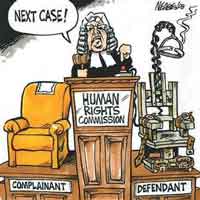
Writers call for probe into human rights commission


Ezra Levant and Mark Steyn appeared before the justice committee on Monday, asking for a probe into the Canadian Human Rights Commission. (CBC)

Two writers appeared before the justice committee on Monday, repeating their call for a repeal of a controversial section of the Human Rights Act, and asking for a probe into the Canadian Human Rights Commission.

Ezra Levant and Mark Steyn are also calling for the elimination of Section 13 of the Canadian Human Rights Act, which allows the commission to investigate allegations of hate speech.

"I think a very practical, doable thing for this committee and for Parliament would be to repeal Section 13 of the Human Rights Act altogether, to leave any hate speech prosecutions to the Criminal Code with its proper checks and balances, and frankly, to bring in a forensic audit to the Human Rights Commission to examine the allegations that I have made," Levant told the commission.

Levant is alleging that employees of the commission belong to neo-Nazi organizations, an accusation he made in July in a National Post column.

Some committee members, like New Democrat MP Joe Comartin, seemed incredulous at the accusation.

"I think I like everybody sitting at this table are at some disadvantage, Mr. Levant and Mr. Steyn, in terms of the accusations that you're making against members of the commission and their staff."

Levant offered to give MPs documents to back his accusations and come back to testify once they had read them.

Levant was subject of a complaint to the Alberta Human Rights Commission under the act for reprinting the provocative Danish Muhammad cartoons in his magazine in 2006. He published the controversial cartoons depicting the Prophet Muhammad in the now defunct Western Standard, arguing that they were "the central fact in the largest news story of the month."

A complaint was launched by the Canadian Islamic Congress against Steyn for an article he wrote titled "The Future Belongs to Islam" and posted on the magazine's website in October 2006.

The article, an excerpt of a book authored by Steyn, talks about Islam being a threat to North American institutions and values. It used statistics to show higher birth rates plus immigration mean Muslims will outnumber followers of other religions in Western Europe.

Both complaints were eventually dismissed.

But Levant and Steyn argue that they should not have been investigated in the first place.

Steyn said it is hard to defend against a complaint to the human rights commission.

"Truth is no defence, so you can make a statement, every aspect of which is factually accurate, and if certain people decide they are going to be offended by it, the factual accuracy of that is irrelevant."

Liberal MP Ujjal Dosanjh asked why they were recommending the abolition of Section 13, instead of amending it.

"So you believe there then should be nothing between absolute free speech and the Criminal Code provisions?" he asked.

But Steyn said society can deal with hate speech.

"I prefer social disapproval, activist parents, a school board firing, to a law restricting what individuals can say and think."

Source: CBC.CA


Bookmark and Share

Sunday, September 6, 2009

It's a great day for freedom of speech


Yesterday, the Canadian Human Rights Tribunal did something its never done in its 32-year history. It acquitted somebody of "hate speech" charges. Until now, the tribunal had a 100% conviction rate.

In a 107-page ruling, tribunal member Athanasios Hadjis didn't just throw out the case against Marc Lemire, he threw out the law, too, calling it an infringement of the free speech guarantees of the Charter of Rights.

Hadjis is no wild-eyed civil libertarian. In the recent past, he himself has convicted people under this same law. And, before Jean Chretien appointed him to the tribunal, Hadjis was the boss of one of Montreal's largest multicultural lobby groups, which thrived on ethnic identity politics. But even Hadjis has had enough of the human rights industry and their fetish for political correctness. He ruled that allowing Canadian citizens to express offensive ideas is preferable to living under a government that prosecutes people for expressing those ideas.

Thursday, August 13, 2009

The CHRC is ethically challenged


Recently, Canadian Human Rights Commission chief Jennifer Lynch criticized me for relying on "one source that is full of misinformation," in my parliamentary study of the CHRC ( "Canadians 'misinformed' on hate speech," June 22). It may surprise Ms. Lynch to learn that the source of my "misinformation" is her own commission and its companion body, the Canadian Human Rights Tribunal.

Every question I raised in committee about the lack of due process and an ethics code for commission employees, and the absence of rules of evidence, came from commission and tribunal documents, many of which are currently available on the commission's own website ( www.chrc-ccdp.ca).The transcripts of tribunal hearings provide telling evidence of the wayward approach the commission's investigators take in prosecuting their cases. Recent hearings, such as the Marc Lemire case, have revealed that current CHRC investigator Dean Steacy and former CHRC investigator Richard Warman regularly posted neo-Nazi diatribes under assumed names on white supremacist web-sites. Further, uncontradicted expert evidence presented before the hearing demonstrated that investigator Steacy illegitimately used an unsuspecting private citizen's wireless Internet service to post his offensive comments.

Perhaps not coincidentally, the commission asked the tribunal to exclude the media from the hearing that day. Fortunately, for the sake of accountability, a secret hearing was rejected and we know more about the CHRC's inner workings.

However, other hearings have been held in secret, as Ms. Lynch has admitted, supposedly for the "safety" of a witness but contrary to the ancient right of being able to face one's accuser in court. Indeed, in the ongoing case of beachesboy@aol.comvs. drumsaremybeat@aol.com,the commission hasn't even revealed the identity of the complainant. Interestingly, the commission's website does name the complainant for 12 of the 14 hate speech cases that have come before the tribunal in the last eight years: Richard Warman. Ms. Lynch's deputy appeared before my committee in Parliament recently and admitted that the commission does not have to follow rules of evidence or legal procedure, but merely has "operating procedures" that identify the timelines for addressing complaints. To put that in plain English: defendants have no guarantee of a fair hearing.

A 2003 internal government review of the CHRC found that the commission scored only 2.5 out of five on an ethics test. The review recommended the commission adopt an ethics code, which it has still not done. Given the questionable activities of its investigators, perhaps it is time for Ms. Lynch to revisit this recommendation.

I'll let the readers decide who is "misinformed." - Russ Hiebert is the Conservative Member of Parliament for South Surrey-White Rock-Cloverdale.

Source: The National post

Bookmark and Share

Tuesday, August 11, 2009

Why So Serious?


Sabina Guzzanti

Sabina Guzzanti
"In a Democracy there is no right not to be offended. Anyone ought to be free to say whatever they like. If someone says things that are offensive, gratuitous and stupid, one has to assume there will be others able to demonstrate that what someone said was offensive, gratuitous and stupid."


Recently, Washington Post Executive Editor Marcus Brauchli canceled the web-series “Mouthpiece Theater” after its hosts made a joke about Secretary of State Hillary Clinton. Bowing to pressure from an obscure organization called Action in the Media, the Washington Post reinforced the notion that any potentially offensive humor must result in a swift apology, perhaps even in resignation or firing. But since when is it criminal behavior to tell a joke, let alone offend someone? In a country that cherishes freedom of speech, when did it become a requirement to prescreen jokes to meet the approval of every available demographic? The notion that the only appropriate jokes are those pre-approved by special interest groups would be laughable if it wasn’t taken so seriously. In this most recent case, Dana Milbank, a columnist, and Chris Cillizza, a White House correspondent and blogger, lost their show after a woman’s group, Action and the Media, complained that one of their jokes was “sexist” and “tasteless.” What did Action and the Media think was so terribly offensive? On the latest webisode of “Mouthpiece Theater,” Milbank and Cillizza visually implied that President Obama would serve “Mad Bitch Beer” to Hillary Clinton during a discussion about Obama’s recent “beer summit.” Correct me if I’m wrong, but I believe the purpose of the joke was to be offensive. Most viewers probably groaned—chuckled—and then moved on. Not the ladies at Action and the Media. They took action immediately, making sure that Milbank and Cillizza would be properly punished for daring to associate the secretary of state with a vulgar term for female dogs. They are perfectly within their rights to be as outraged as they want to be, of course, but the Washington Post commentators did nothing to warrant the cancellation of their show and the removal of the particular webisode in question. They should not have apologized. By apologizing, as so many others have done in similar situations, Milbank and Cillizza strengthened the armies of the humorless and marched us one step into the icy grasp of the thought police. The politically correct attack on humor wouldn’t be so bothersome if not for two factors: its effectiveness and its history of double standards. I am often surprised at the swiftness of the capitulation of individuals targeted for their inappropriate sense of humor. I can understand why someone wouldn’t want his or her name dragged through the mud, but each apology makes it so much easier the next time. Each firing and self effacement make the self-righteous even more convinced of their power. If the jokesters looked as lightly on themselves as the people they set out to offend, perhaps they would not wilt so easily under criticism. If you can’t stand the heat, stay out of the fire—it would make it that much easier for the rest of us. Most tellingly, groups like Action and the Media are very selective in regards to the people they attack. I wonder why the writers of “Saturday Night Live” got a pass when they featured Hillary Clinton and Sarah Palin in a mocking, feminist appeal to stop pointing out Hillary’s “cankles.” Could it be there is something political lurking behind this selective outrage? Surely you jest. Selective outrage of the kind exhibited by groups like Action and the Media has become a tool to remove anyone who disagrees with those groups from public life. Milbank and Cillizza are simply the latest casualties in a war on dissent. Not just political dissent, but dissent against the entire idea that everything you think, do, and say must meet the approval of social activists. Organizations like Action and the Media know that media outlets will bow to even the slightest pressure, and because it works, have found a weapon against free speech. An old saying goes, “Beware of gods who do not laugh.” We should be wary of the humorless, especially if they have a naked political or social agenda. Organizations like Action and the Media, who claims to represent all women everywhere, do not have any basis for demanding apologies for satire not aimed directly at them. Media outlets should not bow to their pressure, especially when it comes to something as inane as a bad joke. Perhaps “Mouthpiece Theater” was offensive, ignorant, and boorish. In that case, the only person who warrants an apology is the person who was the target of the joke, and I have yet to hear Mrs. Clinton ask for one.Source: Strike at The Root

Source: Strike at The Root

Bookmark and Share

Monday, August 10, 2009

The Folly of Hate-Crime Laws


James von Brunn, who is alleged to have opened fire and killed a guard at the Holocaust Memorial Museum, is apparently a consummate bigot. His former wife said that his hatred of blacks and Jews "ate him alive like a cancer," so it might seem appropriate that in addition to having been indicted last week for murder and gun-law violations, he was also charged with hate crimes. At age 89, he proves that you are never too old to hate.

He also proves the stupidity of hate-crime laws. A prime justification for such laws is that some crimes really affect a class of people. The hate-crimes bill recently passed by the Senate puts it this way: "A prominent characteristic of a violent crime motivated by bias is that it devastates not just the actual victim . . . but frequently savages the community sharing the traits that caused the victim to be selected." No doubt. But how is this crime different from most other crimes?

First, let us consider the question of which "community" von Brunn was allegedly attempting to devastate. He rushed the Holocaust museum, which memorializes the 6 million Jews killed by the Nazis and their enablers. There could be no more poignant symbol for the Jewish community. Yet von Brunn killed not a Jew but an African American -- security guard Stephen Tyrone Johns.

So which community was affected by this weird, virtually suicidal act? Was it the Jewish community or the black community? Since von Brunn hated both, you could argue that it does not matter. But since I would guess that neither community now gives the incident much thought, the answer might well be "neither one." So what is the point of piling on hate crimes to what von Brunn has allegedly done? Beats me. He already faces -- at age 89, remember -- a life sentence and, possibly, the death penalty.

The real purpose of hate-crime laws is to reassure politically significant groups -- blacks, Hispanics, Jews, gays, etc. -- that someone cares about them and takes their fears seriously. That's nice. It does not change the fact, though, that what's being punished is thought or speech. Johns is dead no matter what von Brunn believes. The penalty for murder is severe, so it's not as if the crime is not being punished. The added "late hit" of a hate crime is without any real consequence, except as a precedent for the punishment of belief or speech. Slippery slopes are supposedly all around us, I know, but this one is the real McCoy.

Let us assume that the "community" is really affected by what we call a hate crime. I am Jewish. But even with von Brunn's attack, I am more affected by a mugging in my neighborhood that might keep me from taking a walk at night than I am by a shooting at the Holocaust museum. If there's a murder in a park, I'll stay out of it for months. If there's a rape, women will stay out of the park. If there's another and another, women will know that a real hater is loose. Rape, though, is not a hate crime. Why not?

I doubt that any group of drunken toughs is going to hesitate in their pummeling of a gay individual or an African American or a Jew on account of it being a hate crime. If they are not already deterred by the conventional penalties -- prison, etc. -- then why would additional penalties deter them? And if, in fact, they kept their mouths shut, refrained from the N-word or the F-word or the K-word, and simply made the beating or the killing seem one triggered by dissing or some other reason, then they would not be accused of hate -- merely of murder or some such trifle. If, though, they gave vent to their thoughts, they would be in for real trouble.

For the most part, hate-crime legislation is just a sop for politically influential interest groups -- yet another area in which liberals, traditionally sensitive to civil liberties issues, have chosen to mollify an entire population at the expense of the individual and endorse discredited reasoning about deterrence.

In von Brunn's case, the hate-crime counts are an obscenity. To suggest that the effects of this attack were felt only by the Jewish or the black communities -- and not, for instance, by your average Washington tourist -- ghettoizes both its real and purported victims. It's a consequence that von Brunn himself might applaud.

Source: The Washington Post


Bookmark and Share

Saturday, July 25, 2009

Victory for Freedom of Speech at Stanford: Student Graduates Despite Ed School Efforts to Revoke Admission, Investigate Private Blog, and Declare Stud


Stanford University’s Teacher Education Program (STEP) has finally let dissenting student-blogger Michele Kerr graduate. When Stanford tried to revoke Kerr’s admission after she voiced disagreement with “progressive” views held by STEP administrators, Kerr turned to the Foundation for Individual Rights in Education (FIRE) for help. Kerr sought FIRE’s aid a second time after Stanford School of Education administrators demanded the password to her private blog and threatened to expel her for her opinions and teaching philosophy. The shameful story of Kerr’s travails is featured online in The Washington Post today by education columnist Jay Mathews.

“From before even her first day of classes, the Stanford School of Education seemed to be trying every rationale it could think of to get rid of Michele Kerr,” said Greg Lukianoff, FIRE President and alumnus of Stanford Law School. “But Kerr fought back, and with help from FIRE and the intervention of senior administrators, Kerr was able to graduate in June. No student, however, should be put through this kind of ordeal in the first place.”

Kerr’s saga began in March 2008, when she attended an open house for admitted students and stated in public conversation that she did not entirely agree with what she perceived to be STEP’s “progressive” approach to education. Her promise to keep an open mind was not enough for STEP Director Rachel Lotan, who soon summoned Kerr to meet with her multiple times. Although Kerr had already accepted STEP’s offer of admission, Lotan ominously kept referring to Kerr’s admission as merely “potential.”

Kerr’s concern was further justified when a misdirected e-mail she received revealed that STEP officials were planning to “strategize” with the program’s lawyer, apparently to revoke Kerr’s admission. FIRE wrote Stanford President John Hennessy on May 23, 2008, outlining the situation and demanding that Kerr’s binding admission offer be honored. FIRE noted Stanford’s Statement on Academic Freedom, which states that “[e]xpression of the widest range of viewpoints should be encouraged, free from institutional orthodoxy and from internal or external coercion.” Senior University Counsel Lauren Schoenthaler responded on June 5, confirming Kerr’s admission.

Kerr’s trouble did not end there. Associate Dean of Student Services Eamonn Callan made repeated unique and unreasonable demands to investigate Kerr’s private, password-protected blog about her thoughts and experiences as a teacher. In a formal letter on December 16, Callan and Lotan also threatened to charge Kerr with “intimidation” for sending an e-mail to her fellow STEP students regarding her treatment by Stanford and her response to students in her program who had voiced complaints about her outspokenness. Callan’s and Lotan’s letter said they were following “the STEP Guidelines for Reviewing Concerns Regarding Suitability for the Practice of Teaching.”

“Stanford threatened Kerr with disciplinary action for publicly defending herself and unreasonably demanded to find out what Kerr was saying in a private forum,” said Adam Kissel, Director of FIRE’s Individual Rights Defense Program. “Unquestionably, administrators were attempting to build a case for throwing Kerr out of school because of her expression.”

In a second letter to Hennessy on January 26 of this year, FIRE outlined many additional steps that STEP officials had taken to try to rid themselves of Kerr by holding her to unique standards of expression and conduct. FIRE asked that Stanford “recognize its legal and moral commitments by immediately and unequivocally abandoning attempts to monitor Kerr’s blog, withdrawing threats to punish Kerr for ‘intimidation,’ and ceasing efforts to fail Kerr out of STEP because of her protected expression and her protected beliefs.” Kerr also submitted grievances going into detail about STEP’s actions.

In response to FIRE’s letter, more senior Stanford administrators intervened and guaranteed Kerr fair treatment. The School of Education put Kerr under a new set of supervisors, and she graduated successfully on June 14. Now that she has also found a job, Kerr’s travails at STEP are over. Her story is chronicled today in a 2,000-word article by Washington Post education columnist Jay Mathews, who frequently disagrees with Kerr on educational issues but who was drawn to her story.

“Like STEP, too many education programs today are teaching by words and deeds that only one orthodoxy or ideology is acceptable in future teachers,” Kissel said. “This refusal to accept alternative views is no way to prepare teachers to cultivate effective citizens in our democracy. Fortunately, senior administrators stepped in to set things right for Michele Kerr.”

Source: FIRE
Bookmark and Share

Europe says Freedom of Speech is VERBOTEN!


European court: Calls for Israel boycotts are unlawful discrimination
On Thursday, the Council of Europe's European Court of Human Rights upheld a French ruling that it was illegal and discriminatory to boycott Israeli goods, and that making it illegal to call for a boycott of Israeli goods did not constitute a violation of one's freedom of expression.

The Council of Europe is based in Strasbourg, has some 47 member states and is independent of the European Union. The court is made up of one judge from each member state, and the rulings of the court carry moral weight throughout Europe.

On Thursday the court ruled by a vote of 6-1 that the French court did not violate the freedom of expression of the Communist mayor of the small French town of Seclin, Jean-Claude Fernand Willem, who in October 2002 announced at a town hall meeting that he intended to call on the municipality to boycott Israeli products.

Jews in the region filed a complaint with the public prosecutor, who decided to prosecute Willem for "provoking discrimination on national, racial and religious grounds." Willem was first acquitted by the Lille Criminal Court, but that decision was overturned on appeal in September 2003 and he was fined €1,000.

His appeal to a higher French court was unsuccessful, and as a result he petitioned the European Court of Human rights in March 2005, saying his call for a boycott of Israeli products was part of a legitimate political debate, and that his freedom of expression had been violated.

The court, made up of judges from Denmark, France, Germany, Liechtenstein, Monaco, Macedonia and the Czech Republic ruled that interference with the former mayor's freedom of expression was needed to protect the rights of Israeli producers.

According to a statement issued by the court on Thursday, the court held the view that Willem was not convicted for his political opinions, "but for inciting the commission of a discriminatory, and therefore punishable, act. The Court further noted that, under French law, the applicant was not entitled to take the place of the governmental authorities by declaring an embargo on products from a foreign country, and moreover that the penalty imposed on him had been relatively moderate."
With the court packed with members from Zionist occupied states like Germany, France and Denmark, the opinion of this kangaroo court was a foregone conclusion.

Between England mandating that Holocau$t™ specialists be in every secondary school, laws in at 11 European countries that forbid questions about the Holocau$t™ and now this, Europe is just another appendage of the ZOG.... Zionist Occupied Globe.

Source: The Truth Will Set You Free
Bookmark and Share

Friday, July 17, 2009

"Ask God What Your Judgment Is": Another Speech Code Topples in Court


The Los Angeles Community College District (LACCD) didn't have to "ask God" to discover that it came out on the wrong side of a hearing in which U.S. District Judge George H. King temporarily enjoined the district from enforcing a harassment policy that banned "offensive" speech on campus—a policy so problematic that the judge has ordered it to be taken down from the district's websites while the legal process continues. LACCD's speech code came in for legal scrutiny after one of its students, Jonathan Lopez, was told to "ask God what your grade is" by Professor John Matteson after Lopez gave a speech—in a speech class—about his Christian faith. (For good measure, Matteson also allegedly called Lopez a "fascist bastard.")

With the help of Alliance Defense Fund Senior Counsel David French (formerly FIRE's president), Lopez sued the LACCD, challenging the district's unconstitutional speech code. As French reported:

[T]he Los Angeles Community College District has a rather oppressive speech code, which permits the school to punish "offensive" speech or speech that has an undefined "negative impact" on a student's academic performance (one section of the school's policies even permits punishment for mere "generalized sexist statements").

Well, it had such a code at one time, anyway. While the LACCD vigorously defended its speech code up through the oral argument on June 10, 2009, after the hearing it decided that it had in fact revoked the unconstitutional speech code in 2007. If this sudden realization seems suspect to you, you are not alone, as the judge pointed out in a deadpan footnote:

We are chagrined that defense counsel and Defendants' representative who were present at the oral argument on June 10, 2009 were apparently ignorant of the status of a policy they purported to defend. This lack of preparedness is viewed with great disfavor.

The judge's order itself is well worth a read for those interested. It cites the FIRE-related case of DeJohn vs. Temple Univ. several times (DeJohn, by the way, is still waiting for Temple University to let him finish his degree) in support of the conclusion that a trial is likely to find that LACCD's policy unlawfully restricts "constitutionally protected speech that is merely offensive to some listeners, such as discussions of religion, homosexual relations and marriage, sexual morality and freedom, polygamy, or even gender politics and policies." The judge goes on to point out that "[w]hile it may be desirable to promote harmony and civility, these values cannot be enforced at the expense of protected speech under the First Amendment."

The LACCD has not decided whether it will accept or appeal the ruling. Any appeal, though, would face a very steep uphill battle, considering this ruling and the weight of precedent. Schools including Shippensburg University, Texas Tech, Citrus College, SUNY Brockport, and San Francisco State have all dispensed with their speech codes after legal action. Let's hope the LACCD joins these institutions and permanently consigns its speech code to the scrap heap.

Source: FIRE

Bookmark and Share

Thursday, July 9, 2009

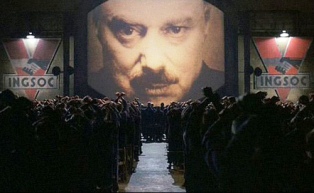
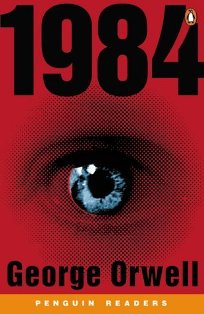
1984 on the Horizon: Congress Moves to Regulate Thought Crime


Ever-vigilant for opportunities to quash anything contrary to the liberal worldview, Leftists in Congress are working on new ways to silence any dissent.

Most of us know about the “Fairness Doctrine” that they got away with for years to harass and control the opposition. Most of us also know the liberals have been trying for years to bring it back.

Their latest attempt is HR 1966, ostensibly to fight “cyber bullying,” but it could very easily be used to prosecute “hate crimes,” or essentially any electronic communication that hurt someone’s feelings.

David Rittgers of the Cato Institute discusses this Orwellian measure on Fox News in the video below.

“Whoever transmits in interstate or foreign commerce [radio, TV internet] any communication, with the intent to coerce, intimidate, harass, or cause substantial emotional distress to a person using electronic means to support severe, repeated, and hostile behavior shall be fined under this title or imprisoned not more than two years, or both.” – HR 1966 Sec 3, Sec 881A

It is also said to violate “double jeopardy” Constitutional protections, in that if you are tried and convicted, but the federal government believes you weren’t punished severely enough, they can retry you to seek a harsher sentence.

It is no stretch whatsoever to see homosexual activists use this against someone like myself or broadcasters at Focus on the Family any time we tell the truth about the moral and health dangers of homosexual behavior.

Here are just a few items from an article I wrote a couple of days ago on how “hate crime” legislation is already being used against people for exercising their opinion, free speech, and freedom of association, both internationally and already here in the United States:

  • Last year a Catholic priest in Canada, Fr. Alphonse de Valk, who was investigated by the Canadian Human Rights Commission (CHRC) for the “crime” of teaching what the Bible says about homosexual behavior (that it is a sin) and marriage (that it is between a man and a woman).
  • The Ontario Human Rights Commission slapped Protestant printer Scott Brockie with a $5000 fine for refusing to print homosexual-themed stationary.
  • The Saskatchewan Human Rights Tribunal fined Hugh Owens several thousand dollars for quoting the Bible in a letter to the local newspaper.
  • Mayor Diane Haskett in London, Ontario, was fined $10,000 for refusing to proclaim a gay pride day.
  • Swedish Pastor Ake Green in 2004 was sentenced to 30 days in jail for preaching a sermon in which he defined homosexual behavior as sinful and harmful to society.
  • A British couple were questioned by police on possible “hate crime” charges after they wrote a letter-to-the-editor of their local newspaper criticizing city officials for distributing brochures at city hall promoting homosexual behavior.
  • In Canada, Focus on the Family must cut out any portions of their broadcasts dealing with homosexuality for radio stations in that country.
  • Last year the Alberta Human Rights Tribunal ruled that youth pastor Stephen Boissoin was guilty of writing a letter to the editor of the Red Deer Advocate which might expose homosexuals to hate and contempt (Boissoin’s 2002 letter said homosexuality was immoral, physically dangerous and should not be promoted in schools).
  • Not content with their success in quashing open refusals to bow at the altar of political correctness, the Canadian pro-homosexual group EGALE (Equality for Gays and Lesbians Everywhere) is calling for the Canadian postal system to censor the mail for “hate mail”
  • Catholic Charities in Boston was forced out of the adoption ministry because they refused to put children in homes of homosexual couples.
  • Boston school teachers have been threatened with termination if they fail to cast homosexuality in a positive light to students.
  • The University of Toledo fired a black administrator for writing a “letter to the editor” of a local newspaper about the inconsistency of comparing homosexuality to ethnicity.
  • Christians in Philadelphia were arrested for reading Bible verses and praying out loud during a homosexual festival.
  • The state of New Mexico issued a fine of $6,600 to a Christian photographer (a private businessman) who didn’t want to photograph two lesbians make a commitment to each other.
  • A Colorado law passed last year to allow men to use women’s restrooms and shower rooms if they “felt like a woman” also contained provisions which prohibits the publication for public consumption any material which is “discriminatory” against homosexual behavior. So while churches can (for now) continue teaching within their own walls what the Bible says about homosexual behavior, they cannot publish anything in public which does. This includes any Christian book publishers or other ministries in Colorado.

We all understand the need to criminally punish assaults on persons and property. We also understand the need to restrict direct threats of violence against persons and property.

1984BookBut this measure and others like it seek to punish thoughts and opinions. Even without a threat of violence against persons or property, this type of regulation can be used to brand you a criminal and punish you for expressing a value statement about a particular issue or behavior.
This bill is a direct assault on the First Amendment:

Congress shall make no law respecting an establishment of religion, or prohibiting the free exercise thereof; or abridging the freedom of speech, or of the press; or the right of the people peaceably to assemble, and to petition the government for a redress of grievances.

This is what we get when we put Leftists in power in our government. Leftists have no interest in fairness or in the freedoms of the “little people.” It is all about the consolidation of power and exercising any government control over the individual–including speech, thoughts and opinions–they consider contrary to their socialist ideology.

Remember this, and remember that the next time you vote.

Source: Dakota Voice
Bookmark and Share

Ireland: blasphemy law a backward step


The government should not be creating new laws to enforce provisions written in the reactionary 1930s, says Michael Nugent

This Wednesday the Irish parliament will vote on a new law making blasphemy an offence punishable by a fine of €25,000. If this law is passed, Atheist Ireland will respond by publishing a blasphemous statement in order to test the law and highlight its absurdity. We believe that people need protection from harm, but ideas and beliefs should always be open to challenge.

Why is this happening? The Irish Constitution says that blasphemy is an offence that shall be punishable by law. That law currently resides in the 1961 Defamation Act. The Dáil is now repealing and updating this Act, and Justice Minister Dermot Ahern says he must pass a new blasphemy law to avoid leaving a “void”.

But this “void” is already there. In 1999, the Supreme Court found that the 1961 law was unenforceable because it did not define blasphemy. So, in effect, Ireland has never had an enforceable blasphemy law under the 1937 Constitution. But we will if this bill is passed through the Dáil and the Seanad (the upper house), and the government has the working majority needed to pass it.

Here are three reasons why this law is both silly and dangerous:

Reason One: The proposed law does not protect religious belief; it incentivises outrage and it criminalises free speech. Under this proposed law, if a person expresses one belief about gods, and other people think that this insults a different belief about gods, then these people can become outraged, and this outrage can make it illegal for the first person to express his or her beliefs.

The problematic behaviour here is the outrage, not the expression of different beliefs. Instead of incentivising outrage, we should be educating people to respond in a healthier manner when somebody expresses a belief that they find insulting. More worryingly, this law would encourage, reinforce and protect the type of orchestrated outrage that Islamic fundamentalists have directed against cartoonists and novelists.

Reason Two: The proposed law treats religious beliefs as more valuable than secular beliefs and scientific thinking. Personally, I find it abusive and insulting that the Christian Bible suggests that a woman should be stoned to death for not being a virgin on her wedding night, or that it is okay to kill your slave if he dies slowly, or that effeminate people are unrighteous, or that women must not teach and must learn in silence.

If enough atheists are outraged by these passages, should the Christian Bible be banned? I do not believe that the Bible should be banned, and neither should discussion of the Bible in terms that cause Christians to be outraged.

Reason Three: We should be removing 1930s religious references from the Irish constitution, not legislating to enforce them. Today, under the Irish constitution, you cannot become president or be appointed as a judge unless you take a religious oath asking God to direct and sustain you in your work.

This means that up to a quarter of a million Irish people could not take up these offices without swearing a lie. These religious declarations are contrary to Ireland’s obligations under the UN International Covenant on Civil and Political Rights.

The preamble to the Irish constitution states that all authority of the state comes from, and all actions of the state must be referred to, a specific god called the Most Holy Trinity. It also humbly acknowledges the obligations of every person in the state to a specific god called Our Lord Jesus Christ.

The constitution acknowledges that the homage of public worship is due to Almighty God. This is not an assertion of the right of citizens to worship this god. It is an assertion of the right of this god to be worshipped by citizens. Our national parliament recognises the rights of this god by starting each day’s business with a prayer asking this god to direct the actions of our parliamentarians.

There are also other references in the constitution to religion, as opposed to gods. We should be amending our constitution to remove these theistic references, not creating new crimes to enforce provisions written in the 1930s.

This Saturday, 11 July, Atheist Ireland will hold our AGM between 2pm and 5pm in Wynn’s Hotel in Dublin. Members of the public are welcome to attend. Please come along, or advise any friends living in Dublin to do so, if you want to help build an ethical and secular Ireland.

Source: Index On Censorship


Bookmark and Share

Monday, July 6, 2009

Holocaust Denial And Uncomfortable Truths


It has always been those few who can see through the political correctness and hypocrisy of popular attitudes who are considered dangerous.

"Holocaust denial laws" are now in place in about a dozen countries. Defenders of these laws claim that the expression of unconventional views about the Jewish genocide is "hate speech" and "incitement to violence" and therefore must be suppressed.

But history shows the greatest purveyors of lies, hatred and incitement to violence are those with the power to spread their poison by manipulating popular opinion via the control or complicity of the mass media. Through a purposefully constructed lens of political correctness the despicable becomes normal. It is by this insidious process that tyrants make it normal and acceptable to murder those whom they consider threatening or inferior. We have only to turn on the television to see that process at work.

It is not the unpopular views we should fear but the popular.

When the suppression of free speech serves no purpose other than to silence unconventional opinions we should be alarmed. We should be even more alarmed when to question oppressive laws is to risk vilification, in this case by the smear of "Holocaust denier" and "anti-Semite".

Appropriation of the term "The Holocaust" to the Nazi extermination of the Jews minimises the significance of other genocides, including those that are happening right now. Should these crimes also be closed to opinions that question the accuracy of the official "truth"?

Stifling open discussion and debate also does an injustice to the other millions of victims of the Nazi concentration camps: the Roma, Blacks, Polish and Russian prisoners, Jehovah's Witnesses, homosexuals and the mentally and physically disabled. It sidelines the slave labourers starved, beaten and worked to death in German war industries and the horrors suffered by anyone expressing anti-Nazi views.

It is likely that most people regard the real deniers of the Jewish genocide - the ones who say the extermination crimes never happened at all - in the same light as those who espouse any number of other oddball ideas. Do we need laws to protect us from those who make obviously unsupportable claims?

The real threat posed by "deniers" is that others might be influenced to undertake serious study and uncover embarrassing facts that would refute Israel's "victim" status. This would threaten Israel's moral legitimacy, underpinned by the world's collective shame for looking the other way. All it takes to invoke that shame is the term anti-Semite, either stated or implied.

But opinions that question the widely accepted WWII Jewish genocide history are not anti-Semitic any more than opinions that question the accepted history of the Ukraine genocide (1) are anti-Russian. That we are led to label any deviation from the official history as "Holocaust denial" and "Holocaust denial" as anti-Semitism is no accident. It has come about by the same semantic sleight of hand that would have us believe anti-Zionism and anti-Semitism are one and the same. They are not.

Many Christians are Zionists while many Jews throughout the world, perhaps even the majority, are anti-Zionist. Anti-Zionism has nothing to do with persecution of the Jews. It is simply anti-racism and anti-colonialism as applied to the occupation of Palestine and the subjugation of its indigenous population. (2)

When anyone goes to great lengths to stifle open inquiry and debate on any subject, alarm bells should ring. Invariably the motivation is suppression of uncomfortable truths. The uncomfortable truth of the Jewish genocide is that millions of lives would certainly have been saved had it been the priority of the Zionist leadership to save them. Their priority instead was establishment of the state of Israel. And then, as now, the suffering of Europe's Jews and the world's collective guilt was exploited to that end. (3)

Ironically, when millions of refugees were trying to escape from Europe before the war, and even while the genocide was in progress, prominent leaders of the Zionist movement were "Holocaust deniers". When the truth could no longer remain hidden, the Zionist leadership opposed attempts to save the European Jews though financial and humanitarian aid and emigration. The exception was migration to Palestine, and even the relative few who were saved were selected not according to their plight but according to their perceived value to the future state of Israel.

One proposal by 270 members of the British Parliament, as a part of diplomatic negotiations with Germany during the height of the killings, was to evacuate 500,000 Jews from Europe and resettle them in British colonies. This offer was rejected by the Zionist leaders with the observation, "Only to Palestine!" (3)

It is clear from the statements and actions of the Zionist leadership that they considered the suffering of the European Jews advantageous in securing future international support for the establishment of the Zionist state.

Shocking? That uncomfortable truth is well documented for those who care or dare to study the subject.

Throughout history Jews, like many other minorities, have indeed been persecuted, but the modern state of Israel never was the victim. Since its inception it has been the coloniser, aggressor, tormentor and oppressor. Exploiting the memory of Hitler's victims to perpetuate the myth of "victim Israel" is cynical. To do so while attacking its neighbours and inflicting Nazi-style state terrorism, apartheid and genocide on the Palestinians is cynical in the extreme.

While "deniers" are jailed for expressing unacceptable views, the real criminals - those responsible for the agony and death of millions - manipulate popular opinion to make crimes against humanity, war crimes, contempt for international law and indifference to human suffering seem normal and acceptable. And they do so with impunity.

(1) http://www.bigeye.com/111703.htm
(2) http://pilger.carlton.com/page.asp?partid=519
(3) http://www.jewsagainstzionism.com/
rabbi_quotes/weissmandl.cfm

Source: Countercurrents


Bookmark and Share

Friday, July 3, 2009

WHAT'S THE DIFFERENCE BETWEEN GERMANY AND IRAN? NOT MUCH!


By My Hate Speech
We had a good laugh today when we read an article posted on Yahoo News, "Merkel likens Iran to repressive East Germany." Of course it was her attempt to deflect what really goes on Germany today by reminding her own nation's sheeple of how good things are, in comparison to the former East Germany, and the current situation that unfolded in Iran last week. If you are aware of people such as Ernst ZUndel, Germar Rudolf, and others you may allready understand. As far as we were concerned the articles title could have been changed to something like, "Whats the Difference between Germany and Iran." Well lets see where this goes.

See if you can guess which country commits the following actions against its people.

What is the country, is in close lead for the harshest censorship laws, after China and North Korea?

What country is it that is proud of conducting more than 10,000 criminal prosecutions against persons for having committed peaceful "thought crimes"?

What country is it where the authorities declare that half of their population deserves to be ostracized for harboring political views?

What country is it where the head of state asks for children to spy on their parents and parents to spy on their children to make sure they do not harbor unwanted political views?

What country is it where even the mainstream media admit that this country is in a state of hysteria while persecuting political dissidents?

What country is it where members of certain political opposition groups considered constitutional can nevertheless be deprived of some of their civil rights?

What country is it that has a huge spy agency designed to snoop on opposition groups?

What country is it that has institutions designed to conduct political trials?

What country is it that prosecutes defense lawyers if they try to introduce exonerating evidence on behalf of their clients?

What country is it where judges are threatened with prosecution because they did not punish political and historical dissenters harshly enough?

What country is it that hides from its citizens, which media are outlawed, so that one cannot possibly know whether or not one commits a crime when distributing such media?

What country is it where authors, editors, publishers, printers, wholesalers, retailers, importers and exporters, warehouses, and customers buying more than two copies of a certain medium can be prosecuted for producing, stocking, importing/exporting, distributing dissenting political and historical literature?

What country is it where well-founded, heavily footnoted books on political and historical topics, authored by academics with plenty of credentials, can be confiscated and burned by the authorities?

What country is it that sends a historical dissenter to prison for more than two years just because he published peaceful, scholarly historical material?

What country is it where a professor criticizing internationalism can be kicked out of his job, harassed, prosecuted and driven into suicide?

What country is it where a history teacher is sent to jail for uttering historical dissent in a private letter to a high-profile personality?

What country is it where a highly renowned historian writing a well-founded book of his country's history can be threatened with prosecution because what he found out is not liked by the authorities?

What country is it where a judge, writing a well-founded, but highly controversial book on historical topics, sees his book confiscated and burned, his pension cut, and his PhD title withdrawn as a result of this?

What country is it where a professor who writes his disbelief about certain historical events in a footnote, written in Latin, in a scholarly anthology can be prosecuted and threatened with jail?

What country is it where people can get fined for raising an arm to wave their hands at a person?

What country is it where somebody raising his country's flag would be harassed by his neighbors for being an extremist?

What country is it where a teacher suggesting that all students should sing the national anthem first thing every morning would lose his job for being an extremist?

Had enough? We have. We could go on but we just get angrier and angrier. If you guessed Iran you would be only partly right. If you guessed Germany, and we are not talking about former east Germany or Nazi Germany, but rather todays modern Germany, you would be 100% correct.

So what is the difference between Germany and Iran. Well Germany claims to be a Democracy, while Iran does not. Don't you just love democracies.


Bookmark and Share