Showing posts with label Big Brother. Show all posts

Thursday, May 27, 2010

Yet More Reasons (As If We Needed Any) to Abolish the TSA


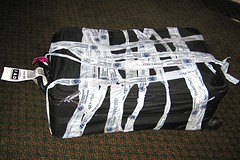
What would enrage you enough to “kick a wall, throw a suitcase or make a pithy comment to a screener” at an airport? How about the screener’s electronically denuding and then leering at your wife? What if the gizmo whereby he stripped also her exposed both her and the month-old child she didn’t yet realize she was carrying to carcinogenic rays? Fast-forward a few years: now, as your toddler struggles with a congenital deformity, you learn your wife’s virtual strip-search at the airport may have been responsible. How many walls, suitcases and screeners will escape your wrath then?

Beware: the Transportation Security Administration (TSA), keeper of blacklists to which it secretly adds folks it has never charged with any crime, let alone tried in a court of law, and from which its victims have little recourse, maintains yet another list, this time of “people who make its screeners feel threatened… A TSA report says the database can include names, birth dates, Social Security numbers, home addresses and phone numbers of people involved in airport incidents, including aggressors, victims and witnesses.”

Read The Rest At Orwell's Dreams

Thursday, February 11, 2010

UK recruits army of child spies to report on ‘anti-social neighbours’


Child spies will be encouraged to report their neighbours as part of the latest drive to cut thuggery and anti-social behaviour on estates.
As part of a campaign launched yesterday, youngsters will look for residents with untidy or litter-strewn surroundings and then try to persuade them to clean up their homes.


Bookmark and Share


Facebook Hit With More Privacy Lawsuits


Facebook has been hit with two new potential class-action lawsuits stemming from recent re visions to its privacy settings.
The cases, filed recently in federal district court in San Jose, Calif. on behalf of nine Facebook users, allege that the new settings are “confusing and materially deceptive” and lessened their privacy.


Bookmark and Share


Friday, February 5, 2010

EU blasts Sweden over failure to store data on people’s phone calls, email…


EU blasts Sweden over failure to store data on people’s phone calls, email…

by Peter Vinthagen Simpson The European Court of Justice has told Sweden that it must implement a 2006 measure requiring telecom operators to store information about their customers’ phone calls and emails.The European Union directive, known as the Data Retention Directive, was approved by Brussels in March 2006, but Sweden has yet to implement the measure.


Bookmark and Share


GA Senate Passes Bill Opposing Involuntary Microchips


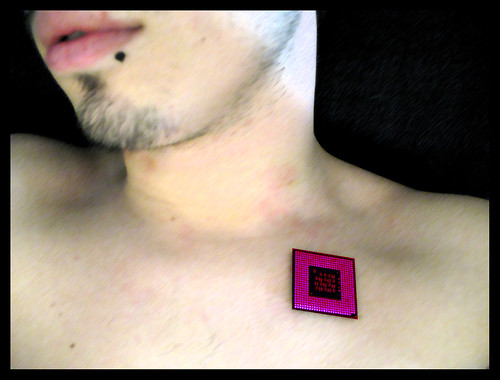
A bill that prohibits microchips from being involuntarily implanted in humans overwhelmingly passed the State Senate today.The Senate bill that passed today would outlaw placing microchips under a persons skin without their consent. (photo fromhttp://www.smartplanet.com)The bill would outlaw placing sensors, transmitters or other micro devices under a persons skin without their consent.


Bookmark and Share

Friday, January 29, 2010

How the march of officialdom is destroying cherished ways of life

A man in Ayr is facing a criminal trial after he was "caught" blowing his nose behind the wheel of his car.

Michael Mancini was given a £60 fixed penalty notice after a policeman decided he was "not in control of his vehicle" when he wiped his nose with a tissue. Mancini maintains that he was in stationary traffic and had put his handbrake on. He refused to pay the fine, and will now face a trial later this year.

This isn't a one-off, by any means (indeed, the policeman who gave Mancini his ticket was PC Stuart Gray – who recently issued a £50 fixed penalty to a man who accidentally dropped a £10 note in the street). It's symptomatic of life in this country today, which is fast becoming so illiberal that it's almost as if normal life is unlawful.

Read The Rest Here

Bookmark and Share

Saturday, December 12, 2009

London Police Continue War Against Photography


The promise to ease up on photographers in the United Kingdom has turned out to be just another government LIE. Police in London are continuing their war against photography as evidenced by this video.

According to the photographer who was a working journalist:

It had taken less than two minutes from the first click of my camera. My subject was the Gherkin, an iconic London landmark photographed hundreds of times a day and, as it turned out, the ideal venue to test claims from a growing number of photographers claiming they cannot take a picture in public without being harassed under anti-terrorist laws. [...]

By the time they looked at my images, threatening me with arrest for obstruction if I didn’t show them, the officers had stopped a second photographer.

Read The Rest At Orwell's Dreams

Bookmark and Share

Terror police to monitor nurseries for Islamic radicalisation

by Alex Ralph and Sean O’Neill

Nursery-age children should be monitored for signs of brainwashing by Islamist extremists, according to a leaked police memo obtained by The Times.

In an e-mail to community groups, an officer in the West Midlands counter-terrorism unit wrote: “I do hope that you will tell me about persons, of whatever age, you think may have been radicalised or be vulnerable to radicalisation … Evidence suggests that radicalisation can take place from the age of 4.”

The police unit confirmed that counter-terrorist officers specially trained in identifying children and young people vulnerable to radicalisation had visited nursery schools.

Read The Rest AT Orwell's Dreams


Bookmark and Share

Friday, December 11, 2009

VeriChip’s Merger With Credit Monitoring Firm Worries Privacy Activists


By Penn Bullock

Remember VeriChip, the Florida company that once dreamed of injecting its human-implantable RFID microchips in everyone from immigrant guest workers to prison inmates?

We haven’t heard much from the company since a dipping stock price nearly got it delisted from the NASDAQ in March. But it’s still alive, and in November it pulled off a seemingly incongruous acquisition. Now called PositiveID, the new company is a merger between VeriChip and Steel Vault, the people behind NationalCreditReport.com.

With a human-implantable microchip maker now running a credit-scoring and identity-theft-protection website, privacy activists are worried again. “The attraction to investors is the potential for synergies,” says Mark Rotenberg, executive director of the Electronic Privacy Information Center in Washington. “You have to anticipate over time there will be an attempt to integrate the services.”

Read The Rest Here

Bookmark and Share

Wednesday, December 9, 2009

Homeland Security Embarks on Big Brother Programs to Read Our Minds and Emotions


Half-baked Homeland Security is spending millions to develop sensors capable of detecting a person’s level of ‘malintent’ as a counterterrorism tool.

In the sci-fi thriller Minority Report, Tom Cruise plays a D.C. police detective, circa 2054, in the department of “pre-crime,” an experimental law enforcement unit whose mission — to hunt down criminals before they strike — relies on the psychic visions of mutant “pre-cogs” (short for precognition) who can see the future. It may be futuristic Hollywood fantasy, but the underlying premise — that we can predict (if not see) a person’s sinister plans before they follow through — is already here.

This past February, the Department of Homeland Security (DHS) awarded a one-year, $2.6 million grant to the Cambridge, MA.-based Charles Stark Draper Laboratory to develop computerized sensors capable of detecting a person’s level of “malintent” — or intention to do harm.

Read The Rest Here

Bookmark and Share

Sunday, December 6, 2009

Equality snoopers to keep files on your sexuality


People will be routinely asked to answer sensitive questions about their sexuality so a Government quango can compile a massive ‘equalities’ database, it emerged last night.

The Equality and Human Rights Commission is to take information given in confidence by millions and place it on a huge ‘Lifestyle Database’.

It will draw information from sources including visits to A&E departments, government surveys and the reporting of crimes to police.

In order for bureaucrats to measure whether gay or straight citizens are suffering greater ‘inequality’, the EHRC said everybody should be asked to provide information about their sexual identity.

They will be asked if they are heterosexual/straight, gay/lesbian, bisexual or other.

Campaigners said the establishment of the ‘Big Brother’ database – which will be available on the quango’s website – would alarm the public.

Alex Deane, Director of Big Brother Watch, said: ‘This intrusive database is being built without even the smallest consideration for privacy.

‘When people go to hospital, they don’t think that information about their illness is going to be shared with the EHRC.

‘What possible right does the EHRC have to build this database, and then share what they’ve gathered with other people on their website?’

Details of the plan emerged after the EHRC, led by chairman Trevor Phillips, began the tendering process for establishing the database.

Freedom of Information requests, obtained by the Old Holborn blogger, then revealed what the scheme involved.

Equalities bosses have decided they must work out whether citizens are suffering inequality based upon various different factors.

These include age, gender, disability, sexual orientation, religion and belief, transgender status, ethnicity and social class. Citizens’ characteristics will be checked through their answers to various government surveys and information on whether they need hospital care or have called the police.

It will allow bureaucrats to check different groups are not more likely to die young, be murdered, suffer illness, or violent crime.

Checks will also be made of happiness, healthy living standards and educational attainment. Any minority groups considered to be losing out can then be targeted for Government help.

It will not be possible to identify individuals from the information on the database.

But what is alarming campaigners is the way the information will be compiled.

Staff are planning to take data which is given to a list of 45 different sources by members of the public.

This includes their A&E records, the British Crime Survey, the British Election Study, the Census, Childcare and Early Years Parents’ Survey and the Citizenship Survey.

The information is not provided in the knowledge it will be handed over to an equality quango.

But the EHRC’s report on the way the database should be established says the sexual identity question should become a standard part of major surveys ‘as soon as practicable’.

An EHRC spokesman said: ‘Crime rates, poor hospital treatment, lack of childcare places and inadequate housing are some of the things that British people are worried about.

‘Looking at each of these problems in isolation doesn’t tell the whole story, as these factors may combine together to have a bigger effect on our lives.

‘By looking at all the issues together, our framework will show what needs to be done to make Britain a fairer place to live.’

Source: Orwell's Dreams

Bookmark and Share

Thursday, December 3, 2009

Czech Big Brother Awards 2009


The results of the fifth annual Big Brother Awards were announced at a festive evening in Prague's Theatre Na Pradle on 12 November 2009. A jury of experts chose from almost 80 nominations entered by the public.

Among those awarded are the Czech Ministry of Schools, Youth and Sports for gathering information about pupils and students, Nokia company for its efforts to legalize snooping in its employees' email communication, the social networking site Facebook for its inconsistent approach to user privacy protection, the Czech Ministry of Health, the State Institute for Drug Control and National Health Registries, or the French "HADOPI law", nicknamed the "electronic guillotine".

The "Statement of the year" went to the General Manager of the state-owned lottery operator Sazka, for demanding that slot-machines be equipped with ID scanners. He thinks this would prevent people who receive social benefits from gambling. "It is a question of a greater control or an increase in gambling," says Mr. Ales Husak. The positive prize was awarded to the citizens of Iran for boycotting telephones manufactured by Nokia Siemens, because a telecommunication surveillance system was sold by this company to the Government of Iran.

The first ceremony in the Czech Republic took place in 2005. Similarly to previous years there are eight categories - Longterm Violation of Human Privacy (for companies and public organizations), Biggest Corporate Snoop (for companies), Biggest Government Agency Snoop (for government organizations), Dangerous New Technology, Big Brother Law, Snoop Among Nations, Statement of a Big Brother and finally the positive award for Achievements in Protecting Privacy. The Czech Awards are held by the EDRi-member Iuridicum Remedium.

Big Brother Awards 2009 (only in Czech)
http://www.bigbrotherawards.cz/

Czech Big Brother awards press release in English (12.11.2009)
http://www.edri.org/files/Czech_BBA09_EN.pdf

Source: European Digital Rights

Bookmark and Share

Wednesday, July 29, 2009

Bumbling Big Brother: What Americans can learn from the British experience with government surveillance


Last October several British newspapers reported that Prime Minister Gordon Brown’s government was working on a plan to monitor every phone call, website visit, text message, and email in the country, entering the information into an enormous database that would be used to catch terrorists, pedophiles, and scam artists. Dominic Grieve, the shadow home secretary, called it “a substantial shift in the powers of the state to obtain information on individuals” and warned that “any suggestion of the government using existing powers to intercept communications data without public discussion is going to sound extremely sinister.”

Home Secretary Jacqui Smith later gave a speech in which she said the electronic dragnet would be limited to data transmitted through websites and information about the identities and locations of senders and recipients. She said investigators would still need ministerial warrants, a kind of administrative subpoena, to listen to or read the contents of communications. The speech apparently did not reassure Ken MacDonald, director of public prosecutions for England and Wales. In late October, shortly before stepping down from his post, MacDonald warned that “decisions taken in the next few months and years about how the state may use these [surveillance] powers, and to what extent, are likely to be irreversible,” adding, “We need to take very great care not to fall into a way of life in which freedom’s back is broken by the relentless pressure of a security state.”

The episode illustrated two points that are reinforced by British journalist Ross Clark’s wry, revealing book The Road to Big Brother: One Man’s Struggle Against the Surveillance State. First, despite the U.K.’s reputation as one of the most watched societies in the world, with more surveillance cameras per capita than any other country, its citizens, notably including law enforcement officials, still care about privacy. Second, their complaints are more easily ignored than similar objections in the United States, where the Fourth Amendment and various statutes prevent the executive branch from unilaterally changing the rules regarding government snooping.

In the U.S., implementing a data collection program like the one contemplated by the British government would require not only the “public discussion” demanded by Dominic Grieve but congressional authorization. The legislation, in turn, would be reviewed by the courts, which are unlikely to allow so much heretofore private information to be gathered on so many innocent people, let alone bless routine wiretapping based on administrative subpoenas. Nor would American courts approve mandatory DNA sampling of every citizen and visitor, as a British appeals court judge has suggested, or let police stop people and search their pockets and bags at will, a policy Clark says is in the offing.

Still, there is much Americans can learn from the British experience with surveillance. Take all those cameras. So far in the United States, they have been limited mainly to detecting traffic violations, generating heated debate about whether they reduce or increase accidents and whether municipalities are sacrificing public safety for the sake of revenue (by reducing the duration of yellow lights, for example). But provided they focus only on public areas, there is no constitutional barrier to erecting surveillance cameras throughout the United States, until our country is as thick with them as the U.K. After all, the government could, in theory, post police officers on every corner, and they would be free to look and listen without violating anyone’s Fourth Amendment rights. Looking and listening from a distance does not change the constitutional question.

Yet there is something to be said, fiscal concerns aside, for not having a cop on every corner. The sense of being constantly watched tends to put a damper on things, potentially affecting the topics people discuss, the way they dress, the businesses they visit, even the books they read while sitting on park benches.

By Clark’s account, this cost is not worth paying. He says the evidence that the government’s surveillance cameras are effective at either deterring or detecting crime is thin. Facial recognition software aimed at catching known suspects has been a bust, easily foiled by poor lighting, hats, sunglasses, even a few months of aging. Clark argues that Britain’s cameras, which he describes as frequently unmonitored or out of order, are appealing as a relatively cheap way of seeming to do something about crime. He finds that “electronic surveillance is not always augmenting traditional policing; it is more often than not replacing it, with poor results.” Likewise, he says, huge collections of information gleaned from private sources such as phone companies, banks, and credit bureaus (along the lines of America’s renamed but not abandoned Total Information Awareness program) are unmanageable and rife with errors. Clark notes that “there is a fundamental rule about databases: the bigger they are, the more useless they become.”

Again and again, Clark finds, high-tech systems that seem at first to be outrageous invasions of privacy turn out to be outrageous boondoggles that not only don’t succeed at their official goals but actually get in the way of catching genuine bad guys and protecting public safety. “The excessive collection of data tends to act as a fog through which authorities struggle to find what they are looking for,” he writes. “The more Big Brother watches, the less he seems to see.”

As Clark emphasizes, an excessively nosy government poses many dangers, including exposure to fraud and blackmail, unjustified interference with freedom of travel, and mistaken incrimination. But it is reassuring to realize that government is not competent enough to be omniscient.

Source: Reason Online

Bookmark and Share

Tuesday, July 28, 2009

Councils must be transparent and accountable about surveillance


Your report on councils spying on their residents (Councils still breaking surveillance laws, 22 July) shows that local government really is on the frontline of Britain's expanding surveillance state – and that councillors and council leaders need to be held accountable for their decisions. Councillors must decide whether they embrace the surveillance society, or reject it and introduce checks and balances and public democratic oversight of the local use of surveillance powers, as the Liberal Democrats have done in Islington.

Local authorities have the power under theRegulation of Investigatory Powers Act (Ripa) to conduct surveilance of residents. Your report highlights how councils have used these powers for issues as trivial as people putting their rubbish out on the wrong day. But there will be times when councils can and do use Ripa powers proportionately and responsibly to tackle serious environmental health issues, fraud, and crime. We've used covert surveillance to crack down on shops selling knives to children, for example.

Surveillance powers should only be used where appropriate and proportionate, such as when there are serious issues of public protection in which there is no other way of collecting evidence. Every time a council uses its surveillance powers it should be considered carefully, and it should be the last resort. And if someone is found innocent, all data gathered should be destroyed.

Councillors should go further than just acting responsibly by introducing democratic oversight and real accountability.

In Islington, my Liberal Democrat administration has made our use of Ripa transparent and accountable, with regular public oversight by elected councillors. The overview committee, the council's main scrutiny body, receives regular reports of all operations conducted under Ripa. Because we are only using these powers where they really are needed, I am not afraid of justifying each operation publicly.

Voters all over the country should start demanding the same level of oversight from their local councils. Liberal Democrat authorities like Islington and Oldham are leading the way, and I hope we are setting a trend for others to follow.

Parliament needs to change the law to roll back Labour's surveillance state, but local councillors are on the frontline and can decide right now whether they embrace or even abuse their surveillance powers, or whether they will take a stand for openness and accountability.

Cllr Terry Stacy JP

Source: The Guardian

Bookmark and Share

ID cards and the snooper state


IT IS simply wrong of James Hall, CEO of the Identity & Passport Service, to suggest that the personal information stored on the National Identity Register is equivalent to the data already collected for passports.
The passport database requires only a single name and address at the time of application, together with a copy of the holder’s passport photograph.
Schedule 1 of the Identity Cards Act 2006 (http://tinyurl.com/IDsched1) describes 50 classes of information that may be stored on the ID database.
These data include every name by which an applicant has been known, every place of residence (in the UK or elsewhere), a photograph, signature, fingerprints and “other” biometric information (eg iris scans), national insurance number, driver number, passport and identity card numbers issued by other countries, and much else besides.

Anyone enrolling on the ID database will be subjecting themselves to lifelong reporting requirements. There are severe financial penalties for failure to keep the authorities notified of any change of detail.

Furthermore, the ID database will store information of a kind that no government department has ever had access to before, except where the security services have placed suspects under surveillance.

The national identity register’s audit trail will record every occasion on which an identity is verified, such as stays in hotels and visits to clinics, providing a detailed profile of every citizen’s life.

Dr Geraint Bevan, Glasgow

UNDER the Identity Cards Act 2006 the Identity and Passport Service has become a branch of the snooper state. Everyone registered for an identity card will subsequently have to report every change in their circumstances on pain of a fine of up to £1,000, and be forced to re-register every ten years or face more large fines. Greatly increased amounts of information about citizens will be kept on a new £6bn database, funded by inflated £77 passport fees. Logging ID card usage in the database will allow government to monitor citizens’ daily lives.

No democratic government has ever tried to track its population’s movements in this way. Whitehall’s identity cards scheme has no place in our country, and must be scrapped immediately.

Andrew Watson, Cambridge

Source: RINF News
Bookmark and Share

Big Brother in the electronic age


WE’RE a big country so I guess it’s understandable that not only is Big Brother watching — but now it’s Big Sister, Big Uncle, Big Aunt, Big Whoever. It’s becom ing a Big Mother of an operation.

OK, we know about pat-downs at the airport that, for some of us, are the only time we have any physical body contact at all so let’s not knock that. But isn’t this whole invasion-of-privacy thing overdone? No place a private citizen can be private anymore. If a nice lady ends up in bed with a semi-nice guy in the so-called privacy of her own nice bedroom, she still can’t be sure she’s not being filmed. Spooks tell you super-mini-cameras can be tucked not only behind a painting or in a light fixture but in your ear, up your nose, between your toes or, with the greatest respect, God knows.

E-mail. The new generation doesn’t even know how to write longhand. Stationery has gone the way of papyrus. Stamps may be going up but letters are going down. Everyone e-mails. A guy’s breaking up with his longtime live-in? He does it by e-mail. You’re receiving a legal document? Comes by e-mail. A dumb married South Carolina governor getting it on with an overheated unmarried lady in downtown Argentina upchucks about the wonders of scratching her itch — on e-mail! Lawyers warn that you must be careful of e-mail. That there’s no way to ever get rid of it. That it’ll remain there longer than a hair transplant.

ATMs? These machines have big mouths. They know what you took and where you were when you took it. Can’t tell the missus you were in Cleveland on business when your ATM will state that on such-and-such particular Thursday you were in hot Buenos Aires pulling cash for a hot time on a hot bod.

Source: RINF News

Bookmark and Share

Thursday, July 9, 2009

1984 on the Horizon: Congress Moves to Regulate Thought Crime


Ever-vigilant for opportunities to quash anything contrary to the liberal worldview, Leftists in Congress are working on new ways to silence any dissent.

Most of us know about the “Fairness Doctrine” that they got away with for years to harass and control the opposition. Most of us also know the liberals have been trying for years to bring it back.

Their latest attempt is HR 1966, ostensibly to fight “cyber bullying,” but it could very easily be used to prosecute “hate crimes,” or essentially any electronic communication that hurt someone’s feelings.

David Rittgers of the Cato Institute discusses this Orwellian measure on Fox News in the video below.

“Whoever transmits in interstate or foreign commerce [radio, TV internet] any communication, with the intent to coerce, intimidate, harass, or cause substantial emotional distress to a person using electronic means to support severe, repeated, and hostile behavior shall be fined under this title or imprisoned not more than two years, or both.” – HR 1966 Sec 3, Sec 881A

It is also said to violate “double jeopardy” Constitutional protections, in that if you are tried and convicted, but the federal government believes you weren’t punished severely enough, they can retry you to seek a harsher sentence.

It is no stretch whatsoever to see homosexual activists use this against someone like myself or broadcasters at Focus on the Family any time we tell the truth about the moral and health dangers of homosexual behavior.

Here are just a few items from an article I wrote a couple of days ago on how “hate crime” legislation is already being used against people for exercising their opinion, free speech, and freedom of association, both internationally and already here in the United States:

  • Last year a Catholic priest in Canada, Fr. Alphonse de Valk, who was investigated by the Canadian Human Rights Commission (CHRC) for the “crime” of teaching what the Bible says about homosexual behavior (that it is a sin) and marriage (that it is between a man and a woman).
  • The Ontario Human Rights Commission slapped Protestant printer Scott Brockie with a $5000 fine for refusing to print homosexual-themed stationary.
  • The Saskatchewan Human Rights Tribunal fined Hugh Owens several thousand dollars for quoting the Bible in a letter to the local newspaper.
  • Mayor Diane Haskett in London, Ontario, was fined $10,000 for refusing to proclaim a gay pride day.
  • Swedish Pastor Ake Green in 2004 was sentenced to 30 days in jail for preaching a sermon in which he defined homosexual behavior as sinful and harmful to society.
  • A British couple were questioned by police on possible “hate crime” charges after they wrote a letter-to-the-editor of their local newspaper criticizing city officials for distributing brochures at city hall promoting homosexual behavior.
  • In Canada, Focus on the Family must cut out any portions of their broadcasts dealing with homosexuality for radio stations in that country.
  • Last year the Alberta Human Rights Tribunal ruled that youth pastor Stephen Boissoin was guilty of writing a letter to the editor of the Red Deer Advocate which might expose homosexuals to hate and contempt (Boissoin’s 2002 letter said homosexuality was immoral, physically dangerous and should not be promoted in schools).
  • Not content with their success in quashing open refusals to bow at the altar of political correctness, the Canadian pro-homosexual group EGALE (Equality for Gays and Lesbians Everywhere) is calling for the Canadian postal system to censor the mail for “hate mail”
  • Catholic Charities in Boston was forced out of the adoption ministry because they refused to put children in homes of homosexual couples.
  • Boston school teachers have been threatened with termination if they fail to cast homosexuality in a positive light to students.
  • The University of Toledo fired a black administrator for writing a “letter to the editor” of a local newspaper about the inconsistency of comparing homosexuality to ethnicity.
  • Christians in Philadelphia were arrested for reading Bible verses and praying out loud during a homosexual festival.
  • The state of New Mexico issued a fine of $6,600 to a Christian photographer (a private businessman) who didn’t want to photograph two lesbians make a commitment to each other.
  • A Colorado law passed last year to allow men to use women’s restrooms and shower rooms if they “felt like a woman” also contained provisions which prohibits the publication for public consumption any material which is “discriminatory” against homosexual behavior. So while churches can (for now) continue teaching within their own walls what the Bible says about homosexual behavior, they cannot publish anything in public which does. This includes any Christian book publishers or other ministries in Colorado.

We all understand the need to criminally punish assaults on persons and property. We also understand the need to restrict direct threats of violence against persons and property.

1984BookBut this measure and others like it seek to punish thoughts and opinions. Even without a threat of violence against persons or property, this type of regulation can be used to brand you a criminal and punish you for expressing a value statement about a particular issue or behavior.

This bill is a direct assault on the First Amendment:

Congress shall make no law respecting an establishment of religion, or prohibiting the free exercise thereof; or abridging the freedom of speech, or of the press; or the right of the people peaceably to assemble, and to petition the government for a redress of grievances.

This is what we get when we put Leftists in power in our government. Leftists have no interest in fairness or in the freedoms of the “little people.” It is all about the consolidation of power and exercising any government control over the individual–including speech, thoughts and opinions–they consider contrary to their socialist ideology.

Remember this, and remember that the next time you vote.

Source: Dakota Voice
Bookmark and Share

The web needs a highway code

Following the BT/Phorm saga, the government must clear up confusion over consumer protection and monitoring software

BT's announcement that it is dropping its involvement with Phorm "for the moment" is unsurprising. The telecoms giant has a high level of trust among consumers, and pushing forward with the controversial web monitoring and profiling system would have been a very dangerous move for the company. It might have destroyed BT customers' trust in the company had they felt that their web traffic was being intercepted in a way they did not understand. Even with reassurance that there would be an "opt-in" system, Phorm's plans did not take account of public worry of just what this would mean in reality.

The government's role in the affair has been dubious. It has never taken responsibility for ensuring that all players were clear about what protection consumers could expect from the law under the Regulation of Investigatory Powers Act and whether it was enforceable over interceptions of the BT/Phorm kind. Despite constant questioning, the government would only say that "it was a matter for the courts" to decide. The Home Office may have its own use for deep packet inspection for intercepting web traffic, but it is mistaken if it thinks ambiguity in the commercial sector would help the technology develop unhindered.

One of the main opponents of the Phorm-type of monitoring is the web's inventor, Tim Berners-Lee, who branded it as "snooping". He has been appointed as a special adviser to the government. Leaving the government is Lord Carter, the erstwhile communications minister who was a Phorm enthusiast. The Information Commissioner's Office remains in its Alice-in-Wonderland position of backing Phorm's technology, provided it complies with data protection laws – which, of course, is the unresolved issue. Another player is Ed Richards, chief executive of Ofcom. The telecoms watchdog has a regulatory role but also an interest in ensuring some resolution to the parlous position that the media has found itself in regarding advertising.

One of the primary roles for the government is to create certainty for citizens and for business. In this sorry saga it has created uncertainty and it was left to the EU to take a line on the original trials, which were ruled illegal. The government knows that there is now an information superhighway where everyone is busy trying to put up billboards. When roads became very busy with cars, a highway code and a planning system was developed to prevent dangerous situations. What is needed now is a similar clear plan for the web highway.

Source: The Guardian

Bookmark and Share

The dangers of policing risk

The great threat to liberty comes from the habits of a risk-averse, market-led society

The pursuit of liberty is worth it because it is essential for the health of society. It sounds like a simple aspiration, but it is not one we hear articulated much these days. At a time when values

are constantly invoked by politicians, the sense of what these values might be becomes harder to grasp. The idea that liberty – and all the laws, institutions and commitments which go with it – are a sacred value, against which the claims of safety, security and utility must strain to justify themselves, sounds quaint these days.

A new idea has come to prominence. We live in an age in which risk management [pdf] is at the heart of politics. Long before it came to power, New Labour was mesmerised by the private sector's use of data to assess risk and allocate resources. Reading through a splurge of government reports from a decade ago, it is quite clear the ardour for risk management was intense and the vision was utopian. The government's lingering faith in ID cards demonstrates the power this kind of thinking has.

Risk management developed by the private sector produced a range of pre-emptive measures, such as defensive space architecture, smart products which could be immobilised if stolen, surveillance techniques and other things which individuals and companies could do to "design out" crime by manipulating the physical environment. This is known as situational crime prevention and, in the words of one of its proponents, it creates a "fortress society" in which crime becomes harder to commit. And indeed, in a shopping centre or street dedicated to the war against crime and antisocial behaviour the innocent and guilty are treated the same – as potential miscreants. It is an egalitarian theory.

The private sector had become better than the state at shaping habits. It was a subtle form of discipline conducted by market forces which could modify behaviour and penalise the costly. Of course, I do not by this mean the market wanted to make the world better; it was aimed at maximising profits. Databases revealed who was blameless and who entailed a cost on others through risky or unhealthy behaviour. The ability to monitor the world revealed risks which no one realised existed before and pinpointed where accountability lay. Risk, once it becomes apparent, has to be policed: it is an economic necessity. The risk economy could, supposedly, predict the future and pre-empt danger. It was hungry for information, personal information; no amount could ever satisfy it.

Politicians of all hues found this deeply attractive. For the right the behaviour-shaping influences of the market satisfied on many conceptual levels. For New Labour it seemed to offer a solution to what it saw as the unacceptably high social cost of economic individualism without reviving a large state or traditional social disciplines. Data could change society, therefore giving up data was no longer an imposition but a selfless act, a duty to society.

And so society changes. When risk management is trumpeted so loudly it is logical for consumers and voters to lay blame on authorities if something goes wrong: why wasn't everything done? And in turn service providers are encouraged to imagine the worst and hunt down dangers: there is never enough you can do to eliminate risks. There is also a tendency to put expert opinion over principles. Hence we see politicians justifying everything from health and safety rules to anti-terror laws on the grounds that officials demand them. What chance do civil liberties stand?

The language of politics has become suffused with the jargon of business. And the mentality. It becomes a duty of government, to provide "consumer-focused services (pdf)" . Increasingly civil liberties are subject to a cost/benefit analysis. In an age when a small band of terrorists can wreak havoc on a vast scale, it is said, civil liberties entail a "marginal cost": better to wrongly imprison a suspect than let one go if the risk is adjudged to be sufficiently high. Civil liberties do indeed come to be seen as hindrances to the technocrat as he or she goes about the business of battening down the hatches. In his or her risk-obsessed mind everyone is a potential danger – which is another way of concluding that everyone is guilty in advance.

The introduction of market-led thinking into government has changed the relationship between the state and citizen. The behaviour of individuals, when it is at odds with the consensus, comes to be seen as not just selfishness but dangerously antisocial. In rebalancing the criminal justice system towards victims (at the expense of ancient civil liberties such as jury trials, double jeopardy rules and other constraints) it was openly responding to consumer (sorry, voter) demand and shifted the emphasis towards the safety of the community and away from the protection of individuals from miscarriages of justice. The worst of our anti-terror laws are an example of a state run along the principles of risk aversion. Privacy – which is at the heart of any concept of liberty – comes to be seen as selfishness. This is the utilitarianism of management, not the principles of a free society.

An economy supposedly based on the efficient policing of risk collapsed around us. Humans are spectacularly bad at predicting and shaping the future – and the very attempt in an age of doom-saying is bound to mean suppression of freedom. What it means is subservience to an imagined future.

But such thinking should be resisted for other reasons. There are plenty of signs that issues of liberty will be important in the next election. We should be wary of platitudes. The great threat to liberty comes from the habits of a risk-averse society. We should remember that there is more to pubic life than technocratic management. At the end of the road marked 'risk-aversion' is the fortress society. Safety, not liberty, first.

To pretend that the delivery of services, justice and security are ideologically neutral is to conceal the truth. They are laden with ideology. We need more politics, not less. Asserting values over the powerful (but delusive) promises of total safety and fear of the future takes courage. It is the same courage which brought about liberty in the first place. Cowards die many times before their deaths.

Source: The Guardian

Bookmark and Share