Tuesday, July 28, 2009

You're (Probably) a Federal Criminal


With all the attention that's been paid lately to long federal sentences for drug offenders, it's surprising that a far more troubling phenomenon has barely hit the media's radar screen. Every year, thousands of upstanding, responsible Americans run afoul of some incomprehensible federal law or regulation and end up serving time in federal prison.

What is especially disturbing is that it could happen to anyone at all -- and it has.

We should applaud Reps. Bobby Scott (D-Va.) and Louie Gohmert (R-Texas), then, for holding a bipartisan hearing today to examine how federal law can make a criminal out of anyone, for even the most mundane conduct.

Federal law in particular now criminalizes entire categories of activities that the average person would never dream would land him in prison. This is an inevitable result of the fact that the criminal law is no longer restricted to punishing inherently wrongful conduct -- such as murder, rape, robbery, and the like.

Moreover, under these new laws, the government can often secure a conviction without having to prove that the person accused even intended to commit a bad act, historically a protection against wrongful conviction.

Laws like this are dangerous in the hands of social engineers and ambitious lawmakers -- not to mention overzealous prosecutors -- bent on using government's greatest civilian power to punish any activity they dislike. So many thousands of criminal offenses are now in federal law that a prominent federal appeals court judge titled his recent essay on this overcriminalization problem, "You're (Probably) a Federal Criminal."

Consider small-time inventor and entrepreneur Krister Evertson, who will testify at today's hearing. Krister never had so much as a traffic ticket before he was run off the road near his mother's home in Wasilla, Alaska, by SWAT-armored federal agents in large black SUVs training automatic weapons on him.

Evertson, who had been working on clean-energy fuel cells since he was in high school, had no idea what he'd done wrong. It turned out that when he legally sold some sodium (part of his fuel-cell materials) to raise cash, he forgot to put a federally mandated safety sticker on the UPS package he sent to the lawful purchaser.

Krister's lack of a criminal record did nothing to prevent federal agents from ransacking his mother's home in their search for evidence on this oh-so-dangerous criminal.

The good news is that a federal jury in Alaska acquitted Krister of all charges. The jurors saw through the charges and realized that Krister had done nothing wrong.

The bad news, however, is that the feds apparently had it in for Krister. Federal criminal law is so broad that it gave prosecutors a convenient vehicle to use to get their man.

Two years after arresting him, the feds brought an entirely new criminal prosecution against Krister on entirely new grounds. They used the fact that before Krister moved back to Wasilla to care for his 80-year-old mother, he had safely and securely stored all of his fuel-cell materials in Salmon, Idaho.

According to the government, when Krister was in jail in Alaska due to the first unjust charges, he had "abandoned" his fuel-cell materials in Idaho. Unfortunately for Krister, federal lawmakers had included in the Resource Recovery and Conservation Act a provision making it a crime to abandon "hazardous waste." According to the trial judge, the law didn't require prosecutors to prove that Krister had intended to abandon the materials (he hadn't) or that they were waste at all -- in reality, they were quite valuable and properly stored away for future use.

With such a broad law, the second jury didn't have much of a choice, and it convicted him. He spent almost two years locked up with real criminals in a federal prison. After he testifies today, he will have to return to his halfway house in Idaho and serve another week before he is released.

The other hardened criminal whose story members of Congress will hear today is retiree George Norris. A longtime resident of Spring, Texas, Norris made the mistake of not knowing and keeping track of all of the details of federal and international law on endangered species -- mostly paperwork requirements -- before he decided to turn his orchid hobby into a small business. What was Norris's goal? To earn a little investment income while his wife neared retirement.

The Lacey Act is an example of the dangerous overbreadth of federal criminal law. Incredibly, Congress has made it a federal crime to violate any fish or wildlife law or regulation of any nation on earth.

Facing 10 years in federal prison, Norris pled guilty and served almost two. His wife, Kathy, describes the pain of losing their life savings to pay for attorneys and trying to explain to grandchildren why for so long Poppa George couldn't see them.

Federal criminal law did not get so badly broken overnight, and it will take hard work to get it fixed. It is encouraging that members of Congress such as Reps. Scott and Gohmert are now paying attention to the toll overcriminalization takes on ordinary Americans. Congress needs to begin fixing the damage it has done by starting to restore a more reasonable, limited and just federal criminal law. Today's hearing is an excellent first step.

Source: FOX News

Bookmark and Share

Councils must be transparent and accountable about surveillance


Your report on councils spying on their residents (Councils still breaking surveillance laws, 22 July) shows that local government really is on the frontline of Britain's expanding surveillance state – and that councillors and council leaders need to be held accountable for their decisions. Councillors must decide whether they embrace the surveillance society, or reject it and introduce checks and balances and public democratic oversight of the local use of surveillance powers, as the Liberal Democrats have done in Islington.

Local authorities have the power under theRegulation of Investigatory Powers Act (Ripa) to conduct surveilance of residents. Your report highlights how councils have used these powers for issues as trivial as people putting their rubbish out on the wrong day. But there will be times when councils can and do use Ripa powers proportionately and responsibly to tackle serious environmental health issues, fraud, and crime. We've used covert surveillance to crack down on shops selling knives to children, for example.

Surveillance powers should only be used where appropriate and proportionate, such as when there are serious issues of public protection in which there is no other way of collecting evidence. Every time a council uses its surveillance powers it should be considered carefully, and it should be the last resort. And if someone is found innocent, all data gathered should be destroyed.

Councillors should go further than just acting responsibly by introducing democratic oversight and real accountability.

In Islington, my Liberal Democrat administration has made our use of Ripa transparent and accountable, with regular public oversight by elected councillors. The overview committee, the council's main scrutiny body, receives regular reports of all operations conducted under Ripa. Because we are only using these powers where they really are needed, I am not afraid of justifying each operation publicly.

Voters all over the country should start demanding the same level of oversight from their local councils. Liberal Democrat authorities like Islington and Oldham are leading the way, and I hope we are setting a trend for others to follow.

Parliament needs to change the law to roll back Labour's surveillance state, but local councillors are on the frontline and can decide right now whether they embrace or even abuse their surveillance powers, or whether they will take a stand for openness and accountability.

Cllr Terry Stacy JP

Source: The Guardian

Bookmark and Share

At last, a crack team to take on cops who kill: the RSPCA


Do make sure you're sitting down. Something quite extraordinary has happened. The police have issued an abject apology for two deaths in their custody, and announced that the officer responsible will be prosecuted. How to put this momentous announcement into context? How to throw it into the sharp relief which is deserves? Well, according to monitoring carried out by the organisation Inquest, there have been 954 deaths in police custody in England and Wales since 1990 – the figure includes shootings – with nary a successful prosecution for murder or manslaughter.

And so to this historic case, which has seen top brass abandon their traditionally minimalist statements on such tragedies, unless of course they take the bizarre decision to pretend that the victim had leapt over a ticket barrier or some such. The deaths have caused "immense sadness", according to the relevant force's chief superintendent. "We will certainly take any lessons we can get from this process, and make sure we put them in place so this sort of thing never happens again. We understand the upset that this has caused the public and members of our staff … There is a sense of shock and sadness at the news of the death of two of our police dogs."

Ah yes. Forgive my getting your hopes up. It's the case of those two dogs who expired in a car outside Nottingham police headquarters earlier this month, having been left in the vehicle on a searingly hot afternoon. Following an urgent RSPCA investigation, the officer responsible will face animal cruelty charges. The force's own inquiry apparently continues.

A horrible business, evidently, and we must pass on our condolences to those who knew the animals. Indeed, the police have established a tribute area, where they and members of the public have laid wreaths.

But after we've done that, I'm afraid we must contrast Plod's reaction with, say, that to the death of Ian Tomlinson, who died of abdominal bleeding at the G20 protests in March, shortly after being struck by a Met officer. The police have sweetly judged this to be something worth offering their "sincere regret" about, but refuse to comment further, while the Independent Police Complaints Commission continues one of its famously fast-paced investigations. It would be funny if it weren't so bleeding wretched.

The contrast has not been lost on some of the families with relatives who have died in police custody. At a recent meeting of their number, a speaker read out the Nottingham chief super's expressions of anguish. One attendee says the room went quiet as everyone wondered to which death in custody such expressions of frank remorse related. When the dog punchline was revealed, how they didn't laugh.

There isn't quite the space to reproduce the official police comments on all those 954 deaths, but let's challenge any copper who fancies a grim afternoon to delve among them and produce a statement as abjectly apologetic or anguished as the one concerning the two dogs.

Of course, there's a point to be made about some people's prioritising of animal injustice, where its human equivalent elicits less concern in them. In 2006, more money was given to a single Devon donkey sanctuary than to all the most prominent charities dealing with violence and abuse of women.

For today, though, these are diversions, because there is something so undeliciously neat about the dog tale that you could be forgiven for thinking it was a staged satire. In an alternate reality, the police would have offered a variation on that cliched explanation for a death in custody – the suspect kicked himself down the nick stairs – perhaps suggesting that the dogs were involved in some sort of asphyxiation game gone tragically wrong.

If the story had failed to catch on, they might have floated a version of the theory that the Met put to Ian Tomlinson's family in the days after his death – namely, that the officer who struck him could have been a member of the public "dressed in police uniform".

This idle speculation could go on for ever, or at least until the IPCC completes its inquiries into the G20 cases, which increasingly seems a similar time frame. Nicole Fisher, the protester who was filmed being struck by a police sergeant, told the home affairs committee that the IPCC had informed her that they expected it would take "between 12 and 18 months" to complete their inquiry. Considering it was such a "distressing" and high-profile case of assault, ran the committee's report, "we cannot imagine why this amount of time is needed".

An obvious solution suggests itself. A crack team of RSPCA investigators must be seconded to the IPCC to teach the latter how to bring in an investigation in under 18 months. Or would that upset the fine equilibrium of this most credible of public bodies, in whose official logo the "I" is helpfully greyed out? After all, a third of the IPCC's investigators are former police officers. Given their continuously triumphant record, one can't help feeling that's a little like a third of the RSPCA's investigators being former circus lion tamers.

Source: The Guardian

Bookmark and Share

ID cards are a bureaucrat's luxury


In a excellent pamphlet produced by the Centre for Policy Studies, advocating a new Great Reform Act, the author of Yes Minister, Sir Antony Jay, writes that we are "governed by an increasingly self-serving almost unaccountable political class who are even further out of touch with the interests and wishes of the British people than were the rural aristocracy 200 years ago."

These words came to mind when I read that a YouGov poll had found that 79% of the public are opposed to the ID card scheme on the grounds that they want the estimated £5bn cost of the scheme spent on something else. There is no better example of the Labour machine's arrogant detachment from the people than the pursuit of this policy, which was consolidated last week with the announcement of the regulations on fees, fingerprinting, lifelong compulsory notification, data sharing and penalties.

The scheme is unpopular for obvious reasons, it represents an enormous intrusion, a waste of time and a personal cost to everyone. With the economic crisis, four-fifths of a sample polled by YouGov for the Sunday People believe it has to be scrapped. There can be no clearer message to the home secretary, yet on Thursday Alan Johnson proposes to make further ID card announcements in Manchester – where a trial is due to begin in the Autumn – which completely ignore the public's view.

The disconnect between reality and the government's megalomaniac ambitions to manage everyone's identity has never been more sharply drawn and I believe that opposition will spread to expensive schemes in which the unaccountable political class expect to monitor our movements, communications and behaviour. Only last month Johnson was trying to spin a story that the card would be voluntary. This is nonsense: anyone who wants a passport will have to join the national identity register and submit to slew of regulations and penalties.

As Phil Booth, the national coordinator of NO2ID, who has done so much to oppose the card, said "The game is up. The ID scheme is exposed as a bureaucrat's luxury that can now only be imposed by bullying and subterfuge."

Here is another quote from the Jay's pamphlet, which tells the story of New Labour and indeed the way we are governed in one sentence.

"Over the past 200 years or so, central government has sucked authority, decision making and local independence out of local communities, it has sucked money out of the purses and pockets of citizens, and it has created huge government departments and government institutions, a vast proliferation of tribunals, inspectorates, regulatory authorities, quangos, bureaux and councils, taken on an army of consultants, advisory committees, coordinating bodies, tsars, initiatives, action groups and task forces, and printed millions of questionnaires, application forms, guidance notes, instructions, licenses, tick boxes, information pamphlets and leaflets that, between them, spelt the death of trust and common sense and created the bureaucratic nightmare of 21st-century Britain."

From the loins of this beast came the identity card.

Source: The Guardian

Bookmark and Share

Bush, Cheney knew they were violating law


Torture instigators George Bush and Dick Cheney should not be allowed to evade prosecution on grounds they acted in good faith on their lawyers’ advice because they told their lawyers what advice to give, a law school dean says.

“Could Al Capone or ‘Lucky’ Luciana receive immunity for acting in accordance with the advice of counsel when they told counsel what to advise?” asks Lawrence Velvel of the Massachusetts School of Law at Andover .

“(Vice-President) Cheney and (President) Bush knew that they were ordering violations of law,” Velvel points out. “The fact that they were doing so, and were well aware they were doing so, was one of the reasons why they, like a significant number of CIA officials who knew the same, demanded that lawyers produce legal cover for them in the form of Office of Legal Counsel memos authored by the likes of (John) Yoo and (Steven) Bradbury.”

Lower level CIA and military personnel that did not read the supposedly exculpatory memos, Velvel said, also cannot claim reliance on legal counsel because “they had to know that torture was forbidden no matter what some lawyers said. You could not grow up in America and not know this” any more than a person could claim murder was lawful because some lawyer told him so, Velvel writes.

“People who grew up in America cannot realistically claim that they thought it was lawful to beat people mercilessly, to smash their heads against walls, to kill about one hundred of them apparently, to hang them from ceiling hooks, to make them freeze, to deny them sleep for weeks on end, and so forth,” Velvel writes in an essay in his new book “America 2008” from Doukathsan Press.

“They knew what they were doing was wrong,” he continued. “FBI…guys on the scene knew it regardless of what lawyers like Yoo said, and it was knowledge that what they were doing was wrong that caused some lower level CIA guys too to want a ‘get out of jail free card,’” Velvel writes.

“That realization is why CIA officials, from 2002 to 2006 or 2007 demanded memoranda from the Office of Legal Counsel of the Department of Justice, falsely claiming that the abuse and torture were not criminal acts,” Velvel said. “The officials wanted these OLC memos so that they could later avoid or defeat prosecutions by claiming that the decision-making office of the DOJ had approved the legality of what they were doing. The officials wanted a ‘golden shield,’” he added.

Those who claim they were ordered to torture, like those who said they had a legal opinion that to do so was okay, are guilty of an effort to “escape the Nuremberg principles by saying that others said what the culprits were doing was okay,” Velvel continues. The Nuremberg tribunal that judged accused Nazi war criminals after World War Two concluded they could not evade guilt by asserting they were only following orders.

“But claiming that their actions were immune because others okayed them is precisely what Cheney, Bush, their whole crowd…have been attempting to do… They knew what they were doing was illegal, as evidenced by the extreme secrecy they practiced lest it be learned they were practicing, and lest they be accused of practicing, the crimes they were in fact practicing. Morality, decency, and Nuremberg alike forbid this.”

“By now it seems beyond serious doubt that George Bush and company committed numerous war crimes,” Velvel wrote. “It is evident that if these things can be done, then there is an end of law where the truly wealthy and powerful are concerned. Whether it is Al Capone or Dick Cheney, the filthy rich or obscenely powerful will have it in their power to do the most awful things yet escape the law by using contributions or power to obtain immunity from preexisting law and to buy the opinions of immoral lawyers. That is the moral and philosophical basis why these things can’t be permitted,” Velvel said.

Velvel is dean of the Massachusetts School of Law at Andover, founded in 1988 for the express purpose of providing a quality, affordable legal education to minority students, immigrants and students from low-income backgrounds who would otherwise not be able to afford law school. Tuition at the school is only about half that charged by other New England area law schools. Velvel has been honored for his contributions to legal education reform by the National Law Journal and has also received a number of awards from the book publishing industry for his essays.

Sherwood Ross

Source: RINF News

Bookmark and Share

U.S. carrying out “targeted killings”


Media reports recently exposed efforts by the Bush administration to create a CIA “assassination squad” so secret that former Vice President Dick Cheney ordered the agency to keep Congress in the dark about it. The Wall Street Journal called it a secret plan to “capture or kill al Qaida operatives”; on Thursday, the Washington Post said the program was about to be activated when CIA director Leon Panetta pulled the plug.

But the blaring headlines, and the buzz in the blogosphere, are not just due to more evidence of the ex-veep’s addiction to executive power and behind-the-scenes machinations. It’s that word “assassinate.” Most observers assume that assassination is specifically proscribed by U.S. policy. Except it isn’t, exactly, and while the secret CIA assassination program canceled by Panetta may never have claimed a victim, the U.S. is already carrying out actions that look nearly exactly like assassinations, and doing so within the guidelines of domestic and international law. The United States has had plenty of legal latitude to carry out targeted killings during the so-called war on terror — and has been exercising that option vigorously for the past eight years.

The United States, in fact, has been targeting and eliminating specific al-Qaida and Taliban operatives ever since Congress authorized the use of force against them in September 2001. Just the other day, what were probably unmanned CIA drones killed 43 militants in Pakistan as part of the still unsuccessful effort to assassinate just one man, Taliban leader Baitullah Mehsud.

Early last year, Salon reported from the Middle East on targeted killings carried out by the U.S. Air Force in Iraq and Afghanistan. That article explored the sometimes-excruciating process, assisted by military attorneys, of trying to decide who could be killed from the air and under what circumstances, while simultaneously trying not to kill innocent civilians. The military officials at the installation Salon visited were definitely engaged in targeted killing — yet they objected to the use of the term “targeted killing,” much less “assassination.”

Gary Solis, an expert on military law at Georgetown University, said the Bush administration — and now the Obama administration — would take umbrage at characterizing the ongoing CIA drone attacks on specific targets as assassinations. “‘Assassination’ is a civilian term for a politically motivated murder,” Solis said. “Soldiers don’t assassinate. They kill.”

Whatever phrase we use to describe the process, clearly the U.S. has been engaged in targeted killing during the past eight years. So what about those U.S. policies that expressly forbid assassination? It may generate flashbacks to the tortured debate over torture, but it all comes down to semantics. Assassination is OK — as long as you don’t use the word “assassination.”

In 1975, the U.S. Senate formed an 11-member commission called the Church Committee, led by Idaho Sen. Frank Church, to investigate the activities of the CIA. The Church Committee’s many reports detailed efforts by the agency to assassinate such foreign leaders as Fidel Castro, Patrice Lumumba and Rafael Trujillo. Reacting to the committee’s findings, Gerald Ford was the first president to issue what would become a series of executive orders limiting targeted political killings. Ford’s Executive Order 11905 of Feb. 18, 1976, included a specific prohibition of assassination that said, “No employee of the United States Government shall engage in, or conspire to engage in, political assassination.” Jimmy Carter reaffirmed that executive order with his own, as did Ronald Reagan; their versions of the order dropped the modifier “political” from “assassination.” There is no public indication that any president since has rescinded Reagan’s order, so it likely remains in place.

But where there’s a will, there’s a way. When the state wants to kill someone, it has to come up with a rationale for describing that killing as something other than assassination. There are effectively three rules the U.S. government must follow in order to be able to argue that a killing is in accordance with both domestic and international law, and is not an “assassination.” First, the killing must be a military act, an act of war. Second, the target must be definable as military or a civilian engaging in hostile acts against the United States. Third, if the killing takes place within a state with which the U.S. is not at war, the U.S. must have the permission of that country’s government to carry out the hit. The U.S. pursuit of Taliban and al-Qaida targets follows those rules — for the most part — and is compliant with domestic and international law — in theory.

The United States is at war with al-Qaida. The president has the authority to conduct limited military action without congressional approval, but for sustained military action the executive branch needs to be granted legal license by the legislative branch. On Sept. 14, 2001, Congress passed a resolution authorizing “all necessary and appropriate force against those nations, organizations, or persons he determines planned, authorized, committed, or aided the terrorist attacks that occurred on September 11, 2001, or harbored such organizations or persons.” The president then signed a secret intelligence “finding” authorizing the CIA to hunt and kill just those kinds of “persons.”

Internationally, the Law of Armed Conflict, that web of treaties including the Geneva Conventions, allows the killing of enemy combatants or even civilians engaged in hostile acts against the United States. Legally, it does not matter where the hit occurs. As long as the U.S. government has the permission of the government where the killing takes place, the killing can occur anywhere in the world. It also does not matter that the people “pulling the trigger” — deploying the drones — are civilian CIA agents, not soldiers. “That is the CIA’s involvement in an armed conflict,” Solis explained. “We have the CIA flying drones killing people who we conceive to be combatants” with the permission of the country where the strikes occur.

But fighting a war against a stateless organization is complicated. The “war on terror” is conducted against anybody deemed the enemy anywhere in the world. The tricky part comes in trying to decide who fits the definition of somebody carrying out hostile acts against the United States. A suspected bomb maker with no uniform? What if he hasn’t made a bomb in a week? A month? A year? Solis said most attorneys would view President Clinton’s 1998 cruise missile strike aimed, in part, at Osama bin Laden as a military operation short of war, not as an assassination attempt. It was undertaken in response to al-Qaida’s attack on the USS Cole, which was clearly a hostile act.

The killing of a person engaged in hostile acts, even by an “assassination squad” of secret agents, would not violate international law — specifically U.N. charter provisions on sovereignty — unless the United States carried out an assassination in a foreign country without the foreign government’s consent. “International law says the U.S. can’t go into country X and do military operations without that country’s consent,” explained David Koplow, a professor specializing in international law and national security law at Georgetown University. “Internationally, so long as you are doing it with the permission of the host country, it is no problem.”

Given this legal framework, Pakistan’s complaints about U.S. drone strikes in Pakistan probably reflect domestic political considerations there, observers speculate, rather than any lack of consent. Pakistan likely quietly gave the CIA the green light. Similarly, U.S. airstrikes in Iraq and Afghanistan documented in the Salon article last year passed legal muster since the governments of Iraq and Afghanistan consented.

Koplow and other experts on international law said while few details of Cheney’s alleged assassination squad are publicly available, legally at least, it’s doesn’t sound like a far stretch from current CIA activities. Ironically, the attorneys add, Cheney could theoretically face stiffer legal consequences under U.S. law for failing to inform Congress about plans for CIA assassinations than he would have had he carried them out. Cheney’s reported decision not to inform Congress might have violated the 1947 National Security Act, which requires that the intelligence committees in Congress are “kept fully and currently informed of the intelligence activities of the United States, including any significant anticipated intelligence activity.”

However, as the Washington Post article states, the intelligence finding that gave rise to the program “imposed no geographical limitations on the agency’s actions.” That raises the possibility that the program would have violated sovereignty. Solis speculated that Cheney’s assassination squad could have been conceived to go a step further and send civilian agents into foreign countries without permission to kill individual people. “Other countries would take a very dim view of that,” he said.

Did the Cheney assassination ring contemplate assassinations in other countries without that country’s permission, which would violate international law? Even if it did, Cheney would likely have escaped sanction, provided he didn’t try to use his passport much. United States domestic law contains no enforcement mechanism for violating a foreign country’s sovereignty, attorneys say. In short, there is no domestic tool to hold Cheney legally liable even if he set up and ran an assassination squad that was taking out al-Qaida operatives in Canada. “Would there be a domestic prosecution?” noted Scott Silliman, an expert on international law at Duke Law. “No. There is nothing there.” But perhaps, like Augusto Pinochet, Cheney could’ve found himself unable to travel abroad without fearing arrest.

Mark Benjamin

Source: RINF News

Bookmark and Share

ID cards and the snooper state


IT IS simply wrong of James Hall, CEO of the Identity & Passport Service, to suggest that the personal information stored on the National Identity Register is equivalent to the data already collected for passports.
The passport database requires only a single name and address at the time of application, together with a copy of the holder’s passport photograph.
Schedule 1 of the Identity Cards Act 2006 (http://tinyurl.com/IDsched1) describes 50 classes of information that may be stored on the ID database.
These data include every name by which an applicant has been known, every place of residence (in the UK or elsewhere), a photograph, signature, fingerprints and “other” biometric information (eg iris scans), national insurance number, driver number, passport and identity card numbers issued by other countries, and much else besides.

Anyone enrolling on the ID database will be subjecting themselves to lifelong reporting requirements. There are severe financial penalties for failure to keep the authorities notified of any change of detail.

Furthermore, the ID database will store information of a kind that no government department has ever had access to before, except where the security services have placed suspects under surveillance.

The national identity register’s audit trail will record every occasion on which an identity is verified, such as stays in hotels and visits to clinics, providing a detailed profile of every citizen’s life.

Dr Geraint Bevan, Glasgow

UNDER the Identity Cards Act 2006 the Identity and Passport Service has become a branch of the snooper state. Everyone registered for an identity card will subsequently have to report every change in their circumstances on pain of a fine of up to £1,000, and be forced to re-register every ten years or face more large fines. Greatly increased amounts of information about citizens will be kept on a new £6bn database, funded by inflated £77 passport fees. Logging ID card usage in the database will allow government to monitor citizens’ daily lives.

No democratic government has ever tried to track its population’s movements in this way. Whitehall’s identity cards scheme has no place in our country, and must be scrapped immediately.

Andrew Watson, Cambridge

Source: RINF News
Bookmark and Share

Big Brother in the electronic age


WE’RE a big country so I guess it’s understandable that not only is Big Brother watching — but now it’s Big Sister, Big Uncle, Big Aunt, Big Whoever. It’s becom ing a Big Mother of an operation.

OK, we know about pat-downs at the airport that, for some of us, are the only time we have any physical body contact at all so let’s not knock that. But isn’t this whole invasion-of-privacy thing overdone? No place a private citizen can be private anymore. If a nice lady ends up in bed with a semi-nice guy in the so-called privacy of her own nice bedroom, she still can’t be sure she’s not being filmed. Spooks tell you super-mini-cameras can be tucked not only behind a painting or in a light fixture but in your ear, up your nose, between your toes or, with the greatest respect, God knows.

E-mail. The new generation doesn’t even know how to write longhand. Stationery has gone the way of papyrus. Stamps may be going up but letters are going down. Everyone e-mails. A guy’s breaking up with his longtime live-in? He does it by e-mail. You’re receiving a legal document? Comes by e-mail. A dumb married South Carolina governor getting it on with an overheated unmarried lady in downtown Argentina upchucks about the wonders of scratching her itch — on e-mail! Lawyers warn that you must be careful of e-mail. That there’s no way to ever get rid of it. That it’ll remain there longer than a hair transplant.

ATMs? These machines have big mouths. They know what you took and where you were when you took it. Can’t tell the missus you were in Cleveland on business when your ATM will state that on such-and-such particular Thursday you were in hot Buenos Aires pulling cash for a hot time on a hot bod.

Source: RINF News

Bookmark and Share

The Wrong Answers


One of the problems of governments in general, and this one in particular, is that they constantly come up with the wrong answers.

For instance, there is a rise in knife crime—but knives are not on special offer. There aren't massive advertising campaigns urging people to get a knife. Knives are not particularly easy to get hold of (and nor particularly difficult).

In short, the availability of knives has not changed, and yet there is a rise in knife crime.

So—even leaving aside any unintended consequences—why, in the name of buggery fuck, does the government think that the solution to an increase in knife crime is to pass a law banning knives?*

* No, the government aren't passing a law to ban knives (yet) but this is the kind of response that the government undertakes.

Source: The Devils Kitchen
Bookmark and Share

Saturday, July 25, 2009

Victory for Freedom of Speech at Stanford: Student Graduates Despite Ed School Efforts to Revoke Admission, Investigate Private Blog, and Declare Stud


Stanford University’s Teacher Education Program (STEP) has finally let dissenting student-blogger Michele Kerr graduate. When Stanford tried to revoke Kerr’s admission after she voiced disagreement with “progressive” views held by STEP administrators, Kerr turned to the Foundation for Individual Rights in Education (FIRE) for help. Kerr sought FIRE’s aid a second time after Stanford School of Education administrators demanded the password to her private blog and threatened to expel her for her opinions and teaching philosophy. The shameful story of Kerr’s travails is featured online in The Washington Post today by education columnist Jay Mathews.

“From before even her first day of classes, the Stanford School of Education seemed to be trying every rationale it could think of to get rid of Michele Kerr,” said Greg Lukianoff, FIRE President and alumnus of Stanford Law School. “But Kerr fought back, and with help from FIRE and the intervention of senior administrators, Kerr was able to graduate in June. No student, however, should be put through this kind of ordeal in the first place.”

Kerr’s saga began in March 2008, when she attended an open house for admitted students and stated in public conversation that she did not entirely agree with what she perceived to be STEP’s “progressive” approach to education. Her promise to keep an open mind was not enough for STEP Director Rachel Lotan, who soon summoned Kerr to meet with her multiple times. Although Kerr had already accepted STEP’s offer of admission, Lotan ominously kept referring to Kerr’s admission as merely “potential.”

Kerr’s concern was further justified when a misdirected e-mail she received revealed that STEP officials were planning to “strategize” with the program’s lawyer, apparently to revoke Kerr’s admission. FIRE wrote Stanford President John Hennessy on May 23, 2008, outlining the situation and demanding that Kerr’s binding admission offer be honored. FIRE noted Stanford’s Statement on Academic Freedom, which states that “[e]xpression of the widest range of viewpoints should be encouraged, free from institutional orthodoxy and from internal or external coercion.” Senior University Counsel Lauren Schoenthaler responded on June 5, confirming Kerr’s admission.

Kerr’s trouble did not end there. Associate Dean of Student Services Eamonn Callan made repeated unique and unreasonable demands to investigate Kerr’s private, password-protected blog about her thoughts and experiences as a teacher. In a formal letter on December 16, Callan and Lotan also threatened to charge Kerr with “intimidation” for sending an e-mail to her fellow STEP students regarding her treatment by Stanford and her response to students in her program who had voiced complaints about her outspokenness. Callan’s and Lotan’s letter said they were following “the STEP Guidelines for Reviewing Concerns Regarding Suitability for the Practice of Teaching.”

“Stanford threatened Kerr with disciplinary action for publicly defending herself and unreasonably demanded to find out what Kerr was saying in a private forum,” said Adam Kissel, Director of FIRE’s Individual Rights Defense Program. “Unquestionably, administrators were attempting to build a case for throwing Kerr out of school because of her expression.”

In a second letter to Hennessy on January 26 of this year, FIRE outlined many additional steps that STEP officials had taken to try to rid themselves of Kerr by holding her to unique standards of expression and conduct. FIRE asked that Stanford “recognize its legal and moral commitments by immediately and unequivocally abandoning attempts to monitor Kerr’s blog, withdrawing threats to punish Kerr for ‘intimidation,’ and ceasing efforts to fail Kerr out of STEP because of her protected expression and her protected beliefs.” Kerr also submitted grievances going into detail about STEP’s actions.

In response to FIRE’s letter, more senior Stanford administrators intervened and guaranteed Kerr fair treatment. The School of Education put Kerr under a new set of supervisors, and she graduated successfully on June 14. Now that she has also found a job, Kerr’s travails at STEP are over. Her story is chronicled today in a 2,000-word article by Washington Post education columnist Jay Mathews, who frequently disagrees with Kerr on educational issues but who was drawn to her story.

“Like STEP, too many education programs today are teaching by words and deeds that only one orthodoxy or ideology is acceptable in future teachers,” Kissel said. “This refusal to accept alternative views is no way to prepare teachers to cultivate effective citizens in our democracy. Fortunately, senior administrators stepped in to set things right for Michele Kerr.”

Source: FIRE
Bookmark and Share

Was Dr. David Kelly a Target of Dick Cheney’s “Executive Assassination Ring”?


Revelations that the Central Intelligence Agency launched a world-wide assassination program, and then concealed its existence from the U.S. Congress and the American people for eight years, carries an implication that death squads may have been employed against political opponents.

The Wall Street Journal reported July 13 that “A secret Central Intelligence Agency initiative terminated by Director Leon Panetta was an attempt to carry out a 2001 presidential authorization to capture or kill al Qaeda operatives, according to former intelligence officials familiar with the matter.

Investigative journalist Siobhan Gorman writes, “The precise nature of the highly classified effort isn’t clear, and the CIA won’t comment on its substance.”

The Washington Post however, revealed July 16 that the assassination plan was sanctioned by President Bush. Unnamed “intelligence officials” told the newspaper that “a secret document known as a ‘presidential finding’ was signed by President George W. Bush that same month, granting the agency broad authority to use deadly force against bin Laden as well as other senior members of al-Qaeda and other terrorist groups.”

According to Post reporter Joby Warrick, Bush’s finding “imposed no geographical limitations on the agency’s actions” and that the CIA was “not obliged to notify Congress of each operation envisaged under the directive.” This implies that targets could be hit anywhere, including on the soil of a NATO ally or inside the United States itself.

According to the Los Angeles Times the program “was kept secret from lawmakers for nearly eight years at the direction of former Vice President Dick Cheney.”

Despite these reports and hand-wringing amongst congressional Democrats, there’s something fishy here. After all, isn’t the whole point of America’s “global war on terror” to “capture or kill” al-Qaeda suspects? What’s so secretive or controversial about that?

The descriptions of the operation that have so far emerged however, bear a striking resemblance to charges laid earlier this year when investigative journalist Seymour Hersh said that the Bush administration stood-up an “executive assassination ring.”

During a “Great Conversations” event at the University of Minnesota in March the veteran journalist told the audience: “After 9/11, I haven’t written about this yet, but the Central Intelligence Agency was very deeply involved in domestic activities against people they thought to be enemies of the state. Without any legal authority for it. They haven’t been called on it yet. That does happen.”

The program was allegedly shut down by Panetta on June 23, a day after leaning of the agency’s clandestine initiative. What make these revelations all the more significant is that the CIA Director only learned of the program fully four months after assuming office.

“The implications,” socialist analyst Bill Van Auken writes, “are clear. The CIA maintained the secrecy ordered by Cheney even after the latter had left office, and continued to conceal the existence and nature of the covert operation not only from Congress, but from the Obama administration itself.”

But was the program shut down? The Washington Post further revealed that the plan, allegedly “on the agency’s back burner for much of the past eight years, was suddenly thrust into the spotlight because of proposals to initiate what one intelligence official called a ’somewhat more operational phase’.”

Col. Lawrence Wilkerson, a former top aide to U.S. Secretary of State Colin Powell hints that the program was in a “somewhat more operational phase” years earlier, despite repeated denials by CIA officials and congressional staffers.

Wilkerson told MSNBC’s Rachel Maddow Show July 14, “What I suspect has happened is what began to happen while I was still in the government, and that was we’re killing the wrong people. And we’re killing the wrong people in the wrong countries. And the countries are finding out about it, or at least there was a suspicion that the countries might find out about it, and so it was shut down. That’s my strong suspicion.”

According to Wilkerson, the teams may have been dispatched under deep cover, using Joint Special Operations Command as a cut-out, a confirmation of charges made by Seymour Hersh in March. When U.S. Secretary of Defense Donald Rumsfeld was queried by the State Department, “after some hemming and hawing, which was Rumsfeld’s forte, he finally admitted that he had dispatched some of these teams,” Wilkerson explained.

Powell’s former aide told Maddow, “It’s laughable that the CIA has never lied to Congress. “They lie to Congress on a routine basis.” Much the same can be said of General Powell who lied to the entire world “on a routine basis” during the run-up to the invasion of Iraq.

It must also be said there is precedence for the CIA’s alleged death squad activities during the Bush era. In Vietnam for example, the CIA and U.S. Special Forces jointly ran a secret assassination program that targeted Vietnamese dissidents. As author Douglas Valentine revealed in his definitive study, The Phoenix Program, Operation Phoenix “was a computer-driven program aimed at ‘neutralizing’, through assassination, kidnapping, and systematic torture, the civilian infrastructure that supported the insurgency in South Vietnam.”

Those programs never died and have since morphed into above top secret “Special Access Programs” used with deadly effect in Central- and South America during the 1980s and across the Middle East today.

The latest scandal comes on the heels of revelations that the Bush administration’s massive secret surveillance programs targeting the American people went far beyond well-publicized warrantless wiretapping.

A new 38-page declassified report issued July 10 by inspectors general of the CIA, National Security Agency, Department of Justice, Department of Defense and the Office of National Intelligence, collectively called the acknowledged “Terrorist Surveillance Program” and cross-agency top secret “Other Intelligence Activities” the “President’s Surveillance Program.”

The IG’s report failed to disclose what these programs actually did, and probably still do today under the Obama administration. Shrouded beneath impenetrable layers of secrecy and deceit, these undisclosed programs lie at the dark heart of the state’s war against the American people and perhaps, other regime opponents.

The CIA’s Office of Inspector General said that “the program was an additional resource to enhance the CIA’s understanding of terrorist networks and to help identify potential threats to the U.S. homeland,” and that the “PSP was one of many tools available to them, and that the tools were often used in combination.” However, “some officers told the CIA OIG that there was insufficient legal guidance on the use of PSP-derived information.” (pp. 33-34)

But with a thin reed provided by President Bush’s executive orders, presidential findings and 2001 congressional authorization for war against al-Qaeda, why would there be “insufficient legal guidance”? If “PSP-derived information” was used to target alleged al-Qaeda operatives there wouldn’t be need for additional legal guidance. If however, the CIA “was very deeply involved in domestic activities” as Seymour Hersh averred, and used NSA information for political dirty tricks it would be a violation of the CIA’s charter, one that comes with serious consequences including jail time.

Investigative journalists James Risen and Eric Lichtblau, who broke the NSA spy story in The New York Times in 2005, reported July 11 that intelligence officials “‘had difficulty citing specific instances’ when the National Security Agency’s wiretapping program contributed to successes against terrorists.”

True enough as far as it goes, but perhaps these programs were highly efficacious in silencing those who were deemed politically suspect, even within the defense and security apparatus itself.

While major media in the United States insist that the Agency’s assassination program was meant to target al-Qaeda assets, one question inevitably raises its head: did the CIA and allied intelligence services murder political opponents? Were covert actions carried out by the CIA–at home or on the soil of America’s allies–”against people they thought to be enemies of the state,” as Hersh revealed?

More pointedly, was the British bioweapons expert Dr. David Kelly, who leaked information to the press that the British and American governments had falsified the case for the 2003 invasion of Iraq, murdered for exposing the fraudulent evidence for war or worse, planning an exposé on the West’s continued development of offensive biological weapons?

Dr. David Kelly was an unlikely dissident. In fact Kelly wasn’t a dissident at all, but a prominent figure in Britain’s bioweapons defense establishment.

The former head of the microbiology department at Porton Down, the UK’s secret biological and chemical warfare research facility, at the time of his 2003 death Kelly was a consummate insider, a trusted keeper of state secrets; dangerous and deadly secrets that could topple governments.

A civilian employee of Britain’s Ministry of Defence (MoD), Dr. Kelly was a biological weapons expert and former United Nations weapons inspector in Iraq. His off-the-record conversations with journalist Andrew Gilligan about the British government’s fraudulent claim that Iraq possessed “weapons of mass destruction” set off a firestorm that continues to smolder.

While David Kelly wasn’t a spy, he did enjoy unprecedented access to the world of secret intelligence. Indeed, according to author Gordon Thomas, Kelly had helped orchestrate the defection of a top Russian microbiologist Vladimir Pasechnik (who turned up dead in 2001, allegedly from a stroke) and played a part in the FBI’s investigation into the 2001 anthrax attacks in the United States by trying to identify the origin of the Ames strain used in the fatal mailings.

In 2008, the multiyear, multimillion dollar “Amerithrax” investigation was closed when the Bureau claimed that Dr. Bruce Ivins was the killer. Ivins, a top anthrax expert at the U.S. Army Medical Research Institute of Infectious Diseases (USAMRIID) at Ft. Detrick in Maryland committed suicide. According to the FBI version, the scientist killed himself just as the Bureau was about to arrest him for the crime.

Many were unconvinced that Ivins was the anthrax “lone gunman.” Indeed, Sen. Patrick Leahy, the chairman of the Senate Judiciary Committee and a target of the 2001 attacks, charged FBI Director Robert Mueller with staging a cover-up.

During 2008 hearings, Leahy angrily chided Mueller: “If he is the one who sent the letter, I do not believe in any way, shape or manner that [Ivins] is the only person involved in this attack on Congress and the American people. I do not believe that at all. I believe there are others involved, either as accessories before or after the fact, I believe there are others who can be charged with murder.”

Richard Spertzel, Ivins’ former boss at Ft. Detrick told investigative journalists Bob Coen and Eric Nadler, “He’s dead and they can close the case and he can’t defend himself. Nice and convenient isn’t it?”

Thomas claims that Kelly had worked with two American scientists, Benito Que and Don Wiley, who also turned up dead under highly suspicious circumstances.

It was originally claimed by authorities that Que was bludgeoned to death during an attempted carjacking in Miami. “Strangely enough,” The Toronto Globe & Mail reported in 2002, “his body showed no signs of a beating. Doctors then began to suspect a stroke.”

Wiley, according to the Canadian newspaper “was an expert on how the immune system responds to viral attacks such as the classic doomsday plagues of HIV, ebola and influenza.” After planning a trip to Graceland with his son police “found his rental car on a bridge outside Memphis, Tenn. His body was later found in the Mississippi River. Forensic experts said he may have had a dizzy spell and have fallen off the bridge.”

As it turned out, the pair were “engaged in DNA sequencing that could provide ‘a genetic marker based on genetic profiling’.” Thomas writes: “The research could play an important role in developing weaponized pathogens to hit selected groups of humans–identifying them by race. Two years ago, both men were found dead, in circumstances never fully explained.”

Coincidence, or something more sinister?

By summer 2003, it was obvious that Saddam Hussein’s regime did not possess WMDs and that the entire pretext for invading Iraq was based on a lie, concocted by the American regime, and in particular by Vice President Richard Cheney and the neoconservative mafia in control of America’s defense and security apparatus.

Tasked to the Defence Intelligence Staff, Kelly read a draft of the Joint Intelligence Committee’s (JIC) dossier on Iraq’s reputed WMDs. He was unhappy with many of the report’s conclusions, according to multiple press reports. He disputed the infamous claim that the Iraqi Army was capable of launching battlefield biological and chemical weapons within “45 minutes” of an order from Saddam. This dubious claim, one of many, was inserted into the report at the insistence of MI6 political masters acting through the JIC.

During a trip to Iraq in June 2003, Kelly inspected what were alleged by the Bush administration to be “mobile weapons laboratories,” a claim infamously made by U.S. Secretary of State Colin Powell at the United Nations in February 2003. The Observer reported that a British scientist, who turned out to be David Kelly, told the newspaper: “They are not mobile germ warfare laboratories. You could not use them for making biological weapons. They do not even look like them. They are exactly what the Iraqis said they were–facilities for the production of hydrogen gas to fill balloons.”

One of the key pieces of evidence to emerge was the JIC’s, and Kelly’s, involvement with Operation Rockingham, a secret program for weapons inspections in Iraq.

Former UN weapons inspector Scott Ritter told the Sunday Herald that Operation Rockingham was a “dirty tricks” unit “designed specifically to produce misleading intelligence that Saddam has weapons of mass destruction to give the UK a justifiable excuse to wage war on Iraq.”

Describing the unit as “dangerous,” Ritter told investigative journalist Neil Mackay, “Rockingham was spinning reports and emphasizing reports that showed non-compliance (by Iraq with UN inspections) and quashing those which showed compliance. It was cherry-picking intelligence.”

A political firestorm ensued, which threatened the viability of Prime Minister Tony Blair’s Labour government. Heads would have to roll; one of those heads as it turned out, would be David Kelly’s.

After an appearance before Parliament’s Foreign Affairs Select Committee on July 15, 2003, Kelly was visibly upset by his shoddy treatment by MPs. In an email to New York Times reporter Judith Miller, a serial-fabricator who had stitched-up evidence that Iraq was reconstituting its nuclear weapons program, Kelly said there “were many dark actors playing games.”

During the whitewash known as The Hutton Inquiry, a British ambassador David Broucher reported a conversation he had with Kelly in Geneva. The ambassador asked Kelly what would happen if Iraq were invaded? The bioweapons expert replied, “I will probably be found dead in the woods.”

Two days after giving testimony before Parliament he was.

“A Wet Operation, a Wet Disposal”

In The Strange Death of David Kelly, Liberal-Democratic MP Norman Baker builds a strong case that the scientist was murdered. Despite Lord Hutton’s dubious findings that Kelly killed himself, several troubling facts intruded to upend the British government’s apple cart. To summarize:

The lack of fingerprints found on the knife allegedly used by the scientist to slit his wrists; the lack of blood found at the scene, despite a verdict that he had sliced open an artery; unexplained contusions on Kelly’s scalp; the position of the body discovered by searchers differed markedly from that alleged by detectives; bottled water, knife and wristwatch said to be found by detectives were not observed by the searchers who actually discovered the body; eight computers removed from Kelly’s home and office by MI6 agents; missing dental records; the level of painkillers found in Kelly’s stomach was “less than a third” of what is considered a fatal overdose by medical experts. On and on it goes…

One source told Baker that Dr. Kelly’s death was “a wet operation, a wet disposal,” a term used in intelligence circles to denote an assassination.

Six years after Kelly’s murder, a group of British doctors have announced that “they were mounting a legal challenge to overturn the finding of suicide,” The Mail on Sunday reports.

A 12-page opinion concludes: “The bleeding from Dr Kelly’s ulnar artery is highly unlikely to have been so voluminous and rapid that it was the cause of death. We advise the instructing solicitors to obtain the autopsy reports so that the concerns of a group of properly interested medical specialists can be answered.”

One motive which may have led to Kelly’s murder was that the scientist was writing a book “exposing highly damaging government secrets before his mysterious death,” The Sunday Express reported July 5.

According to published reports, Kelly intended to reveal that he had warned Prime Minister Tony Blair “there were no weapons of mass destruction anywhere in Iraq weeks before the British and American invasion.” Despite warnings that the book would breach Britain’s draconian Officials Secrets Act, Kelly sought advice on how he might bring his findings into a publishable form.

These reports also suggest that Kelly threatened to “lift the lid” on a larger scandal, “his own secret dealings in germ warfare with the apartheid regime in South Africa.”

Investigative journalists Bob Coen and Eric Nadler in their book Dead Silence: Fear and Terror on the Anthrax Trail and a companion 90-minute documentary, Anthrax War, provide startling evidence that Kelly’s death is linked to a secret world of germ warfare research.

Indeed, according to Coen and Nadler, David Kelly’s secret dealings included a connection with Dr. Wouter Basson, the cardiologist who was the former head of the South African apartheid regime’s clandestine biological and chemical warfare program, Project Coast.

During Basson’s 1999 trial and subsequent acquittal, evidence presented by some 150 witnesses, including operatives linked to South African snatch-and-kill squads, tied Basson to chemical and biological research used in extrajudicial executions by the apartheid regime. It was further alleged that Project Coast had conducted active research into the fabrication of “ethnic weapons” that would specifically target South Africa’s black population.

In Anthrax War, Basson states that his findings were shared with foreign scientists, including those affiliated with weapons research in Britain and the United States. According to a 2001 piece in The New Yorker,

Basson had already put the fear into American intelligence during his T.R.C. [Truth and Reconciliation Committee] appearance, where he handed over fourteen pages of notes from a visit to the United States in 1981. American Air Force officers had been eager to develop joint “medical projects” with South Africa, he wrote. … Basson says that in 1995 his life was threatened on the street by a C.I.A. agent. The American Embassy in Pretoria admits privately that the United States government is “terribly concerned” that Basson may start talking about his sources of information and technology. The Embassy hopes that an impression of “unwitting coöperation” is all that emerges in the way of an American connection. (William Finnegan, “The Poison Keeper,” The New Yorker, January 15, 2001)

Coen and Nadler uncovered evidence that Kelly had discovered a “Porton Down-South Africa connection” linked to a global bioweapons black market. The investigative journalists told the Express, “We have proved there is a black ­market in anthrax. David Kelly was of particular interest to us because he was a world expert on anthrax and he was involved in some degree with assisting the secret germ warfare programme in apartheid South Africa.”

Andrew Mackinlay, a British MP blamed for humiliating Kelly “to the point of suicide” started “asking questions in the House of Lords” after the scientist’s death “about Kelly’s relationship with these bad actors in Pretoria, even making inquiries about South African links to Pasechnik’s Regma firm.”

Founded in 2000 by the deceased scientist, Regma Bio Technologies was headquartered on the Porton Down campus and had signed a contract with the U.S. Navy for anti-anthrax research.

What Mackinlay discovered about the entire operation was highly disturbing to say the least. His inquiry sparked “the convening of an extraordinary ‘handling strategy meeting’ involving thirteen officials from different government agencies. But any and all information about UK-South African germ work was withheld from the MP.”

Mackinlay told Coen and Nadler, “This is one of the most closely guarded secrets of the British government.”

The question is, did David Kelly threaten to reveal these “closely guarded secrets” in the book he was preparing, and was this a motive for certain “dark actors” to eliminate a person now considered “an enemy of the state”?

These programs are not Cold War relics. Biological weapons research continues today and remain one of America’s most deadly secrets. As the 2001 anthrax attacks which employed a weaponized version of the bacteria to sow terror, and subsequent FBI cover-up illustrate, such programs remain fully operational.

The evidence suggests that Dr. David Kelly, as Norman Baker avers “may have signed his own death warrant” by threatening to reveal this secret underworld menacing all humanity with unimaginable horrors.

That an out-of-control agency like the CIA has the means, motives and opportunity to silence critics and that “no geographical limitations” were placed “on the agency’s actions,” should give pause to a society that considers itself a democracy.

Media revelations so far have suggested that the CIA and Special Operations Forces were assembling teams to “put bullets in [the al Qaeda leaders'] heads” as The Wall Street Journal reported.

But perhaps the Obama administration’s trepidation in exploring this and other Bush-era programs through congressional hearings or the mechanism of a special prosecutor has much to do with fear of opening a proverbial can of worms.

One never knows where such an investigation might lead.

Source: Dissident Voice

Bookmark and Share

Amnesty International Condemns Israel


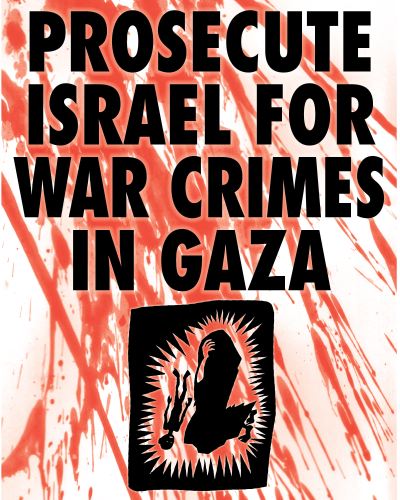
Amnesty International says Israel cannot explain away murdering so many children, civilians in Gaza

Israel has enough clout in Washington to silence criticism. It is also adept at making its critics think twice about speaking out because they risk a withering condemnation from sections of the media and are likely to be branded as an anti-Semites. As a consequence, critics of Israel, even within universities, are increasingly reluctant to voice their opinions when Israel’s foreign policies threaten peace in the Middle East or promote military strategies that display a total disregard for civilian life.

But now an Amnesty International report has emerged accusing the Israeli government and its military chain of command of lacking a moral compass by showing a total disregard for international law and human life in Gaza.

Amnesty, like other groups that have looked at the Gaza death toll, reached the conclusion that you cannot, as Israel has tried to do, explain away the deaths of so many children by claiming they died in crossfire or were used as human shields. Amnesty said if civilians were used as human shields it was by the Israeli army, who put them in harm’s way and, in some cases, made them go into buildings they suspected were booby-trapped.

During the Gaza invasion—codenamed “Cast Lead”— Israel deployed weapons that Amnesty says should never have been used in civilian areas, including Hellfire missiles, phosphorus bombs, 120 mm mortar rounds and tank shells filled with thousands of metal darts that acted like shrapnel.

Hospitals were attacked and ambulance staff were killed and prevented from tending civilian wounded for days. Families were directed to homes that were then shelled and over 200 policemen were killed in a sustained bombardment of their facilities. Some civilian victims, including women and children, were clearly shot at close range. Others were terribly maimed when phosphorus bombs were used indiscriminately.

Amnesty drew attention to two families. The first was the Sammouni extended family that lost 31 of its members in southeast Gaza City on Jan. 5, 2009. The day before, Israeli soldiers moved dozens of the family’s members from one of their homes to another and then shelled the second home. Not everyone died immediately.

Some took days to die from their injuries. Ambulance personnel were not allowed to get to them. A few children who survived were found clinging to their dead mothers.

In other instances, Amnesty confirmed that bodies were left decomposing for days in parts of Gaza. A second example of a family tragedy occurred on Jan. 12, 2009 when a grandmother, mother and three children were sitting outside their home at 9 a.m.. They were killed by a Hellfire missile fired from a drone. The missile and drone were supplied to the Israeli military by the U.S.

Amnesty concluded that the largest numbers of civilian fatalities and injuries resulted from long-range, high-precision weapons fired from helicopters, drones, tanks and mortars. The victims were not caught in crossfire, as Israel alleged, and were not used as human shields by
Hamas militants.

“Many were killed when their homes were bombed or as they slept. Others were going about their daily activities, sitting in their yard, handling the laundry on the roof when they were targeted in airstrikes or tank shelling.

Children were studying or playing in their bedrooms, or on the roof, or outside their homes when they were struck by missiles or tank shells. Paramedics and ambulances were repeatedly attacked while rescuing the wounded or recovering the dead,” said the report, adding it believed Israel failed to take steps required under international law to protect civilians. Amnesty also unequivocally dismissed Israel’s argument that the deaths of 300 children reflected “collateral damage” and the “panicked reactions of lone soldiers.”

Amnesty quoted an Israeli commander, who gave his men the following advice during a security briefing: “I want aggressiveness. If there is someone suspicious on the upper floor of a house, we’ll shell it. If we have suspicions about a house, we’ll take it down. There will be no hesitation. Nobody will deliberate. Let mistakes be over their lives, not ours.”

That strategy has led to tanks firing shells from a distance of five miles, with the result that they often collapsed more than one house. In the targeting of a mosque, the house next to it was hit and five girls ranging in age from 4 to 17 years were killed. When shells filled with 5,000 tiny metal darts were fired into Gaza, people in a 300 x 100 yard radius of an exploding shell were at risk of death or serious injury. Since the end of the Gaza operation Israel has refused to explain how high-precision weapons, whose operators could see the smallest details of a target, could kill so many women and children.

The indiscriminate use of phosphorus rated special condemnation by Amnesty, yet Gaza was not the first time Israel used the weapon against civilian targets. It fired phosphorus shells into Lebanon and, just as it had done during the Lebanon conflict, it reacted with public outrage when reporters accused it of using the weapon in Gaza. We now know the outrage was feigned as the evidence from Gaza is clear. The Israeli military repeatedly fired phosphorus shells over densely populated areas.

“Phosphorus was often launched from artillery shells in air-burst mode, which aggravated the already devastating consequences of the attacks. Each shell ejected over 100 felt wedges with highly incendiary white phosphorus, which rained down over houses and streets, igniting on exposure to oxygen and setting fire to people and property,” said Amnesty, which further accused the Israel military of preventing people from being properly treated for horrific phosphorous burns.

The very fact the Israeli Defense Forces did not come clean about using phosphorus meant many lives were not saved because surgeons did not know what had caused, and how to treat certain types of wounds. The Amnesty report added that white phosphorus and artillery shells were used in attacks that were indiscriminate and violated international law.

“The Israeli military could not have been unaware of the presence of civilians in locations, which were repeatedly attacked. . . . Israeli forces continued to employ the same tactics for the entire duration of the 22-day offensive. . . . Much of the destruction was wanton and deliberate. It was often the result of reckless and indiscriminate attacks which were seemingly tolerated or even directly sanctioned up the chain of command, and which at times appeared intended to collectively punish local residents for the actions of armed groups. . . . Children, women and elderly people were among those trapped and denied access to medical care,” were just some of the report’s conclusions.

Throughout operation “Cast Lead,” the Israeli military denied the international media and independent observers access to Gaza, and, since then, it has refused to speak to investigators. It has made no effort to launch an internal inquiry, and that testifies to a mindset that places scant value on the lives of Palestinians. At the very least, Congress should ask Israel to explain why it killed, injured and maimed so many civilians and particularly why it slaughtered 300 children.

On the other hand, if Congress and the American mainstream media are not prepared to address the issue, why should Israel? It is made to feel confident that its closest ally will stand by it no matter what crimes it commits.

In a very real sense, the American people, who constantly are told how great, humane and generous they are, and who finance Israel’s murder machine with their tax dollars, are guilty of these appalling atrocities.

Unlike the U.S., Britain has taken punitive action against Israel for its Gaza operation. The Israeli embassy in London was informed that Israel had violated current British and European laws that forbade the use of weapons for “internal repression.”

An all-party group of British parliamentarians welcomed the move and also a government promise to review all military export licenses to Israel. Meanwhile, Israeli promoters, such as the “Rev.” John Hagee, make millions of dollars with the support of the Israeli-controlled American media, holding rallies to support Israel and its murderous policies.

Source: American Free Press
Bookmark and Share

THE FILM ISRAEL DOES NOT WANT YOU TO SEE ~~ RACHEL


Israel and its watchdogs have been on special alert regarding criticisms coming from Jews and Jewish organisations. It’s almost as if they want the world at large to believe that all Jews stand behind them and support their policies of genocide, ethnic cleansing and apartheid. Anyone who is a regular reader of this Blog knows that nothing is further from the truth.

The latest uproar is about a film called Rachel…. a film by Simone Bitton about the death of Rachel Corrie. Ms. Bitton is not only Jewish, she is also an Israeli! That’s way too much for the zionists to swallow… so the campaign to boycott the film has started….

Better to BOYCOTT ISRAEL!

Below you will find some interesting information about the film and the efforts to keep it from the public eye….

The following is from an entry on Daily Kos…

The San Francisco Jewish Film Festival, the largest Jewish Film festival in the world, will screen many films this year, many with discussion with filmmakers and others featured in the film. Some of these films will be controversial, there will be all sorts of issues explored.

None has generated more controversy than the film “Rachel”, a film by Jewish-Israeli filmmaker Simone Bitton about the death of Rachel Corrie, the young woman killed by an Israeli-military bulldozer as she was protecting homes in the Rafah, Gaza. At the request of the filmmaker, they have invited Cindy Corrie, Rachel’s mother to speak. Big time controversy and condemnation by a weekly Jewish magazine and even from the local Israel Consul General.

Cindy Corrie has publicly advocated for ensuring “justice, freedom, security and economic viability for both Israelis and Palestinians.”

Israel Consul General protests the presence of Cindy Corrie:

“The San Francisco Jewish Film Festival made a serious error in judgment in inviting Mrs. Corrie to the festival,” Israel Consul General Akiva Tor said via e-mail. “She is a propagandist who is immune from responsibility for the causes she supports because it was her daughter, Rachel, who was accidentally killed.

“So her staged presence becomes a kind of emotional grandstanding, rather than pursuit of a deeper insight.”

Propagandist? The Consul General has been busy supporting policies of expanding settlements in the West Bank, supporting the war on Gaza, supporting a brutal blockade, and now will be supporting a policy of muzzling Palestinians, and Jewish Israelis, who dare to commemorate the Nakba of 1948. The Foreign Minister, his boss, is seen by many (even Israeli diplomats) as extreme as fascist Haider of Austria… and this man is calling Cindy Corrie a “propagandist”? Cindy Corrie who wants justice, freedom, security and economic viability for both Israelis and Palestinians?

I think its a way of saying there is a point of view that the Consul General finds might disturb the status quo. Change might happen. Scary. Also a way to challenge the official narrative. “accidental” he says? That’s the official line. Not so fast. Maybe not an accident. as perhaps the deaths of hundreds of civilians in the war on Gaza of December/January is perhaps not an accident, or the continuing blockade that brings hunger to the people of Gaza is not an accident. Perhaps the latter atrocity is nothing more than a joke among its designers.

Jewish Voice for Peace, a national group based in the Bay Area, is one of the groups co-sponsoring this film, and they are to be commended for their courage, as well as the festival organizers. Compare this to the sometimes successful effort to not allow the staging of the play: “My Name is Rachel Corrie” at several theaters around the country (which helped tremendously, no doubt, with publicity and its success where it was produced).

Here is how Cecilie Surasky of Jewish Voice for Peace responds to J Weekly’s editorial opposing the presence of Cindy Corrie.

There’s something so deeply, deeply depressing about the attack against Cindy Corrie by J Weekly, the Bay Area’s Jewish newspaper. True, it’s just one of countless examples of the moral malaise that plagues the institutional Jewish world when it comes to Palestinians, but on this day, this day when I am fresh back from Gaza, from Hebron, from Silwan, it has gotten to me.

I’m not sure which is worse- the possibility that the J’s editorial writer actually believes the morally groundless drivel he or she is writing? Or the possibility that they know full well that the moral outrage that is the Israeli treatment of Gazans is an affront to all Jews and feeling people, but that they care more about keeping advertisers happy.

Change is happening, both in the Jewish Community and the wider community, and the keepers of the status quo cannot shut it down. that’s not to say they are not trying. This should be seen in the wider context. In Israel, beyond the attempt to erase “Nakba” from the history books, (see assaf’s diary)there is also the arrest and detention of Jewish groups who desire a different future for Israel, not based on militarism and oppression. The government must resort to repression not just of Palestinians, which is widely-accepted Israeli tradition, but now even Jewish dissidents. It is the criminalization of dissent, by any means necessary.

It won’t work. Arrests will not work. Personal attacks will not work. Like the ones that will accumulate below, more likely than not, some based purely on the idea that most of my diaries deal with oppression of Palestinian rights… what if i were focusing on the Health Care debate… would there be this wild accusations without basis if i was consistently unfriendly to insurance company policies? Is there some mathematical formula to determine one’s “acceptable” criticism of Israel? It really is nothing less than a lame attempt to avoid dealing with substance, and diverting people’s attention.

This movement to demand justice in the Middle East is already too large, too diverse for that to work. They will call Rachel and her mother “terrorist sympathizers” who have no business going to Gaza. Like they say that Ezra Nawi has no business protect homes in the West Bank. Like others said that Andrew Goodman and Michael Schwerner had no business going to Mississippi to support the movement for justice there. Or like others said that Ita Ford, Maura Clarke, Dorothy Kazel and Jean Donovan had no business in El Salvador.

It is our business to share in the struggle for human rights and peace.

Rachel will be shown on Saturday, July 25th, 1:30 pm at the beautiful Castro Theater in San Francisco. Cindy Corrie Will be there.


Here is the Statement from the organisors of the San Francisco Film Festival….on why they are screening Rachel


Why San Francisco Jewish Film Festival is showing Rachel, a film by Simone Bitton about

Rachel Corrie, and inviting Cindy Corrie, Rachel Corrie’s mother, to the Festival:

1. The film Rachel is directed by veteran filmmaker Simone Bitton, a dual citizen of Israel and

France. The documentary takes an unflinching look at the controversy surrounding the death of

an American activist who was protesting Israeli military actions in Gaza. In the film, Bitton,

through interviews with eyewitnesses, Israeli soldiers and spokespeople, and others close to the

tragedy, exposes new information about the incident which we believe makes for very

worthwhile viewing, from both a journalistic and an aesthetic perspective. The film has already

played in such prestigious festivals as the Berlin International Film Festival and Tribeca Film

Festival (New York).

2. The film Rachel includes the viewpoints of people with a variety of opinions on the events

which led to Ms. Corrie’s death. It includes interviews with Israeli army spokeswoman Avital

Leibovitch, as well as doctors, activists, soldiers, Israeli and Palestinian civilians, and Rachel

Corrie’s parents. The film also includes military video from the Israeli army.

3. As with all the films we show at SFJFF, we are presenting the views of the filmmakers and

their subjects in what we hope is an atmosphere that encourages free expression and public

debate. We regret that the filmmaker of Rachel could not be present to discuss the film

personally, although we invited her to be here. Cindy Corrie, Rachel Corrie’s mother, is a subject

of the documentary, and it is customary (and even expected by audiences) for documentary

subjects to participate in Festival screenings. This kind of exchange has occurred throughout our

Festival’s long history, and Cindy Corrie herself has addressed audiences at the Tribeca Film

Festival, presentations in New York theaters, and other cultural forums. We wish to provide our

audiences with the same opportunity. Her appearance at SFJFF is not intended to provide a

political platform but rather to deepen the dialogue around the film. Cindy Corrie has publicly

advocated for ensuring “justice, freedom, security and economic viability for both Israelis and

Palestinians.” We think it will be an illuminating conversation.

4. We are presenting the film as part of a wider series on social justice and activism, and want

our audience to have the benefit of a direct encounter with those who can help them

understand Rachel Corrie’s motivations ‐ even if they don’ agree with them ‐ from a very

personal standpoint. The filmmaker considers herself a film essayist rather than a reporter and

desires the film to be viewed as an artistic statement as well as an investigation.

5. SFJFF’ commitment to Israeli filmmakers and cinema is steadfast. We are proud that this

year we are showcasing 37 individual films from or connected to Israel –comedies, dramas,

documentaries, animation and shorts –which together form a very vibrant portrait of the

country and its complexity. Other political affairs documentaries besides Rachel include Gilad

Shalit: 2 Years in Captivity, a portrait of Gilad Shalit, the soldier captured by Hamas; and

Chronicle of a Kidnap, a portrait of Karnit Goldwasser, the widow of Ehud Goldwasser, an Israeli

soldier who was one of many victims of the Lebanon war.

6. The SFJFF supports the democratic exchange of ideas that great filmmaking provides. We

believe that the best artists, including documentary filmmakers, create work that makes us think

and sparks a dialogue both within the Jewish community and the greater community of the Bay

Area. We do not expect that the views of every film or speaker will be embraced by all of our

audiences, nor can every film represent the diverse views of SFJFF staff, board, members or

sponsors. We unanimously embrace the tradition of spirited debate that is a core element of

Jewish inquiry, and strive to provide a welcoming forum for the discussion of different

perspectives.

Source: Dessert Peace


Bookmark and Share