Wednesday, July 29, 2009

The Anti-Defamation League’s extreme double standard in regards to ‘hate crimes’


The ADL Applauds Senate's Passage of Hate Crime Legislation. The Bill which is known as the The Matthew Shepard Hate Crimes Prevention Act, passed the Senate 63-28, and is supported by the President who will sign it into law. Organizations such as the ADL have aggressively promoted hate crime legislation. These organizations have endorsed Europe and Canada's policies on prosecuting what they deem as hate speech. The ADL openly advocates for their model anti-hate law which has been adopted by many states.

The bill is unconstitutional because it violates the 10th Amendment by granting the Federal Government authority over local and state government in prosecuting hate crimes. It violates the 14th Amendment by granting certain groups special protected status, as well the double jeopardy clause of the 5th amendment.

Recently the Plains State ADL Director denounced the 1st Amendment by saying that "freedom of speech does not extend to racist groups, nor give their supporters the right to threaten and intimidate others or commit acts of violence."In many western nations, an individual can be prosecuted by the government for certain speech. In 1988 the ADL gave out an award to law student Joseph Ribikoff for writing a proposed hate crime bill that would criminalize hate speech against gays and minorities.

In testimony before the Senate Judiciary Committee, ADL Washington counsel Michael Lieberman spoke in support of the Hate Crimes Bill. "We have no illusions about this legislation," Lieberman testified. "We know that bigotry, racism, homophobia, and anti-Semitism cannot be legislated out of existence. A new federal law that finally addresses all victims of hate crimes will not eliminate them."

Let us take a look at how the ADL has handled two major hate crimes. They exploited the racial Murder of James Byrd using the tragedy to call for stiffer hate crime laws and a tougher stance against white racism. However they take a very differant stand when whites are the victims of hate crimes.

Not to excuse his crimes but it is important to note that John King, the white supremacist who was responsible for the murder of James Byrd became a hardened racist due to his his experience being gang raped by black gang members while incarcerated in a notorious Texas Prison for a petty crime. He latter joined a white gang for protection [See Becoming A Devil, by Joseph Sobran].

That part of King's story was completely ignored by the media because it would change the perception of him as from an evil white supremacist to a man who was driven insane and full of hatred by being a victim of a horrific crime just because he was white. When Michael Jackson was accused of child molestation it was brought to attention that he was abused as a child and that gained him sympathy by some segments of the society while hardly anyone had any sympathy for King.

In regards to the horrific black and white crime known as the Knoxville murders the ADL took and very differant position. Quoting an article by James H. Lilley, also stated in other blogs, etc:

On Saturday January 6, 2007 Hugh Christopher Newsom, age 23 and Channon Gail Christian, age 21, both students at the University of Tennessee went out on a date. They were driving in Channon's Toyota 4-Runner when they were carjacked at gunpoint. Suddenly the crime turned far more savage than an armed car theft. Chris and Channon were kidnapped and driven to 2316 Chipman Street where they were forced into the home at gunpoint. While Channon was forced to watch, her boyfriend was raped prison style and then his penis was cut off. He was later driven to nearby railroad tracks where he was shot and set afire. But Channon's hell was just beginning. She was beaten; gang raped repeatedly in many ways, had one of her breasts cut off and bleach poured down her throat to destroy DNA evidence-all while she was still alive. To add to Channon's degradation the suspects took turns urinating on her. They too set her body afire, apparently inside the residence, but for some reason left her body there-in five separate trash bags...
For the whole article from Mr. Lilly see click here.

The mainstream media including most mainstream conservatives with the exception of Michelle Malkin, Walter Williams, and Michael Savage refused to cover the story because they knew it would instill anger on behalf of whites. Compare that to the coverage the Duke Lacrosse gang rape of a black stripper by white Lacrosse players that ended up being a Hoax.

The ADL Condemns White Supremacist Attempts to Exploit Knoxville murders. Yet they have gone out of their way to politically exploit any crime commited by white supremacist such as the recent Holocaust Museum shooting as well as the murders of James Byrd and Matthew Sheppard, whom the hate bill is named after. The ADL also defended the horrific atrocities of Israel's Operation in Gaza. Regardless of their race all victims of horrific crimes deserve justice. The ADL has not only failed to live up to it mission "to secure justice and fair treatment to all," but has gone out of it's to support injustice whether for Chris Newsom and Channon Christian or for the people of Gaza.

Source: The Examiner

Bookmark and Share

Z Street - The New Zionist Extremist Group


Zionism is corrosive, destructive, racist, extremist, undemocratic and hateful
On July 6, co-founders Lori Lowenthal Marcus and Allyson Rowen Taylor announced: "Z Street is launched, Will end J Street Treason." More on that below.
Continuing they said: "welcome to Z street! No more appeasement, no more negotiating with terrorists, no more enabling cowards who fear offending more than they fear another Holocaust. Z STREET is for those who are willing not only to support - but to defend - Israel, the Jewish State."
Never mind that no nation threatens Israel nor has for decades. It's a regional superpower - nuclearized and defended by the world's fourth most powerful military, armed with the latest state-of-the-art weapons and technology, and not reluctant to use them.
Its only adversaries are self-made and are needed to justify oppression, a culture of violence, an ethnocracy, exclusivity, privilege, and Jewish exceptionalism over others deemed inferior, legitimate enemies, and terrorists.
Zionism is corrosive, destructive, racist, extremist, undemocratic and hateful.
-- it claims Jewish supremacy, specialness and uniqueness as God's "chosen people;"
-- espouses violence, not peaceful coexistence;
-- confrontation over diplomacy;
-- strength through militarism, intimidation, and naked aggression;
-- is what Joel Kovel calls "a machine for the manufacture of human rights abuses" led by real terrorists posing as democrats;
-- what others say is repugnant, indefensible, destructive and malignant; and
-- what author Alan Hart calls "the real enemy of the Jews;"
-- an ideology contemptuous of Judaism's moral values and ethical principles;
-- the driving force behind a re-awakened anti-Semitism; and
-- a monster that's consuming its host and threatening humanity.
That's what Z Street supports.
Its Founders Have Disturbing Resumes
Based in Philadelphia, Lori Lowenthal Marcus writes about Israel and the Middle East for media outlets like the pro-Israeli American Thinker. She's also affiliated with the extremist Zionist Organization of America (ZOA).
From Los Angeles, Allyson Rowen Taylor is associate director of the 2001-founded Stand With Us, a pro-Israeli front group calling itself:
-- "an international education organization that ensures that Israel's side of the story is told in communities, campuses, libraries, the media and churches through brochures, speakers, conferences, missions to Israel, and thousands of pages of Internet resources."
In other words, it's a pro-Israeli mouthpiece promoting Zionist extremism at the expense of truth and an equitable resolution of the Israeli-Palestinian conflict.
Some of Taylor's Amazon book review comments give her away:
-- on (Fox News) Sean Hannity's "Let Freedom Ring: Winning the War of Liberty over Liberalism," she "wonder(s) if anyone other than those who respect and understand the issues of Jihad, Marxism and 'Facism' will read this book. But I recommend it....I love Sean."
-- on John Mearsheimer's "The Israel Lobby and US Foreign Policy," she rants about authors blaming everything on Jews. This "book should have been funded by Henry Ford, or the 'Thrid' Reich. Even Norman Finkelstein, a staunch hater of the Israeli State, found flaws in this sad excuse for a book....Give me a break, 'Anti Semites' are just 'anti Semites,' " and
-- on Jimmy Carter's "Palestine: Peace Not Apartheid," she calls the book "a mess....This is a work of a man who 'clarly' is in cahoots with the radical Islamofacists..it should be filed in the 'fiction' section of the library."
Taylor is also CEO and president of the August 2008-founded People Against Hate Speech, another pro-Israeli front group affiliated with the Simon Wiesenthal Center, notoriously pro-Zionist with over 300,000 global members and support from prominent figures like George W. Bush, Barack Obama, Senator Charles Schumer and Hillary Rodham Clinton.
Z Street's Charter
"Z STREET is an organization of Zionists who join together at this time of great danger to the Jewish State of Israel and, increasingly, to world Jewry.
Fact check: Israel creates its own enemies through extremism, lawlessness, wars of choice, and decades of contempt for Palestinians, other Arabs and Islam.
"I. Z STREET proudly asserts the right of the Jewish people to a state."
Fact check: Israel denies one to Palestinians, occupies their land, and expropriates it for its own use in violation of international law.
"II. Z STREET proudly reclaims the words 'Zionist' and 'Jewish State' as ones to wear with pride, in direct opposition to their recent branding as shameful or impolite terms."
Fact check: Zionism's extremist, destructive ideology is explained above.
"III. Z STREET maintains that Jews have the right to live anywhere in the world, including, and especially, within greater Israel."
Fact check: Palestinians are denied all rights, including to live securely on their own land in their own country in peace.
"IV. Z STREET is dedicated to maintaining and strengthening the Jewish State of Israel in the firm belief that there can be no compromises or agreements with, and no concessions to, any Terrorist Entity or any individual Terrorists."
Fact check: For over six decades, Israel has committed slow-motion genocide against indigenous Palestinians who want peace, not conflict; are willing to recognize the Jewish state in return for their own; and who deserve equal rights to Jews and all others, but are denied them by an oppressive occupier.
"V. Z STREET is dedicated to rejecting and refuting the condemnation of any actions taken by Israel which are not similarly condemned when taken by any other individuals or political entities."
Fact check: Israel acts lawlessly, chooses violence over peace, and calls legitimate self-defense "terrorism."
"VI. Z STREET is dedicated to constantly and consistently declaring and affirming the facts which fully support the legal, moral and historical right of the Jewish State to exist in peace and security without physical or verbal assault against its sovereignty or legitimacy. This necessarily entails adamantly opposing the dismantling of and/or handing over territory to any other entity or entities."
Fact check: Israel demands special rights as "God's chosen people" but denies any to indigenous Palestinians. In addition, its settlements and human rights abuses violate international law.
"VII. Z STREET is dedicated to constantly and consistently declaring and affirming the facts that reveal the fallacious narratives of Terrorist Entities, Terrorists, and their supporters undermining the legal, moral and historical right of the Jewish State to exist in peace and security without physical or verbal assault against its sovereignty or legitimacy."
Fact check: The "narratives" are true, and so-called "Terrorists" are, in fact, peace-loving people who by law may defend themselves when attacked.
"VIII. Z STREET insists that terrorists or other threats against Israel be unequivocally condemned, and that those members of the world community failing to actively condemn those threats also be branded as active or passive supporters of a second genocide against the Jewish people."
Fact check: Israel is the region's real terrorist threat.
"IX. Z STREET declares that Israel's respect for women's, religious and other minorities' rights, provides a welcome beacon - particularly in the Middle East - to be acknowledged and respected by all people of good will."
Fact check: Israel promotes Zionist extremism, demeans Arabs and Islam, and calls Muslims "Islamofascists."
"X. Z STREET recognizes the existence of 22 officially Muslim countries and 19 Christian countries, whose status the world does not challenge, while only Israel, the Jewish State, is demonized for asserting its legitimate right to be a religion-affiliated State, and which religion, Judaism, is the world's oldest monotheistic faith."
Fact check: Israel denies equal rights to its non-Jewish citizens, a practice found nowhere else in the civilized world.
"XI. Z STREET recognizes the value of other Zionist organizations whose activities include lobbying, producing publications, the sponsorship of scholars and scholarship centers, honoring generous donors and/or other important programs. Z STREET is not intended to supercede those other Zionist organizations. Z STREET is intended to serve as an alternative to many mainstream and other Jewish organizations that, to meet donors' requirements or for ideological reasons, cannot affirm the principles set out in the Z STREET Charter."
Fact check: All Zionist organizations are extremist, hateful, and preach Jewish supremacy over Islam and Muslims.
"XII. Z STREET has no need to, and will not negotiate with, nor seek to gain the approval from, any government, Israeli or Diaspora organization, or individuals supporting the diminution or weakening of Israel either because of ideological conviction, animosity towards a strong, Jewish State, cowardice, or the misguided belief that compromise with Terrorist Entities can lead to peace in the Middle East or global peace."
Fact check: Like Israel, Z Street is uncompromisingly hard line, extremist, militant and racist.
"XIII. Z STREET will serve as an educational force that will FIGHT WITH FACTS. Z STREET undergirds its positions with facts and provides that essential ingredient to exponentially increasing its membership ranks."
Fact check: Z Street distorts facts to fit its ideology and attract new extremist members.
"XIV. Z STREET is a new, entirely volunteer organization for those who affirm the foregoing and dedicate themselves to upholding and ensuring respect for these principles. Its primary purpose of which is to provide a proud banner for Zionists behind which to rally."
Fact check: Z Street supports Zionist extremism, militancy and racism. It demeans other views and affirms that "Israel is the homeland of the Jewish people," no others, "and must remain a Jewish state." It challenges critics as neo-Nazis and calls persons, groups, or entities defending themselves against Israeli aggression "terrorists." It champions Jewish exceptionalism and demeans Arabs as inferior Islamofascists.
It believes Jews have colonization rights to dispossess indigenous Arabs for a "greater Israel" in all Judea, Samaria, the Golan, Jerusalem and Gaza.
Z Street's Opposition to J Street
Z Street was founded to counter more moderate Jewish organizations like Americans for Peace Now and J Street, a US-based Israeli advocacy group. Founded (in April 2008) by its Executive Director Jeremy Ben-Ami, it calls itself "The new address for Middle East peace and security (as) the political arm of the pro-Israel, pro-peace movement" and says:
"(It) was founded to promote meaningful American leadership to end the Arab-Israeli and Israeli-Palestinian conflicts peacefully and diplomatically. (It) support(s) a new direction for American policy in the Middle East and a broad public and policy debate about the US role in the region."
It represents Jews and non-Jews "who support Israel and its desire for security as the Jewish homeland, as well as the right of the Palestinians to a sovereign state of their own - two states living side-by-side in peace and security....based on the 1967 borders with agreed reciprocal land swaps (and) resolution of the refugee issue within the new Palestinian state and in current host countries."
It supports "a new regional approach to cooperation and security;" diplomatic solutions over military ones; multilateral conflict resolution, including with Iran; an equitable Israeli-Syrian peace agreement; dialogue instead of confrontation; and for America to provide leadership to achieve it.
It "oppose(s) alliances with the religious right or any radical religious ideologues in the name of supporting Israel as well as efforts to demean and fan fears of Islam or of Muslims." It omits Zionism or Zionist goals in its Statement of Principles, Issues, Policy, and Actions.
Executive Director Ben-Ami held a number of senior positions as Bill Clinton's Deputy Domestic Policy Advisor and Howard Dean's presidential campaign Policy Director. He's also been a senior vice president at Fenton Communications and was communications director for the pro-Israeli New Israel Fund. His father was born in Israel, and much of his family still lives there.
On October 27, Z Street supporters plan a pro-Israeli White House rally at the same time J Street holds its first annual meeting in Washington - the organization it accuses of "Treason."
Co-founder Marcus said, "the presence of Z Street will ensure that the true Zionist voice will be heard: that we will not stand by quietly as apartheid is imposed on Jews in the Israeli territories, and we will not stand by quietly as the Iranians continue racing madly towards obtaining weapons to wipe whole peoples off the globe while politicians send polite letters and invitations to parties."
Co-founder Taylor added: "This grass roots effort will compete for media attention with the slick packaging of several well-funded anti-Zionist organizations (specifically J Street), and unless those of us who are committed to maintaining a strong, unified Jewish State of Israel stand up and speak out together, the weak will continue to appear strong and the strong will continue to appear weak."
In October on Washington streets, Z Street's extremism will be vocal in full public view against J Street's message of peaceful resolution and equity for all sides of the Middle East conflict.
Source: Rense.Com
Bookmark and Share

‘A Nation That Does Not Educate in Liberty Will Not Long Preserve It.’


This blog entry was authored by Tim Nuccio, a student at the University of Illinois at Urbana-Champaign and FIRE summer intern.

Greg Lukianoff, FIRE's President, has devoted many of his speeches to a concept that he calls "unlearning liberty," a process by which students learn to live under and even embrace censorship—even becoming censors of their own peers. Greg believes that this process is partially responsible for students' acceptance of oppressive speech codes at the college level. Simply put, students have little understanding of what free speech involves or why it is useful, and therefore fail to see the serious problems associated with an environment that does not protect expressive conduct.

Why is this happening on our campuses? Attempting to answer this question, I, along with a colleague, examined the data from a study by the John S. and James L. Knight Foundation that asked sixty-three questions about the First Amendment to 112,003 high school students—quite a large sample.

Before we began examining the polling data, we hypothesized that, consistent with Greg's "unlearning liberty" idea, students would place a lower value on expression in which they were likely to engage. We also predicted that Greg's conclusion-that students who spend their entire lifetime "unlearning" the ideas of freedom will therefore be willing to see their fellows punished even for constitutionally protected expressive conduct—would be confirmed.

On examination, the data did indeed support the hypothesis that high school students are more likely to support protection for acts that acts that they themselves either engage in or would recognize as socially acceptable. Questions forty-three and fifty, which deal with flag burning or defacing the flag as a means of political protest, are an excellent example. While flag burning has been a historically difficult First Amendment issue, the fact that a large majority of students strongly think it should be banned outright tends to indicate that students are less concerned about the ideal of broad protection for all expression than they are about their personal feelings about the content of that expression. Seventy-five percent of students were unaware that Americans have the right to burn the flag as a political protest, while sixty-three percent "strongly disagree[d]" that "People should be allowed to burn or deface the American flag as a political statement" (emphasis added).

This is especially noteworthy considering that, as Noah noted several weeks ago, a majority (nearly sixty percent, in fact) of students responded that they have "...taken classes in high school that dealt with the First Amendment." The study did not ask students whether this was simply a passing mention or an entire class dedicated to topics regarding the First Amendment. Either way, while the First Amendment is not foreign to most students, they still tend to show a lack of real understanding of the purpose and reach of its protection. Indeed, over a third of the students polled think that the First Amendment "goes too far"(question forty) in the rights that it protects, while less than half disagreed with that statement and just one in four "strongly disagree[d]." The responses to this question provide evidence of a lifetime of "unlearning liberty" that must be remedied if the First Amendment is to enjoy the support that it has traditionally had among the vast majority of Americans.

Students were also asked whether unpopular opinions "should be allowed." An overwhelming majority (eighty-three percent) stated that they should. This reflects FIRE's experience that the philosophical idea of free expression has universal appeal, especially when the hypothetical only requires consideration of an expansive concept like "unpopular opinions." But more specific questions asking whether a racially-charged satire constituted free speech, whether a professor's explanation of a racial epithet is protected, or if reading a book with burning crosses on its cover can be prohibited by literally "judging a book by its cover" would almost certainly not reach the same result. I draw this conclusion based on responses for the survey, with students expressing support for liberty when it comes to issues like music (question forty-four) or the student press, while they express opposition to liberty when polled about other issues like flag burning or "indecent" material on the Internet (question fifty-two).

This is important because unpopular speech is precisely what the First Amendment is intended to protect. For instance, two different cases dealing with flag burning found that neither states nor the federal government could constitutionally restrict flag defacement as part of a political protest (Texas v. Johnson and United States v. Eichman). And while no court has ever declared government regulation of "indecent" Internet content per se unconstitutional, the First Amendment's broad protection has resulted in two federal statutes' invalidation. Congress' first attempt to regulate indecency on the Internet, the Communications Decency Act of 1996, was struck down unanimously in Reno v. ACLU, 521 U.S. 844 (1997). Their second attempt, the Child Online Protection Act (passed in 1998 in response to the Reno opinion) failed after eleven years of litigation in ACLU v. Mukasey, 534 F. 3d 181 (2008), and the Supreme Court denied certiorari in this case on January 21, 2009. Indeed, Congress has yet to find a manner to regulate indecent content on the Internet that will survive a First Amendment challenge, and may never do so.

Considering the respective percentages, many students who responded that flag burning was not protected nonetheless say they favor protection for speech that is "unpopular." Further examination of the raw data could presumably uncover the correlation coefficient between those who believe flag burning is protected and those who support protection for unpopular opinions. Examining this correlation might allow future studies to find where the disconnect exists between difficult topics like flag defamation and the broader philosophical concept of protection for unpopular speech. Better teaching of First Amendment history may help students connect specific controversial issues with their general and laudable wish to defend "unpopular" speech.

Unlearning liberty is not just an isolated occurrence, but rather a systemic part of our educational process. While our education system has apparently managed at least to mention the First Amendment to the majority of students, an insufficient number appear to possess even a rudimentary understanding of how a society with free expression functions. This is supported not just by students' responses on issues regarding protected expressive conduct but also by the large proportion who responded "don't know" to many of the questions.

Students need to be educated about the meaning of the First Amendment at the high school level—college is too late. After all, many do not attend college, or may go on to technical school, where the concept of a broad liberal arts education either does not exist or is limited in scope. Among the most important purpose for comprehensive public education in our republic is to create more informed voters, which necessitates broad education about the political process. Our society must seize this opportunity in the interest of preserving our democratic process.

Source: Foundation For Individual Rights In Education

Bookmark and Share

Victory for Freedom of Conscience at Grand Valley State University: Music Department Axes Political Litmus Test


Grand Valley State University (GVSU) has promised to remove "demonstrated commitment to the principles of diversity" from the stated job requirements for prospective faculty seeking appointment to GVSU's Department of Music. The department will restate its requirements in terms of relevant experience, not vaguely worded personal commitments regarding a controversial political issue. The change, which came after FIRE asked GVSU to restore freedom of conscience on its campus, is a fresh reminder to public universities that they cannot require prospective faculty to demonstrate personal commitment to "the principles of diversity," any more than they can require a commitment to "patriotism," "objectivism," or "communalism."

On April 17, 2009, GVSU posted a job listing for a Visiting Assistant Professor of Music (Flute), a position primarily involving "the teaching and mentoring of university level flute students [and] performance with various faculty ensembles." The listing required that candidates show "a demonstrated commitment to the principles of diversity with the skills necessary to effectively develop and lead in a cultural climate that recognizes, respects and celebrates diiferences [sic]." While public universities like GVSU may impose objective requirements regarding skills and experience, requiring a "demonstrated commitment" to "the principles of diversity" imposes ideological requirements in violation of individuals' freedom of conscience.

FIRE wrote to GVSU President Thomas J. Haas on June 18, noting that the department had been imposing such requirements for years—including job listings for instructors in a piano and trombone who had committed themselves to "the principles of diversity." FIRE's letter stated that "GVSU, as a public university, simply cannot require professors to adhere to a political orthodoxy, no matter how much the college may believe in the tenets of that orthodoxy and wish others to embrace those tenets." FIRE also informed Haas of similar cases this year at Virginia Tech and North Shore Community College (NSCC).

This latest downfall of a political litmus test is particularly reminiscent of this year's case at NSCC, which required an "appreciation of multiculturalism" of prospective faculty. NSCC removed the language after FIRE reminded it of its constitutional obligations. While Virginia Tech has softened its ideological requirements somewhat, its campus-wide policy is to evaluate faculty partly on their "diversity accomplishments"—not just in their personal development activities, which is problematic enough, but also in their own research and courses, encroaching on their academic freedom.

GVSU responded to FIRE on July 9. University Counsel Thomas A. Butcher argued that the department's requirements were "bona fide occupational qualifications of education, training and experience that are relevant to the faculty position," but he acknowledged that prospective applicants might "misread" the diversity requirement as unlawfully restricting their views. Accordingly, Butcher promised that GVSU would restate the requirements in terms of relevant experience.

GVSU's policy change is a win for everyone, allowing GVSU to retain whatever lawful employment qualifications it desires, and leaving prospective music teachers free to hold whatever beliefs they want. FIRE commends GVSU for revoking the music department's demand that candidates have ideological commitments.

Source: Foundation For Individual Rights In Education

Bookmark and Share

GERMANY BESTOWS HIGHEST HONOR ON FANATICAL ISRAEL HATER: Good For Them


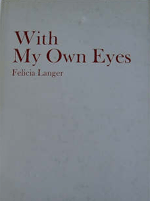
BERLIN - Horst Köhler, the president of the Federal Republic of Germany, issued on Thursday the ‘Federal Cross of Merit, first class,’ the most prestigious award in Germany, to Israeli attorney Felicia Langer, a vociferous critic of Israel, who lives in the city of Tübingen in the southern state of Baden-Württemberg.

Langer frequently compares Israel with apartheid in South Africa, and praised the anti-Semitic speech of Iranian President Mahmoud Ahmadinejad in Geneva at the Durban II UN conference on racism. When asked about the award and her comparison between Israel and South African apartheid, she told the Jerusalem Post that the Federal Cross of Merit is a “recognition of my work,” and “what Israel is practicing in the occupied territories is apartheid.”

In an interview with the junge Welt, a radical anti-Zionist Germany daily, she termed Israel, “the apartheid of the present” and refers to the Jewish state as “the Israeli regime.” Asked about her interview with the anti-Israeli website Muslim Markt, in which she argued that Defense Minister Ehud Barak, as well as other leading Israeli politicians and generals, should be charged and convicted with war crimes at the International Criminal Court in The Hague, Langer told the Post that she considers Israeli officials “war criminals” and stands by her comments. She said the “official translation” of Ahmadinejad’s threat to “wipe Israel off the map” did not contain a statement seeking the obliteration of Israel.

When asked why President Köhler, who delivered a speech in the Knesset in 2005, awarded Langer with Germany’s highest distinction, his press spokesman, Stefan Schulze, declined to comment and deferred the matter to the State Ministry in Baden-Württemberg.

In an e-mail to the Post, Uwe Köhn, a spokesman for the state of Baden-Württemberg, wrote, “the honor bestowed on Felicia Langer recognizes her humanitarian service, independent of political, ideological or religious motivation. Most important is her dedication to people in need, regardless of nationality or religion, given her own background as massively affected by the Holocaust. The decision to present the Order of Merit was made on the recommendation of the Lord Mayor of Tübingen, where Ms. Langer lives, with confirmation from all the usual departments involved in bestowing such honors, including the Foreign Ministry. The honor will be conferred by President Köhler and presented by Undersecretary [Hubert] Wicker.”

A spokesman for the German Foreign Ministry told the Post that the Ministry’s involvement in the award process is being reviewed and could not issue an immediate comment. Tübingen Mayor Boris Palmer could not be reached for a comment regarding his support for Langer.

According to Langer, the Christian Democratic Union party governor of Baden-Württemberg, Günther Oettinger, praised her work in a letter and congratulated her on receiving the Federal Cross of Merit.

However, Germany’s Jewish community had a different response to Langer’s prestigious award. Dr. Dieter Graumann, Vice President of the 120,000 member Central Council of Jews in Germany, could not fathom the German government’s decision to award her the Federal Cross of Merit. She is a “militant and fanatical hater of Israel,” said Graumann.

“An aggressive verbal attack on the Jewish state is rewarded for the first time by the German state. Is that really the intention?” Graumann wrote in an e-mail to the Post.

“Fact-based critique of concrete Israeli policies is of course always legitimate - and one hears it most loudly in Israel itself. But Ms. Langer is known particularly for entertaining a mean-spirited, militant hatred of Israel, which only succeeds in getting such effective public attention because she does this as a Jewish person - as she herself stresses.

“And Ms. Langer just a few months ago called the German Chancellor’s positive attitude toward Israel ’scandalous’. Now Langer is suddenly getting a Federal Cross of Merit- that’s a fatal signal, recognizing and legitimizing her fully one-sided agitation against Israel,” he continued.

“The reasoning provided by the state government is that Ms. Langer’s political engagement is linked with her past and with the Holocaust, a connection that is decidedly insensitive, unwise and unfortunate, to put it mildly. Is this the introduction of a new fashion? Whoever criticizes Israel the loudest - especially if they are Jewish - is first in line for the Federal Cross of Merit?” Graumann asked rhetorically.

Responding to Graumann’s criticism, Langer told the Post that “the Central Council of Jews in Germany is a branch of the Israeli Embassy. The Council is doing nothing good for Israel and the peace movement.” She said that he is “denigrating” her because he “does not have an argument.”

Peter Weidner, Upper Austrian Chairman of the Federal Freedom Fighters and member of the Victims of Fascism Organization, told the Post that Langer agreed with Ahmadinejad’s speech in Geneva. Weidner had reported on an event at the Linz City Hall, in which Langer ignored the Iranian president’s anti-Semitism, compared Israel with apartheid South Africa and described Hamas elections “as the freest democratic elections to have taken place in the Middle East.”

The Vienna-based online Jewish magazine Die Jüdische (www.juedische.at) and its chief editor, Samuel Laster posted Weidner’s report covering the Linz City Hall event in late April. According to Weidner, Langer described “Israel’s politics as racist.”

Critics in Austria and Germany assert that Langer’s efforts to delegitimize Israel by comparing Israel with apartheid in South Africa and terming the Jewish state as racist meet the criteria outlined in the European Union’s working definition of anti-Semitism.

President Köhler’s office and the State Secretary declined to further comment on the content of Weidner’s report and allegations against Langer.

Source: San Francisco Sentinel

Bookmark and Share

Norway examines the ethics of its Israel investments


Norway is reexamining its investments in several Israeli companies, in particular Elbit Systems. Two representatives of the Council on Ethics of the Norwegian finance ministry visited Israel at the beginning of June, in the wake of growing criticism of Israel in Norway in the months following last winter’s Israeli offensive in Gaza. The representatives met with, among others, groups of Palestinians and Israelis who claim that Norway invests in businesses directly involved in the Israeli occupation, which, they say, contradicts its commitment to abide by international law and to a just solution for the area.

The Council on Ethics was established to insure that foreign investments by the Norwegian Government Pension Fund-Global meet its ethical guidelines. At the end of 2008, the fund was invested in about 8,000 international companies, to the tune of 2,275 billion kroner, approximately $365 billion, according to this week’s exchange rate.

Of that amount, the Norwegian investment in Israeli companies totaled some 2.67 billion kroner, about $428 million, with another 627 million kroner in bonds, about $100 million. According to the Central Bank of Norway, the investment in Elbit Systems, which manufactures electronic equipment used by military and other security organizations, was 35 million kroner at the end of 2008, about $5.75 million, a little under a third of 1 percent of the company’s stock. The year 2008 saw a significant increase in the number of Israeli companies whose stock the Norwegian fund purchased, from eight in January to 41 by December.

Nearly two-thirds of the 41 companies are involved in development and building in the occupied territories, including the parts that were annexed to Jerusalem after the 1967 war. Another 11 international companies in which the Norwegians invest are also involved in the activities of Israeli companies on the other side of the Green Line, according to the “Who Profits from the Occupation” project of the Coalition of Women for Peace.

Earlier call for boycott

The Council on Ethics does not usually confirm or deny reports on the checks it conducts. But the examination of Israeli investments became known because representatives of the council met with the Israeli ambassador to Norway in Oslo before their visit to Israel. According to newspaper reports, Norwegian Finance Minister Kristin Halverson announced at the height of Operation Cast Lead, in Gaza last winter, that the pension fund was obligated to examine its Israeli investments.

The fund’s chairwoman, Gro Nystuen, told Haaretz that the Norwegian finance ministry itself published an announcement that investments in Elbit were under scrutiny, information that members of the council are themselves not allowed to volunteer. Finance Minister Halverson is a member of the Socialist Left Party, a partner of the Labor and Center parties in the coalition government. In 2005, when her party was in the opposition, Halverson called for a boycott of Israel. But after voicing a similar statement as a member of the government’s ruling coalition, she then recanted, when the government made clear that this was not official Norwegian policy toward Israel. The Socialist Left Party was among the most persistent political forces demanding the implementation of ethical guidelines for government investments.

The representatives’ June visit to Israel was also not a routine one. According to Nystuen, taking into consideration that Norway invests in 8,000 companies around the world, out of a potential 80,000, it is not possible to visit each relevant country. She said that one of the representatives was planning in any case to participate in a conference taking place in Israel, and so the examination, based on existing materials in writing, was combined with an on-site visit.

People who met the council representatives during their visit in the country said two major Elbit products - surveillance systems for the separation barrier and pilotless aerial vehicles (drones), both of them causes of the reexamination - were under special scrutiny, even though the drones are not included in the Norwegian category of forbidden weapons.

Erik Hagen, who works for the independent news service Norwatch, assumes that other Israeli companies are also under scrutiny. Norwatch is monitoring whether Norway’s foreign business investments match its criteria for human rights, workers rights and protection of the environment. Hagen’s previous reports in Norwatch led to the first exclusion recommended by the Council on Ethics - from the American oil-scouting firm formerly known as Kerr-McGee, which was operating in the Sahara, in territory occupied by Morocco.

The Government Pension Fund-Global, originally the Government Petroleum Fund, is meant to insure that Norway’s oil income will be available for the welfare of future generations; it began operating in the 1990s. The Council on Ethics was established in 2004, when the fact became known that - although Norway is party to the international demand for a ban on land mines - the fund was invested in a Singaporean company that manufactured mines, and the subject became a matter of public debate in Norway.

The council’s members include two lawyers, an economist, a biologist and a philosopher. The council’s ethical guidelines do not rule out investment in companies that produce weapons. A prohibition does, however, apply to producers of nuclear or chemical weapons, cluster bombs, land mines, and incendiary weapons of all types, such as napalm.

According to the guidelines, the fund may not invest in companies that “constitute an unacceptable risk of the Fund contributing to serious or systematic human rights violations, such as murder, torture, deprivation of liberty, forced labor, the worst forms of child labor and other forms of child exploitation, serious violations of individuals’ rights in situations of war or conflict, severe environmental damages, gross corruption or other particularly serious violations of fundamental ethical norms.” The council inspects the nature of the company’s products, and does not examine governments’ policies in countries where the Fund invests. Since its establishment, the council has recommended excluding some 30 companies and the Norwegian finance ministry adopted the majority of these recommendations.

The council has examined its holdings in Israel twice before: in 2006, when the fund was invested in only five Israeli companies, and in 2008 and 2009, when investments in Israel Electric Corporation bonds came under scrutiny. At that time the council decided there was no reason to withdraw its holdings, for it found no evidence that the electric company was involved as a company in the withholding of electric supply to the Gaza Strip. The examination and recommendation processes are likely to take many months; sometimes they can take as much as a year. If the recommendation is to exclude a company, and the Norwegian finance ministry adopts it, the decision will be made public only after the stocks are sold.

Source: Haaretz

Bookmark and Share

URGENT: The Bill We Warned You About


Subject: The bill we warned you about

THIS IS AN URGENT ACTION ITEM... We've been told a vote is likely to occur Wednesday.

When we first launched our Freedom to Farm campaign back in April, we mentioned that House Energy and Commerce Chairman Henry Waxman said "he intends to pass a strong food safety bill soon."

This bill we warned you about, the 109-page H.R. 2749, is Waxman's promise.

The good news is that some of the most egregious trial balloons from earlier bills such as H.R. 875 have gone by the wayside . . .

* There will be no new Food Safety Administration bureaucracy
* The bill seems to define "farm" in such a way that backyard gardens won't be included in the regulations
* Direct farm-to-consumer, farm-to-restaurant, and farm-to-grocery store transactions will be exempt
* There is no implementation or incorporation of the National Animal Identification System (NAIS)

YOU are to be thanked for this. DC Downsizers were part of a large army of concerned citizens that killed earlier bills.

But the bad news is very bad. This bill . . .

* authorizes warrantless searches of farms
* imposes a $500 tax (or "registration fee") of all operators in all steps of the food production chain
* imposes civil penalties up to $20,000 per individual for each violation
* creates a food trace-back system, burdening farms and small businesses with reams of new paperwork
* empowers the Dept. of Health and Human Services to micro-manage the raising and harvesting of crops (you might have assumed that Congress would've handed the U.S. Dept of Agriculture this terrible power).

In essence, Congress wants to punish the innocent and protect the guilty. It is not small farms and businesses that were the source of contaminated food scares, but rather the processing facilities of large corporations. Yet this bill will only drive small farms out of business, which means reduced competition and higher prices in an already-bad economy.

Please use DownsizeDC.org's proprietary Educate the Powerful System to send a letter to Congress telling them to defeat H.R. 2749. Tell them the bill will only hurt competition and put undue burdens on small farmers. Let's send enough messages to frighten Congress and kill this bill.

And due to the urgency of this vote, if you have time, please call your local House Representative as well. His or her contact info is presented on the campaign page, once you're logged in.

Source: DownSizeDC.Org


Bookmark and Share

Bumbling Big Brother: What Americans can learn from the British experience with government surveillance


Last October several British newspapers reported that Prime Minister Gordon Brown’s government was working on a plan to monitor every phone call, website visit, text message, and email in the country, entering the information into an enormous database that would be used to catch terrorists, pedophiles, and scam artists. Dominic Grieve, the shadow home secretary, called it “a substantial shift in the powers of the state to obtain information on individuals” and warned that “any suggestion of the government using existing powers to intercept communications data without public discussion is going to sound extremely sinister.”

Home Secretary Jacqui Smith later gave a speech in which she said the electronic dragnet would be limited to data transmitted through websites and information about the identities and locations of senders and recipients. She said investigators would still need ministerial warrants, a kind of administrative subpoena, to listen to or read the contents of communications. The speech apparently did not reassure Ken MacDonald, director of public prosecutions for England and Wales. In late October, shortly before stepping down from his post, MacDonald warned that “decisions taken in the next few months and years about how the state may use these [surveillance] powers, and to what extent, are likely to be irreversible,” adding, “We need to take very great care not to fall into a way of life in which freedom’s back is broken by the relentless pressure of a security state.”

The episode illustrated two points that are reinforced by British journalist Ross Clark’s wry, revealing book The Road to Big Brother: One Man’s Struggle Against the Surveillance State. First, despite the U.K.’s reputation as one of the most watched societies in the world, with more surveillance cameras per capita than any other country, its citizens, notably including law enforcement officials, still care about privacy. Second, their complaints are more easily ignored than similar objections in the United States, where the Fourth Amendment and various statutes prevent the executive branch from unilaterally changing the rules regarding government snooping.

In the U.S., implementing a data collection program like the one contemplated by the British government would require not only the “public discussion” demanded by Dominic Grieve but congressional authorization. The legislation, in turn, would be reviewed by the courts, which are unlikely to allow so much heretofore private information to be gathered on so many innocent people, let alone bless routine wiretapping based on administrative subpoenas. Nor would American courts approve mandatory DNA sampling of every citizen and visitor, as a British appeals court judge has suggested, or let police stop people and search their pockets and bags at will, a policy Clark says is in the offing.

Still, there is much Americans can learn from the British experience with surveillance. Take all those cameras. So far in the United States, they have been limited mainly to detecting traffic violations, generating heated debate about whether they reduce or increase accidents and whether municipalities are sacrificing public safety for the sake of revenue (by reducing the duration of yellow lights, for example). But provided they focus only on public areas, there is no constitutional barrier to erecting surveillance cameras throughout the United States, until our country is as thick with them as the U.K. After all, the government could, in theory, post police officers on every corner, and they would be free to look and listen without violating anyone’s Fourth Amendment rights. Looking and listening from a distance does not change the constitutional question.

Yet there is something to be said, fiscal concerns aside, for not having a cop on every corner. The sense of being constantly watched tends to put a damper on things, potentially affecting the topics people discuss, the way they dress, the businesses they visit, even the books they read while sitting on park benches.

By Clark’s account, this cost is not worth paying. He says the evidence that the government’s surveillance cameras are effective at either deterring or detecting crime is thin. Facial recognition software aimed at catching known suspects has been a bust, easily foiled by poor lighting, hats, sunglasses, even a few months of aging. Clark argues that Britain’s cameras, which he describes as frequently unmonitored or out of order, are appealing as a relatively cheap way of seeming to do something about crime. He finds that “electronic surveillance is not always augmenting traditional policing; it is more often than not replacing it, with poor results.” Likewise, he says, huge collections of information gleaned from private sources such as phone companies, banks, and credit bureaus (along the lines of America’s renamed but not abandoned Total Information Awareness program) are unmanageable and rife with errors. Clark notes that “there is a fundamental rule about databases: the bigger they are, the more useless they become.”

Again and again, Clark finds, high-tech systems that seem at first to be outrageous invasions of privacy turn out to be outrageous boondoggles that not only don’t succeed at their official goals but actually get in the way of catching genuine bad guys and protecting public safety. “The excessive collection of data tends to act as a fog through which authorities struggle to find what they are looking for,” he writes. “The more Big Brother watches, the less he seems to see.”

As Clark emphasizes, an excessively nosy government poses many dangers, including exposure to fraud and blackmail, unjustified interference with freedom of travel, and mistaken incrimination. But it is reassuring to realize that government is not competent enough to be omniscient.

Source: Reason Online

Bookmark and Share

Militant Jewish settlers set up 11 outposts in the occupied West Bank

Defying calls from the US to freeze settlements, young Israelis set up tents and huts on hilltops

illegal israeli settlement in West Bank

Givat Tzuria, West Bank: Israeli girls peer through a hole cut through a makeshift structure in an illegal settlement Photograph: David Furst/AFP/Getty Images

Israeli settler groups have set up 11 new outposts in the occupied West Bank, in a direct rebuttal of mounting US calls to freeze settlement activity.

Young Jewish groups are reported to have set up the structures – mostly tents and huts on hilltops – in the West Bank over Monday night, in a move timed as a precursor to the meeting between the US special envoy, George Mitchell, and Israeli prime minister, Binyamin Netanyahu today. On Monday, hundreds of settlers set up an outpost near the Palestinian village of Tulkarem, reportedly without intervention from the Israeli army.

Settler groups said they were mimicking the fabled activities of 1946, when the area was ruled by British mandate and 11 Jewish outposts were defiantly erected in the Negev desert during one night.

The mostly young Israelis are associated with settler organisations such as Youth for Israel, a militant group set up in response to Israel's evacuation of settlements in the Gaza Strip in 2005.

According to the Jerusalem Post, settlers were canvassing support and distributing flyers over the weekend at existing settlements in the West Bank – which, like the outposts, are illegal under international law.

One flyer read: "The nations of the world do not want us here and we are responding by strengthening the connection to the land and by establishing new communities."

Haaretz newspaper reported that 40 teenage girls spent three days in an established West Bank outpost in "spiritual preparation" for the "relentless battle on the right to settle the Land of Israel".

One 16-year-old girl from Tel Aviv told the paper: "I don't know if I personally would live in an outpost but it contributes to the entire people of Israel that the land is being settled."

Today, the Israeli army chief of staff, Gabi Ashkenazi, said he had not received orders to prepare for the evacuation of outposts in the West Bank.

Netanyahu and Mitchell said they had made progress in their meeting in Jerusalem to discuss the settlements issue, but reported no firm development.

Source: The Guardian

Bookmark and Share

Tuesday, July 28, 2009

You're (Probably) a Federal Criminal


With all the attention that's been paid lately to long federal sentences for drug offenders, it's surprising that a far more troubling phenomenon has barely hit the media's radar screen. Every year, thousands of upstanding, responsible Americans run afoul of some incomprehensible federal law or regulation and end up serving time in federal prison.

What is especially disturbing is that it could happen to anyone at all -- and it has.

We should applaud Reps. Bobby Scott (D-Va.) and Louie Gohmert (R-Texas), then, for holding a bipartisan hearing today to examine how federal law can make a criminal out of anyone, for even the most mundane conduct.

Federal law in particular now criminalizes entire categories of activities that the average person would never dream would land him in prison. This is an inevitable result of the fact that the criminal law is no longer restricted to punishing inherently wrongful conduct -- such as murder, rape, robbery, and the like.

Moreover, under these new laws, the government can often secure a conviction without having to prove that the person accused even intended to commit a bad act, historically a protection against wrongful conviction.

Laws like this are dangerous in the hands of social engineers and ambitious lawmakers -- not to mention overzealous prosecutors -- bent on using government's greatest civilian power to punish any activity they dislike. So many thousands of criminal offenses are now in federal law that a prominent federal appeals court judge titled his recent essay on this overcriminalization problem, "You're (Probably) a Federal Criminal."

Consider small-time inventor and entrepreneur Krister Evertson, who will testify at today's hearing. Krister never had so much as a traffic ticket before he was run off the road near his mother's home in Wasilla, Alaska, by SWAT-armored federal agents in large black SUVs training automatic weapons on him.

Evertson, who had been working on clean-energy fuel cells since he was in high school, had no idea what he'd done wrong. It turned out that when he legally sold some sodium (part of his fuel-cell materials) to raise cash, he forgot to put a federally mandated safety sticker on the UPS package he sent to the lawful purchaser.

Krister's lack of a criminal record did nothing to prevent federal agents from ransacking his mother's home in their search for evidence on this oh-so-dangerous criminal.

The good news is that a federal jury in Alaska acquitted Krister of all charges. The jurors saw through the charges and realized that Krister had done nothing wrong.

The bad news, however, is that the feds apparently had it in for Krister. Federal criminal law is so broad that it gave prosecutors a convenient vehicle to use to get their man.

Two years after arresting him, the feds brought an entirely new criminal prosecution against Krister on entirely new grounds. They used the fact that before Krister moved back to Wasilla to care for his 80-year-old mother, he had safely and securely stored all of his fuel-cell materials in Salmon, Idaho.

According to the government, when Krister was in jail in Alaska due to the first unjust charges, he had "abandoned" his fuel-cell materials in Idaho. Unfortunately for Krister, federal lawmakers had included in the Resource Recovery and Conservation Act a provision making it a crime to abandon "hazardous waste." According to the trial judge, the law didn't require prosecutors to prove that Krister had intended to abandon the materials (he hadn't) or that they were waste at all -- in reality, they were quite valuable and properly stored away for future use.

With such a broad law, the second jury didn't have much of a choice, and it convicted him. He spent almost two years locked up with real criminals in a federal prison. After he testifies today, he will have to return to his halfway house in Idaho and serve another week before he is released.

The other hardened criminal whose story members of Congress will hear today is retiree George Norris. A longtime resident of Spring, Texas, Norris made the mistake of not knowing and keeping track of all of the details of federal and international law on endangered species -- mostly paperwork requirements -- before he decided to turn his orchid hobby into a small business. What was Norris's goal? To earn a little investment income while his wife neared retirement.

The Lacey Act is an example of the dangerous overbreadth of federal criminal law. Incredibly, Congress has made it a federal crime to violate any fish or wildlife law or regulation of any nation on earth.

Facing 10 years in federal prison, Norris pled guilty and served almost two. His wife, Kathy, describes the pain of losing their life savings to pay for attorneys and trying to explain to grandchildren why for so long Poppa George couldn't see them.

Federal criminal law did not get so badly broken overnight, and it will take hard work to get it fixed. It is encouraging that members of Congress such as Reps. Scott and Gohmert are now paying attention to the toll overcriminalization takes on ordinary Americans. Congress needs to begin fixing the damage it has done by starting to restore a more reasonable, limited and just federal criminal law. Today's hearing is an excellent first step.

Source: FOX News

Bookmark and Share

Councils must be transparent and accountable about surveillance


Your report on councils spying on their residents (Councils still breaking surveillance laws, 22 July) shows that local government really is on the frontline of Britain's expanding surveillance state – and that councillors and council leaders need to be held accountable for their decisions. Councillors must decide whether they embrace the surveillance society, or reject it and introduce checks and balances and public democratic oversight of the local use of surveillance powers, as the Liberal Democrats have done in Islington.

Local authorities have the power under theRegulation of Investigatory Powers Act (Ripa) to conduct surveilance of residents. Your report highlights how councils have used these powers for issues as trivial as people putting their rubbish out on the wrong day. But there will be times when councils can and do use Ripa powers proportionately and responsibly to tackle serious environmental health issues, fraud, and crime. We've used covert surveillance to crack down on shops selling knives to children, for example.

Surveillance powers should only be used where appropriate and proportionate, such as when there are serious issues of public protection in which there is no other way of collecting evidence. Every time a council uses its surveillance powers it should be considered carefully, and it should be the last resort. And if someone is found innocent, all data gathered should be destroyed.

Councillors should go further than just acting responsibly by introducing democratic oversight and real accountability.

In Islington, my Liberal Democrat administration has made our use of Ripa transparent and accountable, with regular public oversight by elected councillors. The overview committee, the council's main scrutiny body, receives regular reports of all operations conducted under Ripa. Because we are only using these powers where they really are needed, I am not afraid of justifying each operation publicly.

Voters all over the country should start demanding the same level of oversight from their local councils. Liberal Democrat authorities like Islington and Oldham are leading the way, and I hope we are setting a trend for others to follow.

Parliament needs to change the law to roll back Labour's surveillance state, but local councillors are on the frontline and can decide right now whether they embrace or even abuse their surveillance powers, or whether they will take a stand for openness and accountability.

Cllr Terry Stacy JP

Source: The Guardian

Bookmark and Share

At last, a crack team to take on cops who kill: the RSPCA


Do make sure you're sitting down. Something quite extraordinary has happened. The police have issued an abject apology for two deaths in their custody, and announced that the officer responsible will be prosecuted. How to put this momentous announcement into context? How to throw it into the sharp relief which is deserves? Well, according to monitoring carried out by the organisation Inquest, there have been 954 deaths in police custody in England and Wales since 1990 – the figure includes shootings – with nary a successful prosecution for murder or manslaughter.

And so to this historic case, which has seen top brass abandon their traditionally minimalist statements on such tragedies, unless of course they take the bizarre decision to pretend that the victim had leapt over a ticket barrier or some such. The deaths have caused "immense sadness", according to the relevant force's chief superintendent. "We will certainly take any lessons we can get from this process, and make sure we put them in place so this sort of thing never happens again. We understand the upset that this has caused the public and members of our staff … There is a sense of shock and sadness at the news of the death of two of our police dogs."

Ah yes. Forgive my getting your hopes up. It's the case of those two dogs who expired in a car outside Nottingham police headquarters earlier this month, having been left in the vehicle on a searingly hot afternoon. Following an urgent RSPCA investigation, the officer responsible will face animal cruelty charges. The force's own inquiry apparently continues.

A horrible business, evidently, and we must pass on our condolences to those who knew the animals. Indeed, the police have established a tribute area, where they and members of the public have laid wreaths.

But after we've done that, I'm afraid we must contrast Plod's reaction with, say, that to the death of Ian Tomlinson, who died of abdominal bleeding at the G20 protests in March, shortly after being struck by a Met officer. The police have sweetly judged this to be something worth offering their "sincere regret" about, but refuse to comment further, while the Independent Police Complaints Commission continues one of its famously fast-paced investigations. It would be funny if it weren't so bleeding wretched.

The contrast has not been lost on some of the families with relatives who have died in police custody. At a recent meeting of their number, a speaker read out the Nottingham chief super's expressions of anguish. One attendee says the room went quiet as everyone wondered to which death in custody such expressions of frank remorse related. When the dog punchline was revealed, how they didn't laugh.

There isn't quite the space to reproduce the official police comments on all those 954 deaths, but let's challenge any copper who fancies a grim afternoon to delve among them and produce a statement as abjectly apologetic or anguished as the one concerning the two dogs.

Of course, there's a point to be made about some people's prioritising of animal injustice, where its human equivalent elicits less concern in them. In 2006, more money was given to a single Devon donkey sanctuary than to all the most prominent charities dealing with violence and abuse of women.

For today, though, these are diversions, because there is something so undeliciously neat about the dog tale that you could be forgiven for thinking it was a staged satire. In an alternate reality, the police would have offered a variation on that cliched explanation for a death in custody – the suspect kicked himself down the nick stairs – perhaps suggesting that the dogs were involved in some sort of asphyxiation game gone tragically wrong.

If the story had failed to catch on, they might have floated a version of the theory that the Met put to Ian Tomlinson's family in the days after his death – namely, that the officer who struck him could have been a member of the public "dressed in police uniform".

This idle speculation could go on for ever, or at least until the IPCC completes its inquiries into the G20 cases, which increasingly seems a similar time frame. Nicole Fisher, the protester who was filmed being struck by a police sergeant, told the home affairs committee that the IPCC had informed her that they expected it would take "between 12 and 18 months" to complete their inquiry. Considering it was such a "distressing" and high-profile case of assault, ran the committee's report, "we cannot imagine why this amount of time is needed".

An obvious solution suggests itself. A crack team of RSPCA investigators must be seconded to the IPCC to teach the latter how to bring in an investigation in under 18 months. Or would that upset the fine equilibrium of this most credible of public bodies, in whose official logo the "I" is helpfully greyed out? After all, a third of the IPCC's investigators are former police officers. Given their continuously triumphant record, one can't help feeling that's a little like a third of the RSPCA's investigators being former circus lion tamers.

Source: The Guardian

Bookmark and Share

ID cards are a bureaucrat's luxury


In a excellent pamphlet produced by the Centre for Policy Studies, advocating a new Great Reform Act, the author of Yes Minister, Sir Antony Jay, writes that we are "governed by an increasingly self-serving almost unaccountable political class who are even further out of touch with the interests and wishes of the British people than were the rural aristocracy 200 years ago."

These words came to mind when I read that a YouGov poll had found that 79% of the public are opposed to the ID card scheme on the grounds that they want the estimated £5bn cost of the scheme spent on something else. There is no better example of the Labour machine's arrogant detachment from the people than the pursuit of this policy, which was consolidated last week with the announcement of the regulations on fees, fingerprinting, lifelong compulsory notification, data sharing and penalties.

The scheme is unpopular for obvious reasons, it represents an enormous intrusion, a waste of time and a personal cost to everyone. With the economic crisis, four-fifths of a sample polled by YouGov for the Sunday People believe it has to be scrapped. There can be no clearer message to the home secretary, yet on Thursday Alan Johnson proposes to make further ID card announcements in Manchester – where a trial is due to begin in the Autumn – which completely ignore the public's view.

The disconnect between reality and the government's megalomaniac ambitions to manage everyone's identity has never been more sharply drawn and I believe that opposition will spread to expensive schemes in which the unaccountable political class expect to monitor our movements, communications and behaviour. Only last month Johnson was trying to spin a story that the card would be voluntary. This is nonsense: anyone who wants a passport will have to join the national identity register and submit to slew of regulations and penalties.

As Phil Booth, the national coordinator of NO2ID, who has done so much to oppose the card, said "The game is up. The ID scheme is exposed as a bureaucrat's luxury that can now only be imposed by bullying and subterfuge."

Here is another quote from the Jay's pamphlet, which tells the story of New Labour and indeed the way we are governed in one sentence.

"Over the past 200 years or so, central government has sucked authority, decision making and local independence out of local communities, it has sucked money out of the purses and pockets of citizens, and it has created huge government departments and government institutions, a vast proliferation of tribunals, inspectorates, regulatory authorities, quangos, bureaux and councils, taken on an army of consultants, advisory committees, coordinating bodies, tsars, initiatives, action groups and task forces, and printed millions of questionnaires, application forms, guidance notes, instructions, licenses, tick boxes, information pamphlets and leaflets that, between them, spelt the death of trust and common sense and created the bureaucratic nightmare of 21st-century Britain."

From the loins of this beast came the identity card.

Source: The Guardian

Bookmark and Share

Bush, Cheney knew they were violating law


Torture instigators George Bush and Dick Cheney should not be allowed to evade prosecution on grounds they acted in good faith on their lawyers’ advice because they told their lawyers what advice to give, a law school dean says.

“Could Al Capone or ‘Lucky’ Luciana receive immunity for acting in accordance with the advice of counsel when they told counsel what to advise?” asks Lawrence Velvel of the Massachusetts School of Law at Andover .

“(Vice-President) Cheney and (President) Bush knew that they were ordering violations of law,” Velvel points out. “The fact that they were doing so, and were well aware they were doing so, was one of the reasons why they, like a significant number of CIA officials who knew the same, demanded that lawyers produce legal cover for them in the form of Office of Legal Counsel memos authored by the likes of (John) Yoo and (Steven) Bradbury.”

Lower level CIA and military personnel that did not read the supposedly exculpatory memos, Velvel said, also cannot claim reliance on legal counsel because “they had to know that torture was forbidden no matter what some lawyers said. You could not grow up in America and not know this” any more than a person could claim murder was lawful because some lawyer told him so, Velvel writes.

“People who grew up in America cannot realistically claim that they thought it was lawful to beat people mercilessly, to smash their heads against walls, to kill about one hundred of them apparently, to hang them from ceiling hooks, to make them freeze, to deny them sleep for weeks on end, and so forth,” Velvel writes in an essay in his new book “America 2008” from Doukathsan Press.

“They knew what they were doing was wrong,” he continued. “FBI…guys on the scene knew it regardless of what lawyers like Yoo said, and it was knowledge that what they were doing was wrong that caused some lower level CIA guys too to want a ‘get out of jail free card,’” Velvel writes.

“That realization is why CIA officials, from 2002 to 2006 or 2007 demanded memoranda from the Office of Legal Counsel of the Department of Justice, falsely claiming that the abuse and torture were not criminal acts,” Velvel said. “The officials wanted these OLC memos so that they could later avoid or defeat prosecutions by claiming that the decision-making office of the DOJ had approved the legality of what they were doing. The officials wanted a ‘golden shield,’” he added.

Those who claim they were ordered to torture, like those who said they had a legal opinion that to do so was okay, are guilty of an effort to “escape the Nuremberg principles by saying that others said what the culprits were doing was okay,” Velvel continues. The Nuremberg tribunal that judged accused Nazi war criminals after World War Two concluded they could not evade guilt by asserting they were only following orders.

“But claiming that their actions were immune because others okayed them is precisely what Cheney, Bush, their whole crowd…have been attempting to do… They knew what they were doing was illegal, as evidenced by the extreme secrecy they practiced lest it be learned they were practicing, and lest they be accused of practicing, the crimes they were in fact practicing. Morality, decency, and Nuremberg alike forbid this.”

“By now it seems beyond serious doubt that George Bush and company committed numerous war crimes,” Velvel wrote. “It is evident that if these things can be done, then there is an end of law where the truly wealthy and powerful are concerned. Whether it is Al Capone or Dick Cheney, the filthy rich or obscenely powerful will have it in their power to do the most awful things yet escape the law by using contributions or power to obtain immunity from preexisting law and to buy the opinions of immoral lawyers. That is the moral and philosophical basis why these things can’t be permitted,” Velvel said.

Velvel is dean of the Massachusetts School of Law at Andover, founded in 1988 for the express purpose of providing a quality, affordable legal education to minority students, immigrants and students from low-income backgrounds who would otherwise not be able to afford law school. Tuition at the school is only about half that charged by other New England area law schools. Velvel has been honored for his contributions to legal education reform by the National Law Journal and has also received a number of awards from the book publishing industry for his essays.

Sherwood Ross

Source: RINF News

Bookmark and Share