
NGOs Propose Measures for Justice
A Platform for Climate Justice, a consortium of people’s movements in Asia, has
highlighted solving climate change and injustice through the transformation of global economic, political and socio-cultural systems. It urges the broad recognition of climate debt, along with reparations to redress it, estimating a figure of US $24 trillion from the climate debt incurred between 1800 and 2008.
{UN}
A generation ago, Daniel Ellsberg stole thousands of documents from the Rand Corporation, photocopied them, and gave them to the New York Times, which began publishing them. Ellsberg was prosecuted by the government. So was the Times. The defendants won.
Only after the Times broke the story did the mainstream press pick up on it. The Times got its scoop, and the Nixon administration had no way to stop it. This led to Nixon's decision to stop the leaks with the Plumbers squad. That led to his defeat.
The Pentagon Papers did not directly undermine Nixon. He was re-elected in 1972 by a landslide. But the papers reinforced seeds of doubt about the war in Vietnam. Four years later, President Ford pulled the plug on the war.
What made this possible? Ellsberg's theft, the photocopy machine, and the decision by the Times to publish the papers.
Fast-forward a generation. Because of the World Wide Web, the stolen "Climategate" emails were on-line within hours. The mainstream media did their best not to promote the story, but it could not be stopped.
Read The Rest Here
A group of academic economists – including several Nobel Prize winners, leaders of respected economic journals and former Fed officials – is dialing up its call for lawmakers to drop plans to subject the Federal Reserve to more scrutiny by the Government Accountability Office, an investigative arm of Congress.
In a letter to leaders on the Senate Banking Committee and House Financial Services Committee, the economists say a bill proposed by Rep. Ron Paul (R., Tex.) and Alan Grayson (D., Fla.) to let the GAO review Fed monetary policy would do “serious harm to the economy.” They warn increased congressional oversight would harm the Fed’s independence and ability to fight inflation.
Mr. Paul has built a popular movement in part on his attacks against the Fed and won large support in the House for his bill. Ben Bernanke, Fed chairman, has a growing body of academics on his side. Some 270 economists have signed the letter, including Edward Prescott, Myron Scholes, Daniel McFadden, Fynn Kydland, Roger Myerson and Robert Engel, all Nobel winners.
By Aaron Dykes
Is Austin-area FBI Informant Brandon Darby, who allegedly provoked anarchists into plotting with ‘molotov cocktails’ at the RNC 2008 connected to plans to "firebomb" patriot bookstore Brave New Books and a sting on "suicided" Palestinian activist Riad Hamad.
Remember Riad Hamad, the Palestinian man who’s "suicide" left him at the bottom of Lady Bird Lake in Austin with his mouth gagged and arms duct-taped behind his back? (Kurt Nimmo, Did Palestinian Activist Riad Hamad Commit Suicide? )
According to reports, he was observed at meetings with now-outed FBI informant/provocateur Brandon Darby, who admittedly set up two anarchist/leftists from Austin with "molotov cocktails" who were subsequently arrested for alleged plans to attack police cars outside the RNC 2008 in Minnesota in connection with the "RNC Welcoming Committee."
Since Darby’s exposure as an admitted FBI informant, flyers have been seen in coffeehouses across Austin reading “Wanted: Brandon Darby An Informant Rat Loose in Austin.”
![]() Flyers circulated across Austin coffeehouses reading “Wanted: Brandon Darby An Informant Rat Loose in Austin.” |
WHAT’S MORE– Scott Crow, anarchist/leftist who formed the Hurricane Katrina relief group "Common Ground Collective" has made a number of interesting connections with fellow member Brandon Darby, whose role in Common Ground may have coincided with his FBI/Police Informant role, which may have begun in 2004, 2005 or 2006.
Scott Crow claims that in 2006, after Brandon Darby was admittedly an FBI informant, Darby attempted to recruit Crow on a plot to "firebomb" Brave New Books of Austin, Texas. Crow writes:
In Darby’s ‘revolutionary rhetoric’ over the years he tried to get numerous people, including myself, to do the things the two men were eventually taken down for. I believe now he tried to set me up in 2006 (after he, according to FBI documents began informing and provoking) to firebomb a bookstore called Brave New Books in Austin. I was NOT interested at all and thought it was stupid. I tried to talk him out of it. The event never happened. He was allowed to change his mind and move on. What if the Feds had raided him at the time?
This astonishing information was brought to my attention by Harlan of Brave New Books, but the connection to Riad Hamad I found only afterwards in Crow’s posts. Harlan writes:
The vitriol that seems to chase Darby to this day is due to the fact that two young activists David McKay and Bradley Crowder have been sentenced to a combined six years in prison for possessing several Molotov cocktails that were to be used during demonstrations at the 2008 Republican National Convention and were convicted in large part through the testimony of Brandon Darby. The possession of the cocktails is not in question, but what seems peculiar is why Darby an older, seasoned activist would agree to take part in a plan to firebomb a flock of police cars at the RNC, according to the FBI, and not just persuade the younger protégés to avoid instigating violent action? According to the defendants, Darby had encouraged the violence and had provoked the younger activists to take this direction, an allegation Darby denies. Darby admits that he was asked by the bureau to be the “eyes and ears" to monitor the small, loose-knit group of activists that included McKay.
|
|
Crow initially defended Darby against allegations that he was reporting to the FBI , warning against ‘divisive rumors’ and COINTELPRO, even after claims had spread that he was an FBI informant. After Darby publicly admitted his role as an informant, Crow expressed regret for his support in a post titled "Eating Crow", and the later expressed several suggestive claims about the extent of Brandon Darby’s political provocateuring in the Austin political scene, as posted on the PM Press.
Darby has appeared on ‘This American Life’/ NPR and in papers like the Austin Chronicle to talk about his background as an activist and his account of how he became an FBI informant through a New Orleans cop– once opposed to his groups’ actions until he was swayed by community relief efforts he witnessed in the wake of Hurricane Katrina. Or so the story goes…
Crow claims that Darby began contacting the FBI earlier, however, when he traveled to New Orleans in 2004 (prior to Hurricane Katrina) to "see what [the FBI] had on him" in their files. Clearly, in light of certain revelations, this may demonstrate a much longer-lasting relationship inside the FBI.
Brandon Darby has some wild claims, as stated in ‘This American Life,’ that he traveled to Venezuela to convince Chavez to fund their Hurricane Katrina relief effort. While there, he says he was referred to a meeting with the FARC rebels who tried to recruit him to start a revolutionary group ‘in the swamps of Louisiana.’ Darby says he turned them down.
![]() FBI Informant Brandon Darby claims he went undercover to stop Riad Hamad from ‘recruiting people for ‘terroristic’ like activities. Could Darby have been really entrapping Hamad? Why was Hamad found dead, gagged and duct-taped at the bottom of a lake? |
Shortly afterwards, while back in Austin, he admits to having reported to the FBI what he claims was a Palestinian man trying to recruit him for a bombing. This may have been connected to Riad Hamad. Crow mentions the NPR stories’ account of the interaction with Riad Hamad:
In the ['This American Life']/NPR story, they mention Darby going undercover to stop a Palestinian peace activist named Riad Hammad [sic] from recruiting people for potentially ‘terroristic’ like activities. They don’t mention that Riad was found dead at the bottom of a river here in Austin under very unusual circumstances which the Feds ruled a suicide, but looked like was done to him. And that there is NO public evidence that anything that Darby is saying is true. I don’t know myself, but Riad cannot defend himself against the accusations.
Scott Crow claims that Brandon Darby introduced him to Riad Hamad and other Palestinians at Green Muse Cafe coffee shop in Austin, telling him that "these were real revolutionaries" and not just "anarchists."
This inciting rhetoric, which Crow believes was another attempt to provocateur him into revolutionary action/violence was very similar to supposed accounts of Darby’s goading the "Texas 2" prior to the RNC 2008 that they were ‘weakling vegetarians’ and ‘couldn’t handle potentially violent revolutionary acts at the RNC.’ McKay claims Darby further goaded them to find out if they would take ‘revolutionary’ action or not. When he apparently agreed, it led to the bust. Crow writes:
They also don’t mention that when I went to meet Darby at the Green Mews [sic] coffee shop in Austin during this time he was often with Riad and some men he described in excited tones as ‘real revolutionaries’ not activists. He could not wait to tell me, as if I would be impressed. I told him, as always that he needed to watch out for people he didn’t know, but what I didn’t know was working for the Feds. Silly me. So he is bragging about this in a public place, did he entrap Riad for the Feds like Brad and David? I have no idea, but I know that Riad is dead either because he took his own life because he thought someone was after him, or someone else took his life, because they figured there was an informer in their midst. Either of those scenarios are completely sad and scary, and not the world I want to create or be a part of.
Crow points out that Darby’s accounts of when he first contacted the FBI do not add up:
On at least THREE different and unrelated times Darby has stated that it was the FIRST time or reason he contact the FBI. The first was in 2004 when he, according to what he told me and my partner, went to visit the New Orleans office of the FBI to see what they had on him. It sounded SOOOO paranoid. He explained the story in great detail about his visit. The second time was in recent interviews where he has stated he saw that Brad and David were going to do something ‘harmful’ at the RNC in Minneapolis and he had to intervene. And now he is saying that he had to visit the Feds when he saw that Riad Hammad [sic], his friend, was not in fact a school teacher in Austin, but was involved in some other ‘nefarious’ activities. So which is the truth? I know he met commander Bryson of NOPD in Oct/ or Nov. of 2005. He has stated in interviews that Bryson is the one who introduced him to the Feds. Did he begin his work to spy on Common Ground and all of us then? Where is the real Darby?
Crow says that while he knew Brandon Darby for more than six years inside the Austin activist community, his actions were consistently violence-oriented, and with grandstanding, in opposition to the views held by most of the other anarchist members.
For years he advocated ‘blowing things up’ and later using arson. I don’t know if he did, but he sure did try to get other to do it. So was it revolutionary zeal or agent provocateur sh*t straight out of the manual?
Crow states that Darby seemed to merely adopt the rhetoric of various activist groups while differing from their common behaviors (most of the activists were vegan, yet he ate meat; was in favor of dictation over consensus, and ’slept with a lot of women’ and acted in a macho or chauvinistic manner). Crow wrote:
Darby was NOT an anarchist. He actually never claimed to be for the longest time. He disagreed with horizontal organizing and many of the underpinnings of anarchism. He DID however absorb the language, when necessary for interviews or speaking in public. He NEVER absorbed the practice during the 6 years I have known him. He actually was more of a quasi ‘central-democratic’ Marxist. He thought anarchist wasted time, energy and resources. Myself and few excluded of course . He would blurt in the same breath. He aligned himself with what he thought the Black Panther Party central committee would do–whether it was true or not. He didn’t have a liberation or even an anti-oppression analysis, but enough information to get by
within radical circles.He was the only ”’anarchist”’ I have ever known that wanted to ‘overthrow the government’. I debated and argued with him about the impossibilities and reasons why that was a bad idea on so many levels, but he took that message many places to the chagrin and dismay of many radical circles.
Further information is found on the Rag Blog (more)
Harlan at Brave New Books writes:
Why was Darby choosing a bookstore as a target for a direct action? Was his plan a way to ensnare fellow activists in a plot that would eventually be foiled by the heroic FBI? Or was this plan another classic government provocateur attempting to firebomb an actual threat to the FBI and the state, wielding his useful idiots as his accomplices all the while knowing he would be provided the full protection of the FBI? The latter seems justifiably more accurate given the history of the FBI and its long train of abuses using agent provocateurs to carry out its dirty work. One need not look any further than the FBI’s clear infiltration of Elohim City using Timothy McVeigh as their asset. One could also look at the semi-retarded young religious men in Florida that were drafted by the U.S. government through the work of a joint terrorism task force agent who had infiltrated their group and persuaded them to express that they would be willing to help the terrorism task force blow up the Sears Tower in Chicago. Also, one should never forget that the FBI helped train an informant and provided materials to the informant that were used in the 1993 bombing of the World Trade Center. The bombing was allowed to occur with full knowledge of its planning by the FBI. There are loads of other examples that support the notion that the FBI routinely uses agent provocateurs in an effort to undermine its political enemies and swell its rank and budget.
In regrards to Brandon Darby, it is interesting to note that he was committed to seeing the Molotov cocktail bombing through at the RNC. According to the radio show This American Life, that featured Darby and people who knew him, Darby was willing to go ahead with the plan to bomb the police cars with David McKay in the early morning hours but the younger McKay never materialized and the plot was called off. This doesn’t describe the behavior of an innocent observer and sounds more like the actions of an active participant willing to commit an act of terrorism and then scapegoat a pair of useful idiots. So would Darby’s same zeal for terrorism had occurred if there would have been someone that would have been willing to help in Darby’s plan to attack the bookstore? Luckily, we will never know because he was never able to execute his plans


In her latest Washington Post article, "A lonely voice against the Fed now leads a chorus," Tomoeh Murakami Tse covers Ron Paul's efforts to Audit the Fed, his newest book End the Fed, the development of his libertarian philosophy and rejection of Keynesian economics, and his reasons for opposing the disastrous financial regulatory bill, even though a Fed audit is attached as an amendment. Quoting Dr. Paul:
"That's my tradition," he said. "I won't vote for a bill that's a disaster because 1 or 2 or 5 percent of it is an improvement."
It's time to make a stand for principled action. An audit being passed along with Frank's regulatory bill would have its impact minimized by the vast powers granted to the Federal Reserve.
Help Ron Paul know his voice is not the only one calling for central bank transparency: contact Congress and demand a legitimate audit of the Federal Reserve with a stand alone vote of HR 1207 on the House floor.

Last month, a Brooklyn-based non-profit organisation called the Hebron Fund, which supports Jewish settlers in the Israeli-occupied city of Hebron, held a fundraiser at the New York Mets' stadium, Citi Field.
The fundraiser went forward despite calls for its cancellation from grassroots human rights organisations from the US, Palestine and Israel. The fact that the Hebron Fund likely raised hundreds of thousands of dollars for extremist Israeli settlers at a major US venue with little public scrutiny is a troubling sign for those who hope that the US can play a constructive role in achieving a just peace in the Middle East.
Perhaps more worryingly, according to Washington Post columnist David Ignatius: "A search of IRS records identified 28 US charitable groups that made a total of $33.4m in tax-exempt contributions to settlements and related organisations between 2004 and 2007." Some of the larger organisations, including Friends of the Ateret Cohanim and Friends of Ir David, both leading the Jewish settler takeover of Palestinian East Jerusalem, are based in New York City.
Israeli settlements violate the Geneva convention's prohibition against an occupying power transferring its population into occupied territory, and Israeli settlement expansion directly contradicts the US call for a settlement freeze.
Hebron's Jewish settlers, who are supported by the Hebron Fund, are openly fundraising in New York City. Under the protection of the Israeli military, they are expanding settlements in Hebron's Old City and driving out the Palestinian residents.
The Hebron Fund's extremist positions are clear. Hebron Fund executive director Yossi Baumol told The American Prospect that "[d]emocracy is poison to Arabs", "Israel must not give Arabs a say in how the country is run" and "[y]ou'll never get the truth out of an Arab". Hebron's chief rabbi, Dov Lior, a featured participant in some Hebron Fund events, recently praised a new book that says it is permitted for a Jew to kill civilians who provide moral support to an enemy of the Jews, and to even kill young children, if it is foreseeable that they will grow up to become enemies.
Settlers and the Israeli army routinely attack and terrorise Palestinians in Hebron, according to human rights groups such as B'Tselem in Israel. In 1994, Hebron settler Baruch Goldstein massacred 29 unarmed Palestinians who were praying in a Hebron mosque. One of the honorees at the 2009 Hebron Fund dinner, Noam Arnon, called Goldstein "an extraordinary person'' in 1995. In 1990 Arnon called three Jewish terrorists who were convicted of killing three Palestinians and maiming two Palestinian mayors "heroes".
Though the Hebron Fund tells the IRS that its purpose is to "promote social and educational wellbeing", in 2008 Baumol assured New York radio listeners: "There are real facts on the ground that are created by people helping the Hebron Fund and coming to our dinners."
A 2007 appeal explained: "Dozens of new families can now come live in Hebron ... waiting for you to be their partners in the redemption of Hebron."
Baumol dedicated the 2009 fundraiser to protesting at "racist limitations, led by President Barack Obama on Jewish growth".
Settlers frequently claim that preventing Jews from living anywhere they want in the Israeli-occupied West Bank is "racist", regardless of the settlers' severe infringement on the rights of longstanding Palestinian residents. Settlers justify their takeover of Hebron by invoking the massacre of 67 Jewish residents of Hebron by Palestinians in 1929. But rather than equality, Hebron's settlers aim for superior rights enforced from the barrel of a gun.
Non-profit organisations like the Hebron Fund play a substantial role in fuelling the Middle East conflict, but largely fly under the radar in the US. They brazenly hold public fundraisers, and the media generally ignore them. Major US advocacy organisations that claim to oppose Israeli settlements typically fail to criticise them. In one rare mainstream media report, David Ignatius highlighted the US government's self-defeating policy, writing that "critics of Israeli settlements question why American taxpayers are supporting indirectly, through the exempt contributions, a process that the government condemns".
Until the public, advocacy groups, media and the US government scrutinise and rein in settlement non-profits like the Hebron Fund, policy statements about peace in the Middle East will do nothing to stop the daily violence and dispossession suffered by Palestinians.


The Queen's demand that press photographers abide by their own professional code of conduct and not stake out Sandringham over the Christmas holiday carries with it an implied threat of legal action under the ad hoc privacy laws that are being formed in the courts.
Article 8 of the Human Rights Act (HRA) guarantees the right to privacy and family life, which has been used by a number of well-known people to give them a private space away from long-range cameras – today's Guardian editorial mentioned Fabio Capello and Princess Caroline of Monaco.
Although it seems right to give people what the editorial calls "a zone of privacy", this of course is privacy for the few who can afford to go to court, or threaten legal action. It does not seem to occur to our legislators that it is thoroughly inequitable, not to say illogical, to protect the head of state from the media, but not the public from a much greater intrusion by the state and its agencies.
Privacy is not an unqualified right, but it certainly must be held to mean the same for high and low, that is to say it is a quality that each one of us can aspire to and which is guaranteed by the law if we need. It is easy to argue that Capello and the royal family live under intolerable intrusion and that their experiences are nothing like the ordinary members of the public but to me the comparison seems invalid.
Celebrities and the public suffer different forms of intrusion. If we are to allow the construction of a body of law that protects the rich and famous, it is surely wrong not consider the huge expansion of CCTV systems, the use of automatic number plate recognition (ANPR) cameras to track journeys and store the data, and the plans for accessing data from all communications. The total effect of these systems will in the long run be much more serious than anything Capello has suffered on holiday, however much he is owed our sympathy.
This is a very delicate area, but my feeling is that the privacy laws being made on the back of the HRA underline problems with the act because it guarantees nothing upfront but instead requires people to go to law to establish their rights. It would be much more effective to create a proper body of privacy legislation that specifies acts that illegally damage or compromise a person's privacy, and this would apply to the state, the press and the big corporations that gather and store personal details.
When I argue with lawyers about the effectiveness of the HRA they always say that its beauty lies in its vagueness, which allows for much more flexibility in protecting people's rights. I can see their point but surely law that only protects the rich from one type of intrusion is hardly working in the favour of the common good, or indeed universal rights.

WASHINGTON – The folks who sneaked into the president's state dinner are part of a long tradition of people showing up as they please at the People's House. It's just that the tradition vanished ages ago.
Americans staked their claim to the White House in muddy boots on fine carpet, picnicked on the grounds, parked their carriages and then their cars outside and tromped inside to look for the man, often finding him. They did not need invitations, engraved or otherwise.
Many were ordinary people. Others were social climbers, gate crashers, fence jumpers, patronage job seekers, cranks and crazies.
Why so loose? A child's primer from the Civil War explained that there is an essential difference between an imperious monarch and an American president.
"How are emperors and kings protected?" it asked. "By great troops of guards; so that it is difficult to approach them. How is the president guarded? He needs no guards at all; he may be visited by any persons like a private citizen."
Try that now.
Tareq and Michaele Salahi more or less did. The Virginia couple's caper angered President Barack Obama, mortified his troop of guards, left a mum White House social secretary doubtlessly embarrassed and sent ripples of fear through lawmakers that the security breach, if achieved by a malcontent, might have caused a "night of horror," as one put it.
No, it's not the 1800s anymore. Or the 1900s, for that matter.
Thomas Jefferson wanted the Executive Mansion, opened in 1800, to be accessible, not a palace separated from serfs.
Even the idea of stationing guards in and around the complex was considered inappropriate through the 19th century; their presence was only tolerated when the city itself was threatened in wartime.
So says a federal report that reviewed White House security and access after a disturbed pilot crashed his small plane on the grounds and a man sprayed bullets from outside the fence, both in 1994. The report, rich in capturing the history of openness at the White House, was written by a panel that recommended the closing of Pennsylvania Avenue to traffic outside. That happened in May 1995.
Few remember now that until World War II, the public could freely roam the White House property, gates opening to the masses in the morning and closing at night. The attack on Pearl Harbor was one of many events that tightened security several significant notches.
"The gates at the beginning were more to keep cows out than they were to keep people out," said Donald Ritchie, the Senate historian. "This was a very open government and very open city."
Historian Doris Kearns Goodwin cited accounts of "backwoodsmen with their muddy boots standing in line with diplomats."
Abraham Lincoln welcomed visitors who routinely lined up for hours seeking employment, Goodwin said in an interview. When his secretary told him, "you don't have time for these ordinary people," he is said to have replied "You're wrong." He considered the visitors his "public opinion baths."
Facing frequent death threats, Lincoln used policemen in plain clothes with concealed arms to serve as "doormen" in the mansion, while uniformed guards were posted outside.
His bodyguard at Ford's Theatre had left his post, either to drink at a nearby saloon or watch the play from the gallery, when John Wilkes Booth fatally wounded the president.
Despite the assassination, access eased again after the Civil War.
In a ritual that lasted through the first quarter of the 20th century and the assassinations of James A. Garfield and William McKinley, presidents and their wives would come to the East Room most days to say hello to members of the public who had stopped by. Edith Roosevelt, Teddy's wife, used to say life in the White House was like living above the store because average people came in so easily, Ritchie said.
For all the assaults on presidents, none has been injured by an intruder actually on the property.
It's a wonder.
The British torched the house in 1814 after President James Madison had fled. Chaotic, drunken crowds spilled into the residence for the inaugural reception of Andrew Jackson in 1829, forcing the president to escape.
Several drivers literally gatecrashed and got through in their vehicles until 1976, when reinforced gates replaced old wrought iron ones. A man tested the new defenses in his pickup, slamming into the gates at 25 miles an hour. They didn't buckle. Now, obstacles prevent vehicles from getting that far.
In 1994, a deranged pilot slammed his plane into the lawn when President Bill Clinton wasn't home, and another man fired a semiautomatic assault rifle, hitting the North Facade and puncturing a West Wing window while Clinton was elsewhere in the complex.
The people protected the People's House that day — three nearby citizens subdued the gunman before authorities got to him.
Today, people still tour White House staterooms, submitting advance requests through members of Congress. It's a faint echo of the ethic willed down from the ages that the people have a right to be there.
The husband and wife who slipped into the Nov. 24 state dinner were better dressed than the drop-bys of old, but caused more of a stir.
Commenting on the open mansion of the early 1800s, the author James Fenimore Cooper wrote: "I have known a cartman to leave his horse in the street and go to a reception room to shake hands with the President.
"He offended the good taste of all present," he went on, "because it was not thought decent that a laborer should come in dirty dress on such an occasion; but while he made a trifling mistake in this particular he proved how well he understood the difference between government and society."
Cooper meant that the ragged cartman did not belong in high social circles but very much belonged in that room with the president — his political equal.
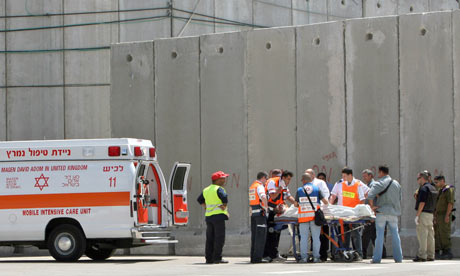
The Erez crossing, where people from Gaza cross into Israel for medical treatment. Many say they have been pressed to become informants. Photograph: AP
Israeli security agents held a Palestinian patient for three weeks without charge, interrogated him repeatedly and offered access to hospital care if he agreed to become an informant, the Guardian has learned.
The treatment of Abd al-Karim al-Atal, 28, is the latest in a series of cases over the past two years in which patients from Gaza referred for hospital treatment in Israel have been held without charge and pressed to become Israeli collaborators, human rights groups say.
Atal, who is losing his sight, is still waiting for a permit to travel from his home in the Jabaliya refugee camp, in Gaza, to an eye hospital in east Jerusalem for a cornea transplant operation now scheduled for tomorrow.
Physicians for Human Rights, a leading Israeli rights group, says the pressure exerted on these patients amounts to coercion, which is illegal under the fourth Geneva convention, and may even constitute a breach of the UN convention against torture. It says around one in five Gazans who apply for permits to enter Israel for medical care are now submitted to detailed interrogations.
B'Tselem, another human rights group, says Israeli security agents "exploited the questionings to exert inappropriate pressure on ill persons, with the aim of forcing them to collaborate with the agency".
Israel says such questioning is a necessary security measure to prevent terrorist attacks and says that 5,000 people – patients and their relatives – have been allowed out of Gaza for medical reasons this year. But Ami Gil, of Physicians for Human Rights, said while initial screening of patients referred for treatment in Israel was a legitimate security consideration, the problem lay in the pressure put on patients under interrogation.
"There is a screening process to prevent a security threat and another to pressure patients to gather intelligence information that has nothing to do with their own case or background," he said. "That is not about screening. It is about gathering information for intelligence purposes."
Atal has a referral from Gazan health officials supported by the St John Eye Hospital in east Jerusalem, which states that he needs a penetrating keratoplasty – a cornea implant. In the west that would be routine, but no hospital in Gaza can perform the operation.
He applied for a permit to enter Israel and in early September was called to the Erez crossing which leads into Israel. He was blindfolded and handcuffed for a time. An Arabic-speaking Israeli security officer accused him of falsifying his medical papers. In fact, his vision is so poor he can barely see out of his left eye and has limited vision in his right. Atal, a former member of Gaza's Fatah-led police force, was asked to give detailed information about his five brothers and an uncle living in Egypt. He was accused of involvement in the Al-Aqsa Martyrs Brigade, the military wing of the Fatah movement.
"They said if I accepted and gave them information they would allow me to return home and to get a permit in future. If I refused they said they would arrest me," he said. When he said he had no information to give he was taken to a detention centre in the nearby city of Ashkelon.
He was photographed, fingerprinted and then held for 19 days alone in a cell with no windows. He was interrogated for hours at a time while seated on a small chair with his hands cuffed behind his back underneath an air conditioner pouring out cold air.
Eventually he was questioned while attached to what he was told was a polygraph machine. He was asked about his relatives, about his neighbours and about any Hamas leaders he knew. Again he was accused of involvement in militant groups. "I looked around and said: 'Are you talking to me? I can hardly recognise people in the street?'
"They said if I collaborated with them it would be a good thing for the Palestinians, that it would help them target Hamas leaders, not accidentally kill civilians," he said. "They said I should call them and tell them about my neighbourhood: who is living where, is anyone from Hamas there. They said I would get a permit to enter Israel in return. They offered money, they said I would be allowed to travel abroad."
Israeli officials deny that entry to Israel for medical reasons is conditional on patients becoming informants but they say security is an issue. In June 2005 a female suicide bomber wearing an explosives belt tried to cross through Erez and Palestinians have used false medical papers in the past. Last year a government official wrote to Physicians for Human Rights saying the questioning was "intended to evaluate the degree of danger posed by the applicant".
"For us it is not only a legal issue, but a very basic moral issue," said Gil. "We are talking about patients here."

Here’s an instructive story:
In 1783, the Constitution had not yet been written, and Congress was operating under the Articles of Confederation. Congress had no ability to enforce its laws, no power to tax, and could not even meet its obligations to the newly-victorious Continental Army.
Debts kept mounting up. In one humiliating incident, Congress felt compelled to flee from Philadelphia when armed troops demanding their back pay physically surrounded the congressional meeting-place at Independence Hall.
Congress re-convened in Princeton, New Jersey. Once there, the delegates started to talk about how it would be a great idea to have a national capital in a district of its own. But Congress couldn’t agree on where the capital district would be located.
Votes were taken on locations in each of the thirteen states, and they were all voted down. More importantly, Congress was completely broke — it simply had no money to build a capital.
Faced with a crisis, some of the delegates had an idea. If the idea of having one national capital wasn’t feasible, then they would propose building TWO national capitals – one on the Delaware River, and one on the Potomac. And that’s just what Congress voted to do!
The lesson for today: The biggest domestic national crisis, almost every impartial observer agrees, consists of the massive and unfunded entitlement programs sweeping the federal government toward default and bankruptcy.
The second biggest problem is health care costs — rising crazily because the government has replaced the traditional doctor-patient relationship with huge bureaucracies of “third party payers” ( government agencies and insurance companies).
The obvious cure for both problems is to find ways to disengage government and return these services to the free market. But both of those solutions are off the congressional agenda. Instead, a majority in Congress wants expansion of entitlements and third-party payments.
Politicians haven’t changed much.
What finally cured the problems of the 1780s was a new Constitution that restructured Congress and clearly defined its powers. It’s becoming more and more clear that it is also going to take some fundamental change to deal with modern congressional irresponsibility — probably a constitutional amendment or two.
| Nazi-minded Jewish settlers continued to rampage throughout the West Bank, terrorizing unprotected Palestinian citizens and vandalizing their property. Settler leaders, mostly rabbis erudite in Jewish law or Halacha, had ruled that it was permissible to attack Palestinians and their property in order to protest token government decisions to freeze Jewish settlement expansion in some parts of the occupied territories. In the West Bank villages of Jourtel Shama’a and Um Salmouna near Bethlehem Jewish settlers carrying automatic rifles on Sunday cut off and then set on fire as many as 50 grown olive trees belonging to Palestinian farmers. The farmers, including owners of the destroyed trees, charged that the Israeli occupation army did nothing to stop the settlers. “The settlers and the occupation army soldiers are the same. The settlers do their dirty work, and the soldiers look on, that is all” said one farmer. “Those who tell you that the settlers are committing their crimes in spite of the army are liars. There is a total tacit coordination between the two sides.” Religious settlers indoctrinated in Jewish supremacy believe that Palestine was given to them by God and are convinced that non-Jews have no right to live in the land unless they convert to Judaism or accept a drastically inferior status as water carriers and wood hewers in the service of Jews. The settlers, who act on religious edicts issued by settlement rabbis, routinely destroy Palestinian olive trees, especially in the vicinity of illegal colonies established on occupied Palestinian land in violation of international law. The settlers hope that the elimination of Palestinian olive groves would force many Palestinians to relocate or even emigrate for good, which would enable the settlers to take over Palestinian land. Many Palestinian families rely on olive oil for their livelihood and economic survival. In the village of Aynabus in the northern West Bank , Jewish settlers on Sunday attacked and vandalized two Arab-owned stores and agricultural machinery. The settlers said they were protesting an earlier decision by the government of Benyamin Netanyahu to freeze the expansion of Jewish-only settlements for ten months. The decision doesn’t cover East Jerusalem nor the vast bulk of settlements and is widely viewed as a public relations maneuver aimed at placating the American administration. Indeed, less than 24 hours after the decision was taken, the Israeli occupation authorities decided to build dozens of settler units and “public buildings” in the West Bank. Some Israeli journalists and columnists have described the decision to freeze settlement expansion as a mere “show” that is being acted out in coordination between the settlers on the one side and the Israeli government and occupation army on the other. The Netanyahu government used the “important step” for Hasbara (propaganda) purposes, arguing that the proverbial ball was now in the Palestinian court and that the Palestinian Authority (PA) had no excuse not to return to the negotiating table. Similarly, Jewish settlers in the heart of al-Khalil hurled stones on Arab worshipers frequenting the Ibrahimi Mosque. Wakf official Zayd Jabari accused the Israeli occupation army of acting as “enabler and protector of Jewish terror against our people.” “The Israeli occupation army tells the world that it is maintaining a presence in this city in order to protect Jews and maintain law and order. But what the army is doing in reality is to enable the settlers to attack Palestinian civilians and sabotage their businesses and property. Another Arab citizen described the settlers as the “head of the snake” and the army as “its tail.” On Saturday, the Israeli occupation army allowed dozens of fanatical settlers to walk through the Jabari neighborhood in what local residents described as a provocative march. In 1994, a Jewish terrorist who had immigrated from the US murdered at least 29 Palestinian worshipers as they were praying at the Ibrahimi Mosque. The settlers openly demand the ethnic cleansing of all non-Jews from occupied Palestine . Observers in occupied Palestine contend Israeli government and army flaccidity have emboldened settlers, encouraging them to carry out more daring attacks on Palestinians. More to the point, the Israeli justice system’s soft-glove approach toward the settlers is also communicating a clear message, namely that the settlers could attack the Palestinians and destroy their property without having to worry about consequences. Palestinian sources have warned that continued attacks and acts of vandalism by Jewish settlers against Palestinian citizens and their property might draw violent reactions. |

There is a virtual consensus among the American public that drunk driving is an horrific crime that deserves only ruthless punishment. Indeed, the level of consensus on this issue is so unanimous that virtually the only debate that ever occurs with regard to drunk driving revolves around how best to step up enforcement and inflict ever more merciless punishments on people who choose to drive drunk. Few and far between are any substantive criticisms of the idea of hunting down and imprisoning people, just because they happen to have an arbitrary amount of alcohol in their blood.
One of the major reasons why this level of consensus has emerged in recent decades is that the proponents of drunk-driving prohibition have seized the moral high ground. They have accomplished this primarily by portraying drunk drivers as uniquely dangerous and uniquely evil drivers – drunk drivers are the great and deadly scourge of the modern world. The drunk driver is painted as the moral and legal equivalent of a man pointing a loaded shotgun at a crowd of innocent people – a menace crying out for the state to step in and "disarm" (i.e., mercilessly punish him) before he kills or hurts anyone.
The glaring problem with the argument that drunk drivers are uniquely dangerous and uniquely evil, however, is that there are plenty of other drivers in this world that are equally dangerous and deadly, but who are not vilified, hunted down and imprisoned by the state. There are sleepy drivers, drivers toying with their stereos, drivers old enough to have seen Great Depression I, drivers with dogs on their laps, drivers putting on makeup, drivers with glasses thicker than their taillights, teenage drivers, drivers looking at maps, drivers with the flu, drivers screaming at their spouses, drivers with kids fighting in the backseat, drivers eating tacos, virtually every single driver in Los Angeles…
Recognizing the fact that there are plenty of other idiotic and deadly dangerous drivers on the road, drunk-driving prohibitionists have to supplement their portrait of drunk drivers with the idea that drunk drivers "choose" to get behind the wheel while intoxicated, and this fact makes them uniquely dangerous and evil. According to this commonplace argument, Grandma didn’t "choose" to slow down her reflexes and become shorter than her steering wheel, but the evil drunk driver does "choose" to get behind the wheel after drinking. Similarly, one often hears the claim that people don’t "choose" to become sleepy while driving, but they obviously "choose" to drink alcohol before driving. Hence, we are urged to conclude, drunk drivers deserve all the punishment we can throw at them for having "chosen" to drive drunk.
As a rhetorical strategy designed to vilify drunk drivers as uniquely dangerous and uniquely negligent, it would be difficult to contest the effectiveness of this argument. When one looks at the argument itself, however, one cannot help but be struck by how thoroughly foolish and fallacious it is.
In the first place, it should be obvious that drunk drivers do not always choose to become "drunk." For example, imagine a man and his wife going out for a nice meal of tapas and margaritas. They do not intend to get drunk, by any means, but to a very large extent the choice is not up to them. The bartender could be distracted when he mixes the drinks, (or he could just be a good sport), and thus might make them much stronger than the couple is expecting. It is easy to play armchair designated driver and condemn the couple for having "chosen" to drive drunk afterward, but it seems disingenuous at the very least to describe their accidental intoxication as a uniquely deliberate "choice" worthy of time spent in jail.
The problem with the argument that drunk drivers are uniquely responsible for having "chosen" to drive runs much deeper than this, however. Indeed, the argument asks us to believe two contradictory things about the drunk driver. On the one hand the argument specifically asks us to believe that drunk drivers are uniquely responsible for "choosing" to get behind the wheel, but, on the other hand, the argument is predicated upon the assumption that drunk drivers are hopelessly dangerous, due to their lack of "judgment." The argument, in other words, looks something like this:
A: Unlike other deadly dangerous drivers, (like the decrepit elderly, for example), drunk drivers are uniquely responsible for "choosing" to get behind the wheel in an intoxicated state.
B: Drunk drivers are extremely dangerous because they thoroughly lack the judgment to be able to drive safely.
It should be obvious that these propositions contradict one another. Drunk drivers cannot be both uniquely responsible for their choices and lacking judgment at the same time. If we want to say that drunk drivers lack the necessary judgment to decide when it is safe to drive, then we cannot at the same time say that they are uniquely responsible for their actions. In fact, we would be closer to the mark if we said that they were less responsible for their "choices." Conversely, if we want to say that drunk drivers are uniquely responsible for their "choice" to get behind the wheel, then we must not say that they lack the judgment to decide when it is safe to drive.
The logical problems only multiply when we shift our attention to other deadly dangerous drivers. The argument that drunk drivers are uniquely responsible and uniquely dangerous because they "choose" to get behind the wheel rests upon the ludicrous notion that other deadly dangerous drivers do not "choose" their impairment. Extremely dangerous elderly drivers, as was noted above, are often portrayed as helpless victims of time, whereas drunk drivers are portrayed as calculating and diabolical villains. But, in what sense can we really describe grandma’s decision to get behind the wheel as any less of a deliberate "choice" than the drunk driver’s? To be sure, grandma did not "choose" to let time ravage her mind and body, but she absolutely does "choose" to turn the ignition in her gigantic Buick and creep out of her driveway. The same is true of the cross-country motorist who gets sleepy – while he does not "choose" to get tired, he undeniably does "choose" to continue driving in that condition.
The simple fact of the matter is that drunk drivers are exactly the same as other drivers, and they are responsible for their actions in exactly the same manner, and to exactly the same degree, as other deadly dangerous drivers. Any appeal to the fact that drunk drivers "choose" to get behind the wheel is completely irrelevant, because all people, no matter what their condition, "choose" to get behind the wheel and drive. The fact that other drivers are extremely dangerous should not be allowed to be ignored or forgotten simply because if the irrelevant fact that drunk drivers "choose" to drive drunk. Of course they do, and so does everyone else who drives in a dangerous condition.
This brings us to the question of what is to be done about all of these extremely dangerous drivers on the road. Simple logical and legal consistency demands that we deal with all of these drivers in exactly the same way. The woman who plays with her iPod, thereby jeopardizing the lives of bystanders, must be treated exactly like the man who drives after imbibing at his local pub. Both are responsible for driving, and they both put other people’s lives at risk. Because we must deal with these dangerous drivers the same way, our options are relatively limited.
One option would be to start treating all dangerous drivers, (like those who are caught driving over the age of 65, those caught eating hamburgers while driving, those caught playing with their radios while driving, etc.), exactly the same as we now treat drunk drivers. We could identify all these deadly dangerous drivers and send them all to jail. This could be accomplished by doubling or tripling the number of police on the roads, having mandatory and permanent checkpoints on all major roads and highways, and installing cameras in everyone’s cars to make sure they never put other people’s lives at risk. This solution would certainly be consistent with treating all dangerous drivers equally, but it would have the inconvenient side effect of exterminating any semblance of freedom in America. It would also be slightly difficult to put this into practice, since the police have a nasty little tendency to drive drunk themselves, and so do the elected officials who are supposedly in charge of the police. It would also be a fairly expensive option, since we would have to build jails large enough to incarcerate…well, everyone.
Another option would be to simply recognize the fact that people are responsible for their actions, and only fine and incarcerate them if they actually cause harm to another person. Yes, this option would mean that we would have to leave drunk drivers alone unless they actually hurt someone, just as we now do with drivers who are sleepy or are decrepitly aged. But, is this not the same standard that we employ in other areas of criminal law? We do not deem it morally or legally acceptable for the police to raid the poorer areas of our cities to search out and incarcerate people they think will become criminals one day, simply because the poor are more likely to commit certain crimes. We do not deem it morally or legally acceptable for the police to round up and imprison people according to race, based upon the fact that certain races commit disproportionate amounts of crime. Why, then, do we allow the state to do precisely this to drunk drivers, based solely on the assumption that drunk drivers may harm other people, when we would condemn it if it was done to any other segment of society?
Both justice and freedom demand that we choose the latter option, and not the option of treating one group of people as potential criminals, all in need of incarceration.
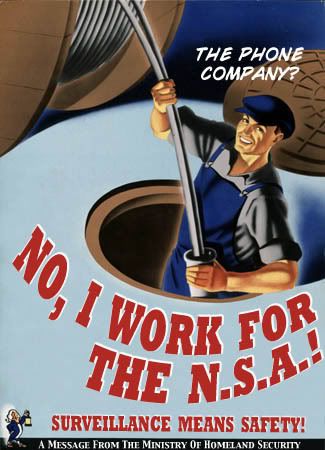
Chris Soghoian, whose post on 8 million times the government has used GPS tracking on Sprint’s customers in the last year, has apparently flushed out the spying policies of many of the nation’s telecoms. Cryptome has them posted–though (as Mary points out) Yahoo has freaked out and initiated take-down proceedings.
Yahoo isn’t happy that a detailed menu of the spying services it provides law enforcement agencies has leaked onto the web.
Shortly after Threat Level reported this week that Yahoo had blocked the FOIA release of its law enforcement and intelligence price list, someone provided a copy of the company’s spying guide to the whistleblower site Cryptome.
The 17-page guide describes Yahoo’s data retention policies and the surveillance capabilities it can provide law enforcement, with a pricing list for these services. Cryptome also published lawful data-interception guides for Cox Communications, SBC, Cingular, Nextel, GTE and other telecoms and service providers.

According to this article in Tampa Bay Online US Customs Officer David Tipton told a Tampa Tribune photojournalist that “We’re not local law enforcement here. We’re the federal government. We’ll take your gear right now,’” simply because the photojournalist took a picture from PUBLIC PROPERTY of a newsworthy accident scene which involved an automobile belonging to the agent.
Taking camera equipment without a proper court order is THEFT, no matter if it is done by an individual, local law enforcement or federal agents!
Fortunately cooler heads did prevail and a superior officer:
Gary McClelland, the agency’s area port director, apologized to Nolan less than two hours later at the scene.
“You have to understand the gentleman (Tipton) was just in a very serious accident,” McClelland said. “He was very shaken up.”
Ordinarily, he said, officers don’t permit photographs because of the nature of their jobs, but the agency doesn’t want to hinder the media.
However the last sentence of that half-hearted apology is extremely disturbing. What does he mean by “officers don’t permit photographs”. They have no choice if they are out in publid. It is an absolute outrage that these officers think that they are above the law. There is NO LAW that prevents them from being photographed if they can be seen from public space. More lies being spewed from the mouths power hungry, abusive federal agents.